Department of Integrative Biology and Physiology, University of California, Los Angeles, Terasaki Life Sciences Building, 610 Charles E, Young Drive East, Los Angeles, CA 90095-7239, USA.
J Neuroeng Rehabil. 2013 Oct 24;10:108. doi: 10.1186/1743-0003-10-108.
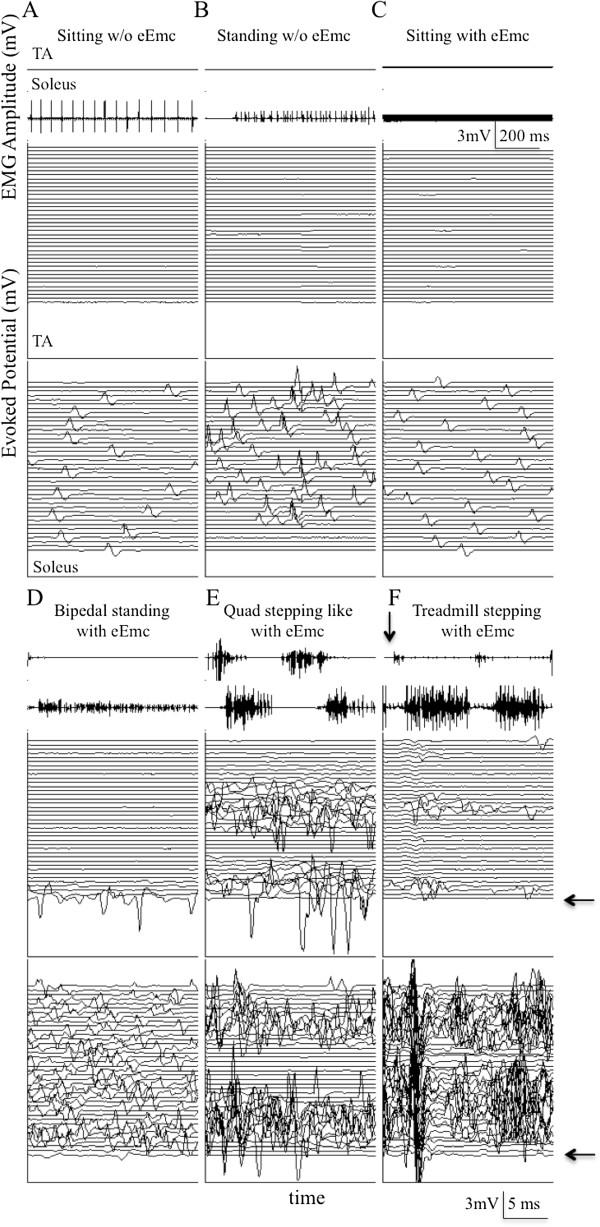
Epidural stimulation of the spinal cord can be used to enable stepping on a treadmill (electrical enabling motor control, eEmc) after a complete mid-thoracic spinal cord transection in adult rats. Herein we have studied the effects of eEmc using a sub-threshold intensity of stimulation combined with spontaneous load-bearing proprioception to facilitate hindlimb stepping and standing during daily cage activity in paralyzed rats.
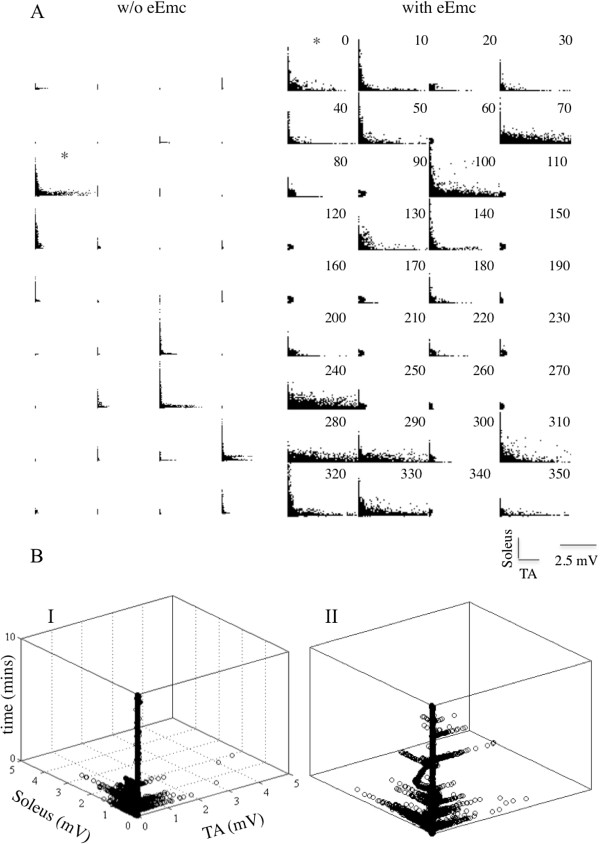
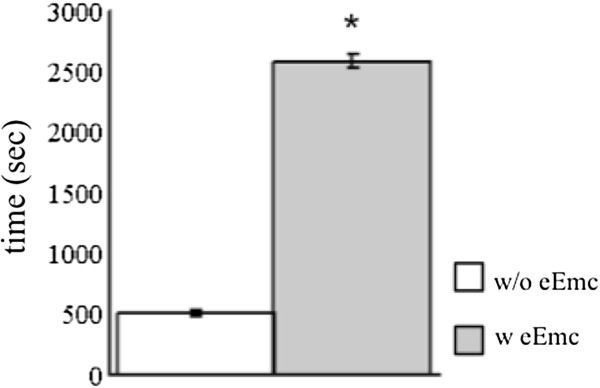
We hypothesized that eEmc combined with spontaneous cage activity would greatly increase the frequency and level of activation of the locomotor circuits in paralyzed rats. Spontaneous cage activity was recorded using a specially designed swivel connector to record EMG signals and an IR based camcorder to record video.
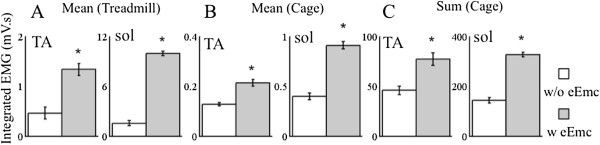
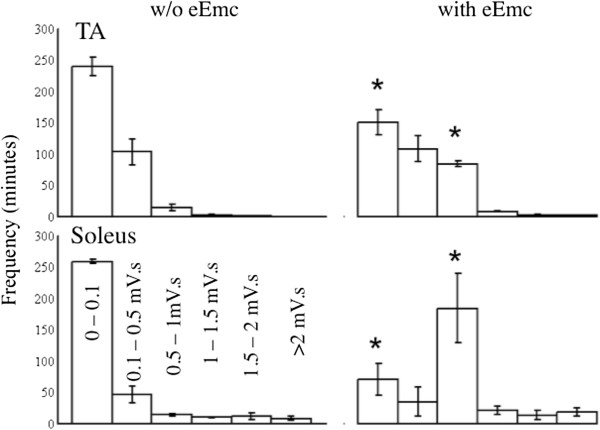
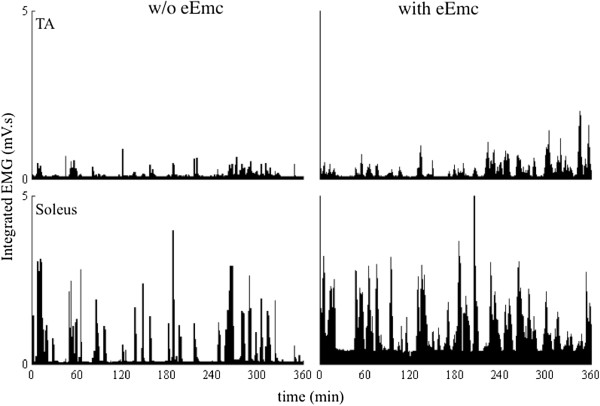
The spinal rats initially were very lethargic in their cages showing little movement. Without eEmc, the rats remained rather inactive with the torso rarely being elevated from the cage floor. When the rats used their forelimbs to move, the hindlimbs were extended and dragged behind with little or no flexion. In contrast, with eEmc the rats were highly active and the hindlimbs showed robust alternating flexion and extension resulting in step-like movements during forelimb-facilitated locomotion and often would stand using the sides of the cages as support. The mean and summed integrated EMG levels in both a hindlimb flexor and extensor muscle were higher with than without eEmc. These data suggest that eEmc, in combination with the associated proprioceptive input, can modulate the spinal networks to significantly amplify the amount and robustness of spontaneous motor activity in paralyzed rats.
脊髓硬膜外刺激可用于在成年大鼠完全胸段脊髓横断后在跑步机上实现踏步(电启用运动控制,eEmc)。在此,我们研究了使用阈下刺激强度结合自发承重本体感觉来促进瘫痪大鼠日常笼内活动中的后肢踏步和站立的 eEmc 效应。
我们假设 eEmc 结合自发笼内活动会极大地增加瘫痪大鼠运动回路的频率和激活水平。通过专门设计的旋转连接器记录自发笼内活动,以记录肌电图信号和基于 IR 的摄像机记录视频。
最初,脊髓大鼠在笼子里非常昏昏欲睡,几乎没有运动。没有 eEmc 时,大鼠几乎没有活动,躯干很少从笼底抬起。当大鼠用前肢移动时,后肢伸展并拖在后面,很少或没有弯曲。相比之下,使用 eEmc 时,大鼠非常活跃,后肢显示出强有力的交替弯曲和伸展,导致在前肢辅助运动时出现类似踏步的运动,并且经常会用笼子的侧面作为支撑站立。有和没有 eEmc 时,后肢屈肌和伸肌的平均和总和积分肌电图水平均更高。这些数据表明,eEmc 结合相关本体感觉输入可以调节脊髓网络,显著放大瘫痪大鼠自发运动活动的数量和强度。