Barnett Institute, Northeastern University, Boston, MA 02115, USA.
AMB Express. 2013 Oct 25;3(1):64. doi: 10.1186/2191-0855-3-64.
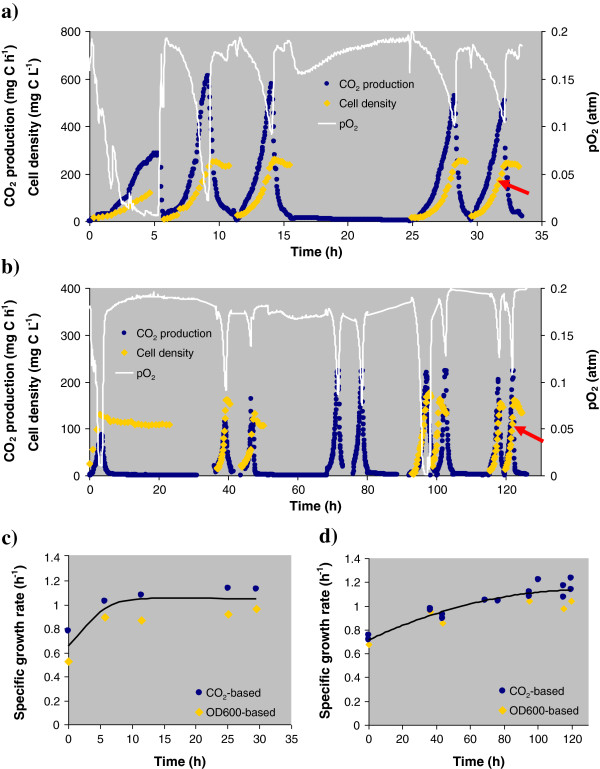
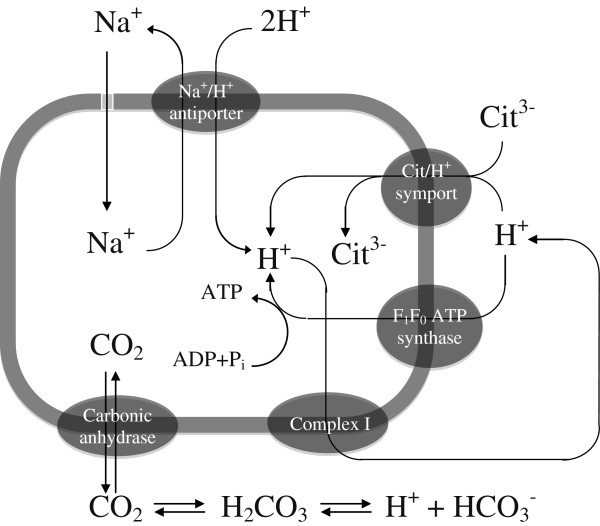
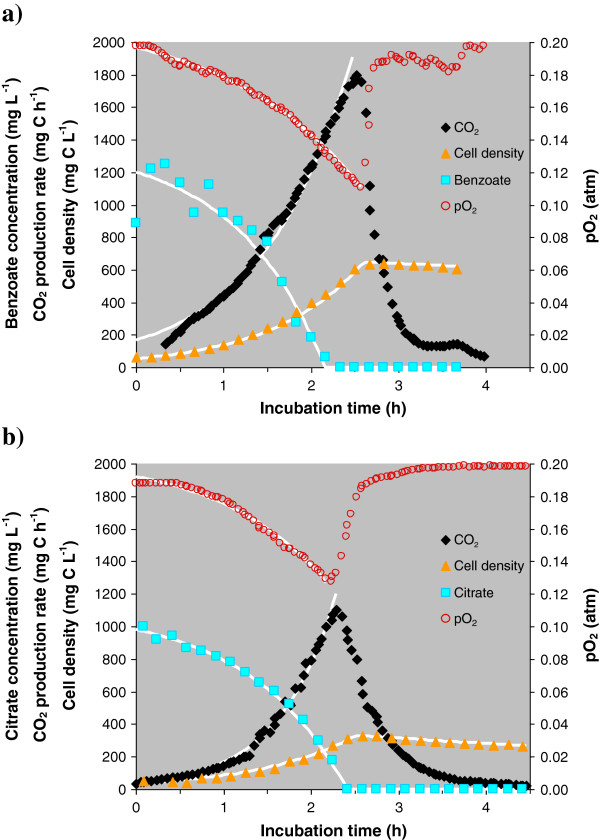
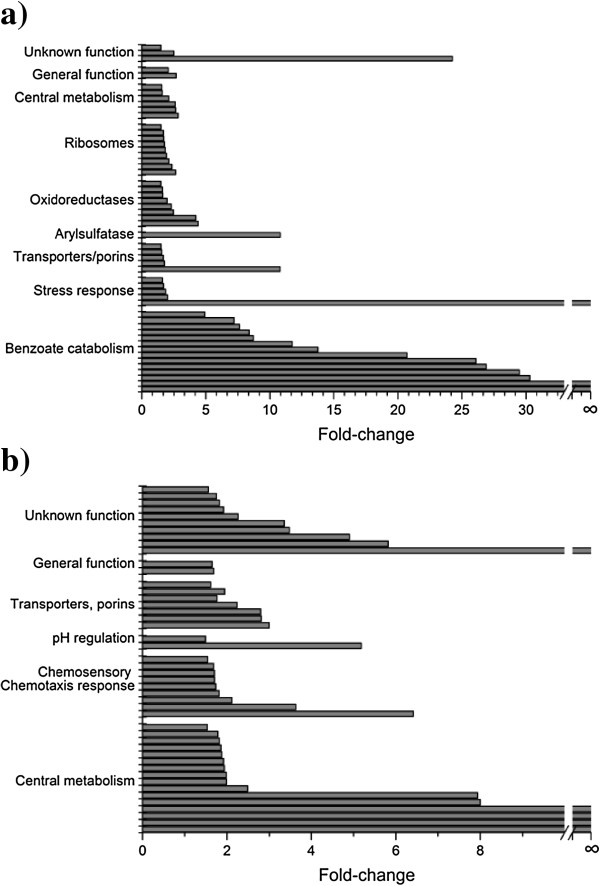
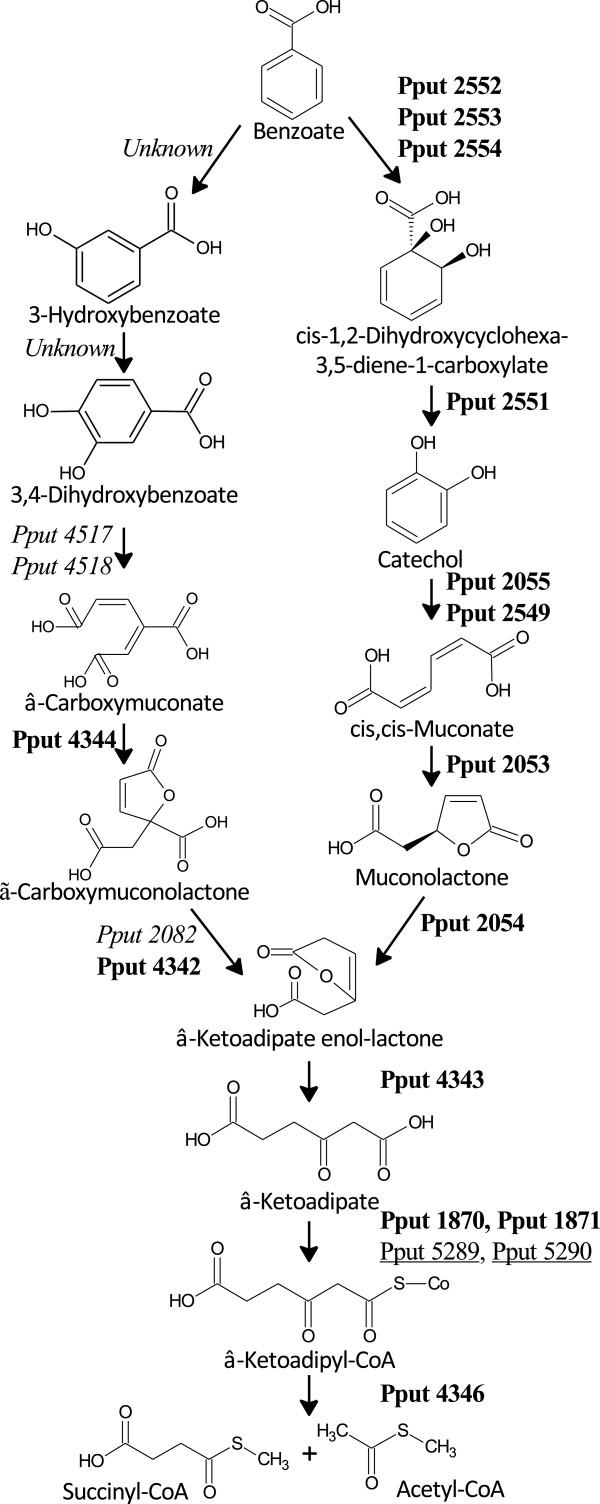
Pseudomonas species are capable to proliferate under diverse environmental conditions and thus have a significant bioremediation potential. To enhance our understanding of their metabolic versatility, this study explores the changes in the proteome and physiology of Pseudomonas putida F1 resulting from its growth on benzoate, a moderate toxic compound that can be catabolized, and citrate, a carbon source that is assimilated through central metabolic pathways. A series of repetitive batch cultivations were performed to ensure a complete adaptation of the bacteria to each of these contrasting carbon sources. After several growth cycles, cell growth stabilized at the maximum level and exhibited a reproducible growth profile. The specific growth rates measured for benzoate (1.01 ± 0.11 h-1) and citrate (1.11 ± 0.12 h-1) were similar, while a higher yield was observed for benzoate (0.6 and 0.3 g cell mass per g of benzoate and citrate, respectively), reflecting the different degrees of carbon reduction in the two substrates. Comparative proteomic analysis revealed an enrichment of several oxygenases/dehydrogenases in benzoate-grown cells, indicative of the higher carbon reduction of benzoate. Moreover, the upregulation of all 14 proteins implicated in benzoate degradation via the catechol ortho-cleavage pathway was observed, while several stress-response proteins were increased to aid cells to cope with benzoate toxicity. Unexpectedly, citrate posed more challenges than benzoate in the maintenance of pH homeostasis, as indicated by the enhancement of the Na+/H+ antiporter and carbonic anhydrase. The study provides important mechanistic insights into Pseudomonas adaptation to varying carbon sources that are of great relevance to bioremediation efforts.
假单胞菌能够在各种环境条件下增殖,因此具有重要的生物修复潜力。为了增强我们对其代谢多样性的理解,本研究探讨了假单胞菌 F1 在苯甲酸和柠檬酸盐这两种不同碳源上生长时其蛋白质组和生理学的变化。进行了一系列重复的分批培养,以确保细菌完全适应这两种截然不同的碳源。经过几个生长周期,细胞生长稳定在最高水平,并表现出可重复的生长曲线。测量到苯甲酸(1.01 ± 0.11 h-1)和柠檬酸盐(1.11 ± 0.12 h-1)的比生长速率相似,而苯甲酸的产率更高(分别为 0.6 和 0.3 g 细胞质量/苯甲酸和柠檬酸盐),这反映了两种底物中碳还原的不同程度。比较蛋白质组学分析表明,苯甲酸生长的细胞中富含几种加氧酶/脱氢酶,表明苯甲酸的碳还原程度更高。此外,观察到与邻苯二酚 1,2-裂合途径降解苯甲酸相关的所有 14 种蛋白的上调,而几种应激反应蛋白的增加有助于细胞应对苯甲酸的毒性。出乎意料的是,与苯甲酸相比,柠檬酸在维持 pH 平衡方面带来了更大的挑战,这表明钠离子/氢离子反向转运蛋白和碳酸酐酶的增强。该研究为假单胞菌适应不同碳源的机制提供了重要的见解,这对生物修复工作具有重要意义。