• 文献检索
  • 文档翻译
  • 深度研究
  • 学术资讯
  • Suppr Zotero 插件Zotero 插件
  • 邀请有礼
  • 套餐&价格
  • 历史记录
应用&插件
Suppr Zotero 插件Zotero 插件浏览器插件Mac 客户端Windows 客户端微信小程序
定价
高级版会员购买积分包购买API积分包
服务
文献检索文档翻译深度研究API 文档MCP 服务
关于我们
关于 Suppr公司介绍联系我们用户协议隐私条款
关注我们

Suppr 超能文献

核心技术专利:CN118964589B侵权必究
粤ICP备2023148730 号-1Suppr @ 2026

文献检索

告别复杂PubMed语法,用中文像聊天一样搜索,搜遍4000万医学文献。AI智能推荐,让科研检索更轻松。

立即免费搜索

文件翻译

保留排版,准确专业,支持PDF/Word/PPT等文件格式,支持 12+语言互译。

免费翻译文档

深度研究

AI帮你快速写综述,25分钟生成高质量综述,智能提取关键信息,辅助科研写作。

立即免费体验

韩国恙虫病的空间分布分析

Spatial distribution analysis of scrub typhus in Korea.

作者信息

Jin Hong Sung, Chu Chaeshin, Han Dong Yeob

机构信息

Department of Mathematics, Chonnam National University, Gwangju, Korea .

出版信息

Osong Public Health Res Perspect. 2013 Feb;4(1):4-15. doi: 10.1016/j.phrp.2012.12.007.

DOI:10.1016/j.phrp.2012.12.007
PMID:24159523
原文链接:https://pmc.ncbi.nlm.nih.gov/articles/PMC3747683/
Abstract

OBJECTIVE

This study analyzes the spatial distribution of scrub typhus in Korea.

METHODS

A spatial distribution of Orientia tsutsugamushi occurrence using a geographic information system (GIS) is presented, and analyzed by means of spatial clustering and correlations.

RESULTS

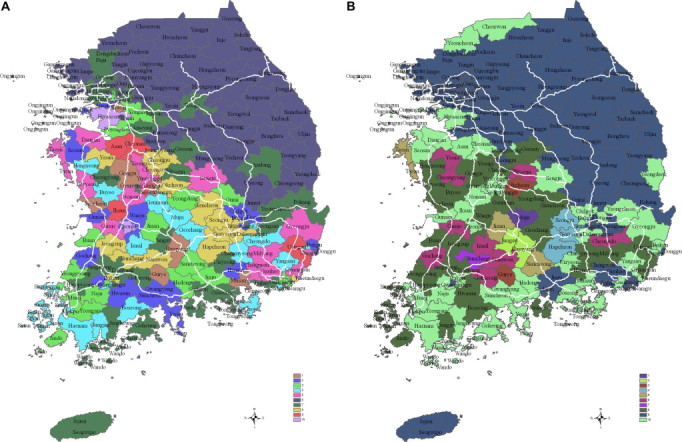
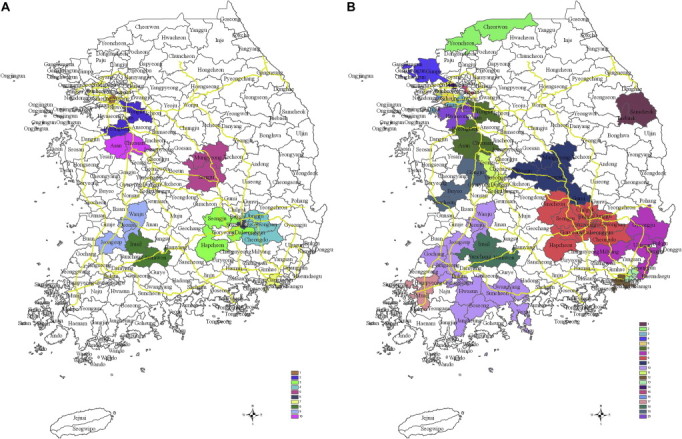
The provinces of Gangwon-do and Gyeongsangbuk-do show a low incidence throughout the year. Some districts have almost identical environmental conditions of scrub typhus incidence. The land use change of districts does not directly affect the incidence rate.

CONCLUSION

GIS analysis shows the spatial characteristics of scrub typhus. This research can be used to construct a spatial-temporal model to understand the epidemic tsutsugamushi.

摘要

目的

本研究分析韩国恙虫病的空间分布情况。

方法

利用地理信息系统(GIS)呈现恙虫病东方体出现的空间分布,并通过空间聚类和相关性进行分析。

结果

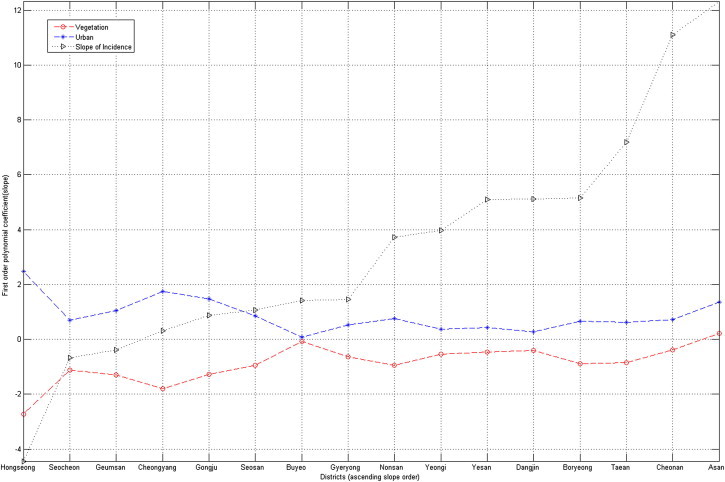
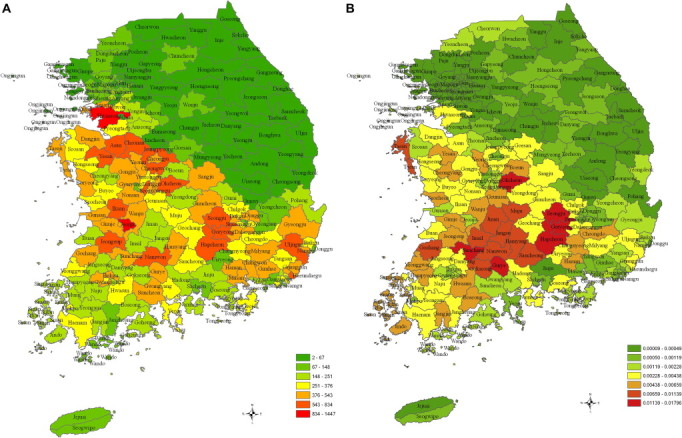
江原道和庆尚北道全年发病率较低。一些地区恙虫病发病率的环境条件几乎相同。地区土地利用变化不会直接影响发病率。

结论

GIS分析显示了恙虫病的空间特征。本研究可用于构建时空模型以了解恙虫病的流行情况。
https://cdn.ncbi.nlm.nih.gov/pmc/blobs/9663/3747683/dd97d87c4837/PHRP-4-1-4-g010.jpg
https://cdn.ncbi.nlm.nih.gov/pmc/blobs/9663/3747683/2912f3648998/PHRP-4-1-4-g001.jpg
https://cdn.ncbi.nlm.nih.gov/pmc/blobs/9663/3747683/16338e7d0595/PHRP-4-1-4-g002.jpg
https://cdn.ncbi.nlm.nih.gov/pmc/blobs/9663/3747683/c2cafdbdeabd/PHRP-4-1-4-g003.jpg
https://cdn.ncbi.nlm.nih.gov/pmc/blobs/9663/3747683/7af1f957990e/PHRP-4-1-4-g004.jpg
https://cdn.ncbi.nlm.nih.gov/pmc/blobs/9663/3747683/dd19556aa8f4/PHRP-4-1-4-g005.jpg
https://cdn.ncbi.nlm.nih.gov/pmc/blobs/9663/3747683/a70e3bab7239/PHRP-4-1-4-g006.jpg
https://cdn.ncbi.nlm.nih.gov/pmc/blobs/9663/3747683/de0ab63c76a4/PHRP-4-1-4-g007.jpg
https://cdn.ncbi.nlm.nih.gov/pmc/blobs/9663/3747683/2c0192719da8/PHRP-4-1-4-g008.jpg
https://cdn.ncbi.nlm.nih.gov/pmc/blobs/9663/3747683/8c51f7a5abea/PHRP-4-1-4-g009.jpg
https://cdn.ncbi.nlm.nih.gov/pmc/blobs/9663/3747683/dd97d87c4837/PHRP-4-1-4-g010.jpg
https://cdn.ncbi.nlm.nih.gov/pmc/blobs/9663/3747683/2912f3648998/PHRP-4-1-4-g001.jpg
https://cdn.ncbi.nlm.nih.gov/pmc/blobs/9663/3747683/16338e7d0595/PHRP-4-1-4-g002.jpg
https://cdn.ncbi.nlm.nih.gov/pmc/blobs/9663/3747683/c2cafdbdeabd/PHRP-4-1-4-g003.jpg
https://cdn.ncbi.nlm.nih.gov/pmc/blobs/9663/3747683/7af1f957990e/PHRP-4-1-4-g004.jpg
https://cdn.ncbi.nlm.nih.gov/pmc/blobs/9663/3747683/dd19556aa8f4/PHRP-4-1-4-g005.jpg
https://cdn.ncbi.nlm.nih.gov/pmc/blobs/9663/3747683/a70e3bab7239/PHRP-4-1-4-g006.jpg
https://cdn.ncbi.nlm.nih.gov/pmc/blobs/9663/3747683/de0ab63c76a4/PHRP-4-1-4-g007.jpg
https://cdn.ncbi.nlm.nih.gov/pmc/blobs/9663/3747683/2c0192719da8/PHRP-4-1-4-g008.jpg
https://cdn.ncbi.nlm.nih.gov/pmc/blobs/9663/3747683/8c51f7a5abea/PHRP-4-1-4-g009.jpg
https://cdn.ncbi.nlm.nih.gov/pmc/blobs/9663/3747683/dd97d87c4837/PHRP-4-1-4-g010.jpg

相似文献

1
Spatial distribution analysis of scrub typhus in Korea.韩国恙虫病的空间分布分析
Osong Public Health Res Perspect. 2013 Feb;4(1):4-15. doi: 10.1016/j.phrp.2012.12.007.
2
Are there spatial and temporal correlations in the incidence distribution of scrub typhus in Korea?韩国恙虫病发病率分布是否存在时空相关性?
Osong Public Health Res Perspect. 2013 Feb;4(1):39-44. doi: 10.1016/j.phrp.2013.01.002.
3
[Analysis of epidemic features of scrub typhus between year 2006 and 2010 in Shandong province, China].[中国山东省2006年至2010年恙虫病流行特征分析]
Zhonghua Yu Fang Yi Xue Za Zhi. 2012 Apr;46(4):338-42.
4
[Spatial analysis of autumn-winter type scrub typhus in Shandong province, 2006-2014].[2006 - 2014年山东省秋冬型恙虫病的空间分析]
Zhonghua Liu Xing Bing Xue Za Zhi. 2016 May;37(5):682-5. doi: 10.3760/cma.j.issn.0254-6450.2016.05.019.
5
Scrub typhus in Jiangsu Province, China: epidemiologic features and spatial risk analysis.中国江苏省恙虫病:流行病学特征和空间风险分析。
BMC Infect Dis. 2018 Aug 6;18(1):372. doi: 10.1186/s12879-018-3271-x.
6
An outbreak investigation of scrub typhus in Nepal: confirmation of local transmission.尼泊尔恙虫病暴发调查:确认本地传播。
BMC Infect Dis. 2021 Feb 18;21(1):193. doi: 10.1186/s12879-021-05866-6.
7
Spatial analysis of scrub typhus infection and its association with environmental and socioeconomic factors in Taiwan.台湾恙虫病感染的空间分析及其与环境和社会经济因素的关系。
Acta Trop. 2011 Oct-Nov;120(1-2):52-8. doi: 10.1016/j.actatropica.2011.05.018. Epub 2011 Jun 14.
8
Spatiotemporal and demographic characteristics of scrub typhus in Southwest China, 2006-2017: An analysis of population-based surveillance data.2006-2017 年中国西南地区恙虫病的时空和人口统计学特征:基于人群监测数据的分析。
Transbound Emerg Dis. 2020 Jul;67(4):1585-1594. doi: 10.1111/tbed.13492. Epub 2020 Feb 6.
9
Geographical distribution and relative abundance of vectors of scrub typhus in the Republic of Korea.韩国恙虫病病媒的地理分布及相对丰度
Korean J Parasitol. 2009 Dec;47(4):381-6. doi: 10.3347/kjp.2009.47.4.381. Epub 2009 Dec 1.
10
Endoscopic characteristics of infection-associated peptic ulcers.感染相关性消化性溃疡的内镜特征。
Helicobacter. 2017 Dec;22(6). doi: 10.1111/hel.12427. Epub 2017 Aug 18.

引用本文的文献

1
Epidemiological Characteristics and Spatiotemporal Cluster Analysis of Scrub Typhus - China, 2006-2023.2006 - 2023年中国恙虫病的流行病学特征及时空聚集性分析
China CDC Wkly. 2025 Jun 27;7(26):882-888. doi: 10.46234/ccdcw2025.146.
2
Detection and molecular identification of scrub typhus vectors and pathogens from rice field rats, a traditional food item of Mizo tribes in Mizoram, Northeast India.从印度东北部米佐拉姆邦米佐部落的传统食物田鼠中检测和分子鉴定恙虫病媒介及病原体。
BMC Vet Res. 2025 Mar 8;21(1):158. doi: 10.1186/s12917-025-04629-8.
3
Severe Fever with Thrombocytopenia Syndrome in South Korea, 2016-2021: Clinical Features of Severe Progression and Complications.

本文引用的文献

1
Spatial analysis of scrub typhus infection and its association with environmental and socioeconomic factors in Taiwan.台湾恙虫病感染的空间分析及其与环境和社会经济因素的关系。
Acta Trop. 2011 Oct-Nov;120(1-2):52-8. doi: 10.1016/j.actatropica.2011.05.018. Epub 2011 Jun 14.
2
[Correlations between climate change-related infectious diseases and meteorological factors in Korea].[韩国气候变化相关传染病与气象因素之间的相关性]
J Prev Med Public Health. 2010 Sep;43(5):436-44. doi: 10.3961/jpmph.2010.43.5.436.
3
A model for the transmission dynamics of Orientia tsutsugamushi among its natural reservoirs.
韩国 2016-2021 年严重发热伴血小板减少综合征:严重进展和并发症的临床特征。
Am J Trop Med Hyg. 2024 Jul 9;111(3):661-670. doi: 10.4269/ajtmh.24-0062. Print 2024 Sep 4.
4
Identification of Bacteria and Viruses Associated with Patients with Acute Febrile Illness in Khon Kaen Province, Thailand.泰国孔敬府急性发热疾病患者相关细菌和病毒的鉴定
Viruses. 2024 Apr 18;16(4):630. doi: 10.3390/v16040630.
5
Surveillance of Chigger Mite Vectors for Tsutsugamushi Disease in the Hwaseong Area, Gyeonggi-do, Republic of Korea, 2015.2015年韩国京畿道华城市恙虫病恙螨媒介监测
Korean J Parasitol. 2020 Jun;58(3):301-308. doi: 10.3347/kjp.2020.58.3.301. Epub 2020 Jun 26.
6
Imported scrub typhus: first case in South America and review of the literature.输入性恙虫病:南美洲首例病例及文献综述。
Trop Dis Travel Med Vaccines. 2018 Aug 16;4:10. doi: 10.1186/s40794-018-0070-8. eCollection 2018.
7
Scrub typhus: risks, diagnostic issues, and management challenges.恙虫病:风险、诊断问题及管理挑战。
Res Rep Trop Med. 2017 Aug 7;8:73-83. doi: 10.2147/RRTM.S105602. eCollection 2017.
8
Severe Fever with Thrombocytopenia Syndrome in South Korea, 2013-2015.2013 - 2015年韩国的严重发热伴血小板减少综合征
PLoS Negl Trop Dis. 2016 Dec 29;10(12):e0005264. doi: 10.1371/journal.pntd.0005264. eCollection 2016 Dec.
9
Severe scrub typhus infection: Clinical features, diagnostic challenges and management.严重恙虫病感染:临床特征、诊断挑战与管理
World J Crit Care Med. 2015 Aug 4;4(3):244-50. doi: 10.5492/wjccm.v4.i3.244.
10
Scrub Typhus Incidence Modeling with Meteorological Factors in South Korea.韩国恙虫病发病率与气象因素的建模分析
Int J Environ Res Public Health. 2015 Jun 29;12(7):7254-73. doi: 10.3390/ijerph120707254.
恙虫病东方体在其自然宿主间的传播动力学模型。
J Theor Biol. 2010 Sep 7;266(1):154-61. doi: 10.1016/j.jtbi.2010.06.015. Epub 2010 Jun 23.
4
A safe operating space for humanity.人类的安全操作空间。
Nature. 2009 Sep 24;461(7263):472-5. doi: 10.1038/461472a.
5
Use of Google Earth to strengthen public health capacity and facilitate management of vector-borne diseases in resource-poor environments.利用谷歌地球增强资源匮乏环境下的公共卫生能力并促进病媒传播疾病的管理。
Bull World Health Organ. 2008 Sep;86(9):718-25. doi: 10.2471/blt.07.045880.
6
A GIS framework for the assessment of tick impact on human health in a changing climate.一个用于评估气候变化下蜱虫对人类健康影响的地理信息系统框架。
Geospat Health. 2007 May;1(2):157-68. doi: 10.4081/gh.2007.264.
7
Comparative research on epidemiological aspects of tsutsugamushi disease (scrub typhus) between Korea and Japan.韩国与日本恙虫病(丛林斑疹伤寒)流行病学方面的比较研究。
Jpn J Infect Dis. 2008 Mar;61(2):148-50.
8
Scrub typhus.恙虫病
J Assoc Physicians India. 2005 Nov;53:954-8.
9
Satellite imagery in the study and forecast of malaria.疟疾研究与预测中的卫星图像
Nature. 2002 Feb 7;415(6872):710-5. doi: 10.1038/415710a.
10
Distribution and seasonal and diurnal activity patterns of Eutrombicula alfreddugesi (Acari: Trombiculidae) in a forest edge ecosystem.森林边缘生态系统中阿氏真恙螨(蜱螨亚纲:恙螨科)的分布及季节性和昼夜活动模式
J Med Entomol. 1993 Jan;30(1):47-53. doi: 10.1093/jmedent/30.1.47.