Bahuguna Rohit, Anand Bhargavi, Kumar Dheeraj, Aeran Himanshu, Anand Vishal, Gulati Minkle
Department of Prosthodontics, Seema Dental College and Hospital, Rishikesh, Uttarakhand, India.
Natl J Maxillofac Surg. 2013 Jan;4(1):46-51. doi: 10.4103/0975-5950.117882.
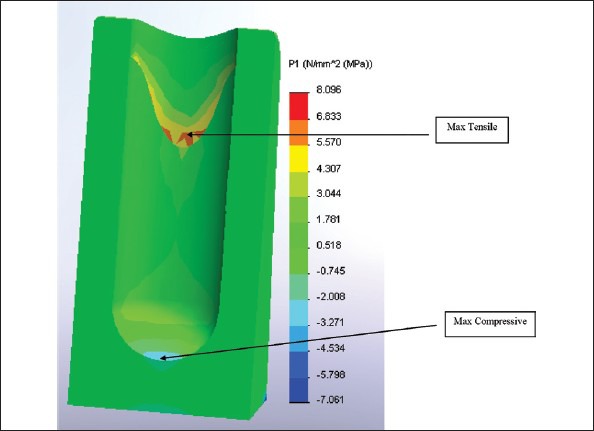
The replacement of missing anterior teeth presents peculiar challenges to the Prosthodontist. Implants are increasingly gaining favour for the same. The morphology of existing bone in the premaxilla often dictates that implants are placed at angles that are difficult to restore with conventional abutments. However, the angulated abutments might transfer unfavourable forces to the implant or bone, thereby compromising the prognosis of the treatment. Because, it is difficult to assess the generated forces clinically, a finite element analysis was chosen for the present study as it is useful tool in estimating stress distribution in the contact area of the implant with the bone.
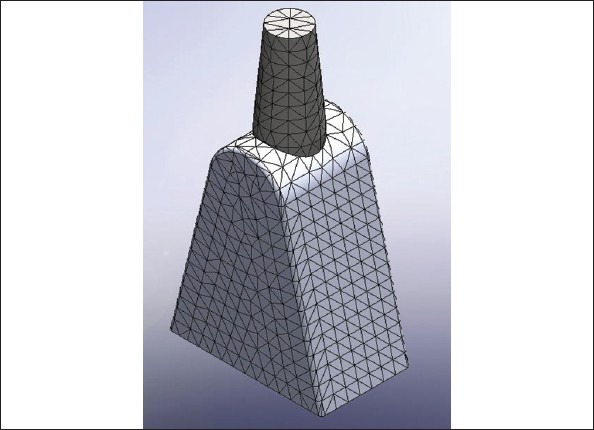
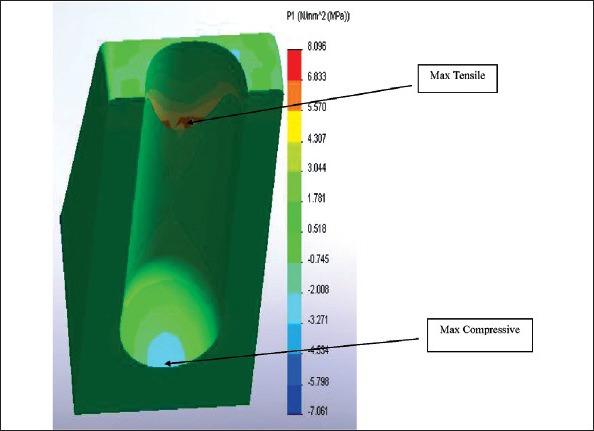
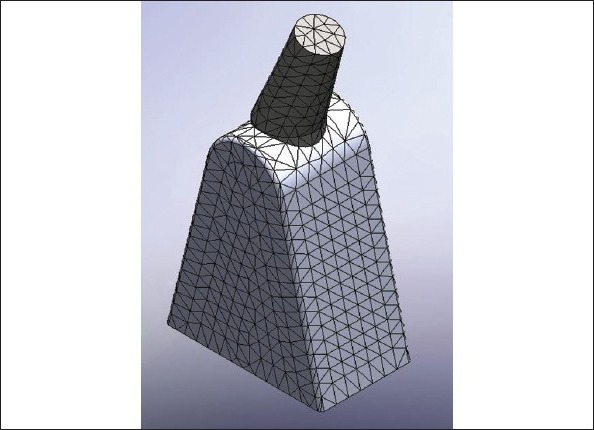
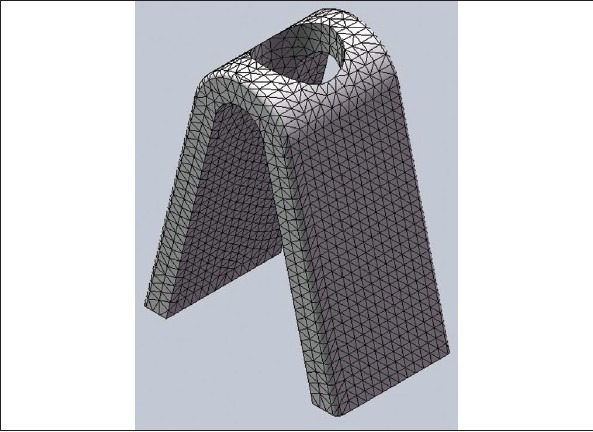
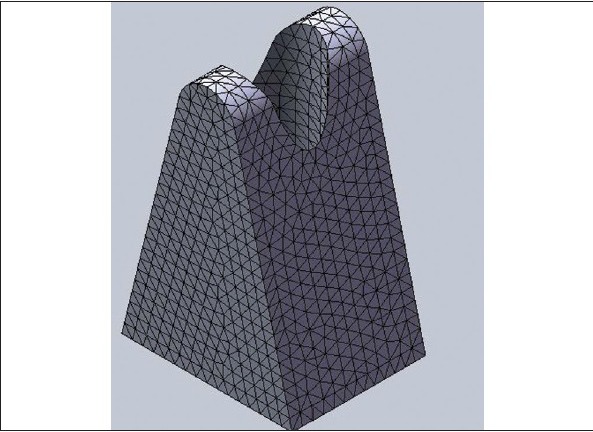
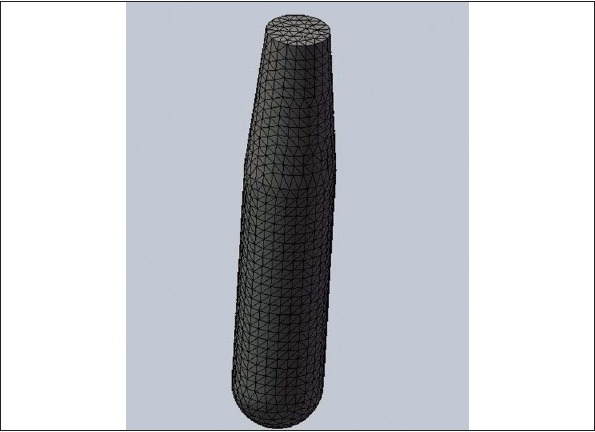
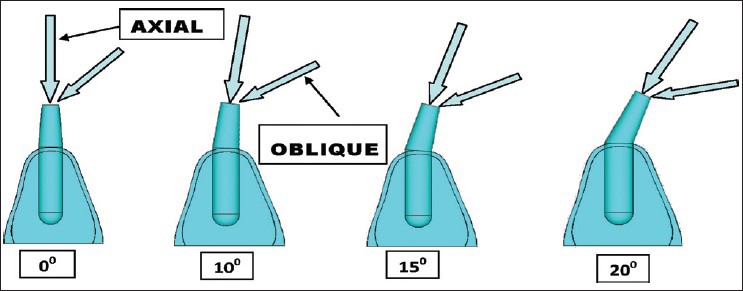
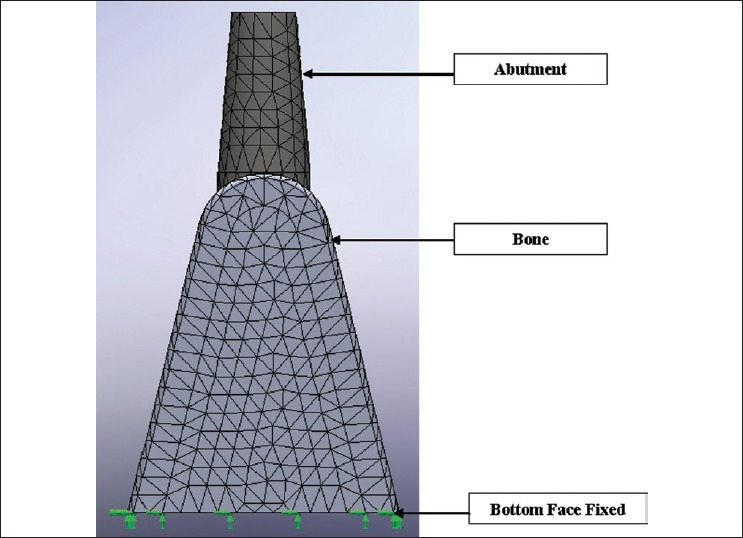
In this study, the frontal region of the maxilla was modelled with a cortical layer 1.5 mm thick containing an inner cancellous core. The implant was cylindrical, round ended, with length 13 mm and diameter 4.1 mm. The abutment was modelled as 7 mm in height with a 5 degree occlusal taper. The different abutment angulations used were 0°, 10°, 15° and 20°. The amount of loads used were 100, 125, 150, 175 and 200 N axially, and 50 N in oblique direction, to approximate the kind of loads seen in clinical situations.
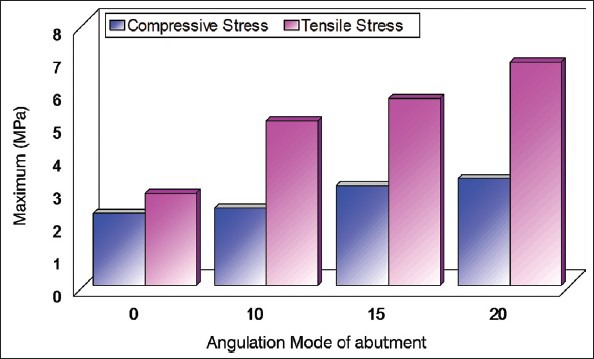
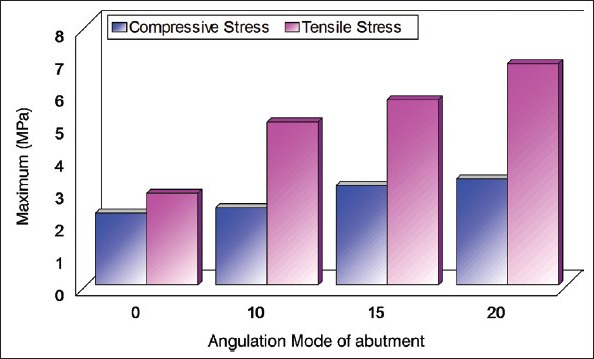
It was seen that, as the abutment angulation changes from 0° to 20° both the compressive as well as tensile stresses increased; but, it is within the tolerance limit of the bone.
It seems reasonably safe to use angled abutments in anterior implant supported prostheses, in the maxillary arch.
前牙缺失的修复给口腔修复医生带来了特殊的挑战。种植体在这方面越来越受到青睐。上颌前部现有骨的形态通常决定了种植体需以难以用传统基台修复的角度植入。然而,成角基台可能会将不利的力传递至种植体或骨,从而影响治疗预后。由于临床上难以评估所产生的力,本研究选择了有限元分析,因为它是估计种植体与骨接触区域应力分布的有用工具。
在本研究中,上颌前部区域建模为包含内部松质骨核心的1.5毫米厚皮质层。种植体为圆柱形,圆头,长度13毫米,直径4.1毫米。基台建模为高度7毫米,咬合锥度为5度。使用的不同基台角度为0°、10°、15°和20°。轴向使用的载荷量为100、125、150、175和200牛,斜向为50牛,以近似临床情况中所见的载荷类型。
可以看出,随着基台角度从0°变为20°,压应力和拉应力均增加;但仍在骨的耐受极限范围内。
在上颌牙弓中,在前牙种植支持的修复体中使用成角基台似乎相当安全。