van den Bekerom Michel P J, Geervliet Pieter C, Somford Matthijs P, van den Borne Maaike P J, Boer Ronald
Department of Orthopaedic Surgery, OLVG, Amsterdam, Netherlands.
Int J Shoulder Surg. 2013 Jul;7(3):110-5. doi: 10.4103/0973-6042.118915.
The optimal surgical treatment of end-stage primary glenohumeral osteoarthritis remains controversial. The objective of this article is to systematically review the current available literature to formulate evidence-based guidelines for treatment of this pathology with an arthroplasty.
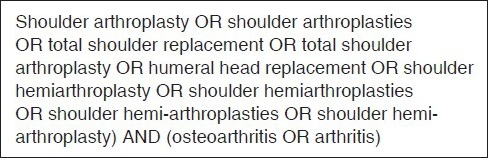
A systematic literature search was performed to identify all articles from 1990 onward that presented data concerning treatment of glenohumeral arthritis with total shoulder arthroplasty (TSA) or head arthroplasty (HA) with a minimal follow-up of 7 years. The most relevant electronic databases were searched.
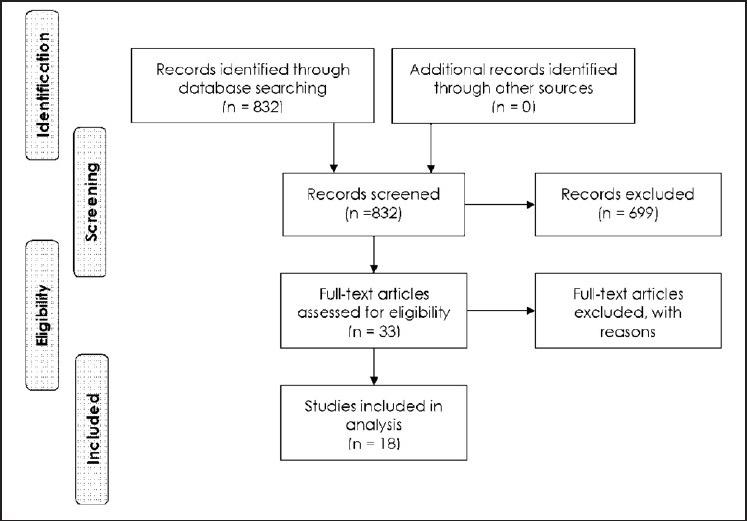
After applying the inclusion and exclusion criteria, we identified 18 studies (of the initial 832 hits). The search included a total of 1,958 patients (HA: 316 and TSA: 1,642) with 2,111 shoulders (HA: 328 + TSA: 1,783). The revision rate for any reason in the HA group (13%) was higher than in the TSA group (7%) (P < 0.001). There was a trend of a higher complication rate (of any kind) in the TSA group (12%) when compared with the HA group (8%) (P = 0.065). The weighted mean improvement in anteflexion, exorotation and abduction were respectively 33°, 15° and 31° in the HA group and were respectively 56°, 21° and 48° in the TSA group. Mean decrease in pain scores was 4.2 in the HA and 5.5 in the TSA group.
Finally, we conclude that TSA results in less need for revision surgery, but has a trend to result in more complications. The conclusions of this review should be interpreted with caution as only Level IV studies could be included.
IV.
终末期原发性盂肱关节骨关节炎的最佳手术治疗方法仍存在争议。本文的目的是系统回顾当前可得文献,以制定基于证据的关节成形术治疗该疾病的指南。
进行系统的文献检索,以识别1990年以后发表的所有有关全肩关节置换术(TSA)或肱骨头置换术(HA)治疗盂肱关节关节炎的数据,且随访时间至少为7年。检索了最相关的电子数据库。
应用纳入和排除标准后,我们从最初的832条记录中识别出18项研究。该检索共纳入1958例患者(HA:316例,TSA:1642例),共2111个肩关节(HA:328个+TSA:1783个)。HA组因任何原因的翻修率(13%)高于TSA组(7%)(P<0.001)。与HA组(8%)相比,TSA组(12%)有任何类型并发症发生率更高的趋势(P=0.065)。HA组前屈、外旋和外展的加权平均改善分别为33°、15°和31°,TSA组分别为56°、21°和48°。HA组疼痛评分平均降低4.2,TSA组为5.5。
最后,我们得出结论,TSA导致翻修手术的需求较少,但有导致更多并发症的趋势。由于仅纳入了IV级研究,本综述的结论应谨慎解读。
IV级