Blood-Brain Barrier Group, Pennington Biomedical Research Center, 6400 Perkins Road, Baton Rouge, LA 70808, USA.
Fluids Barriers CNS. 2013 Nov 1;10(1):32. doi: 10.1186/2045-8118-10-32.
Fibroblast growth factor (FGF)-19, an endocrine FGF protein mainly produced by the ileum, stimulates metabolic activity and alleviates obesity. FGF19 modulates metabolism after either intravenous or intracerebroventricular injection, and its receptor FGFR4 is present in the hypothalamus. This led to the question whether blood-borne FGF19 crosses the blood-brain barrier (BBB) to exert its metabolic effects.
We determined the pharmacokinetics of FGF19 permeation from blood to brain in comparison with its distribution in peripheral organs. Multiple-time regression analysis after intravenous bolus injection, in-situ brain perfusion, and HPLC assays were performed.
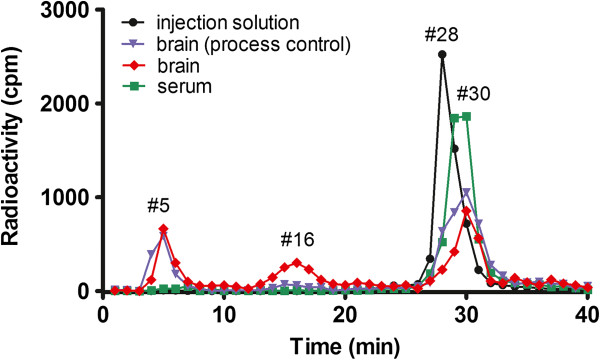
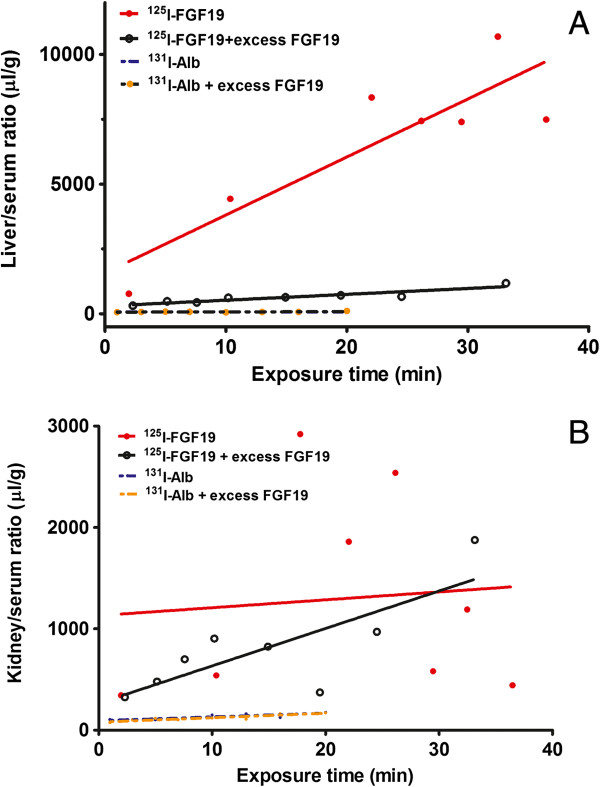
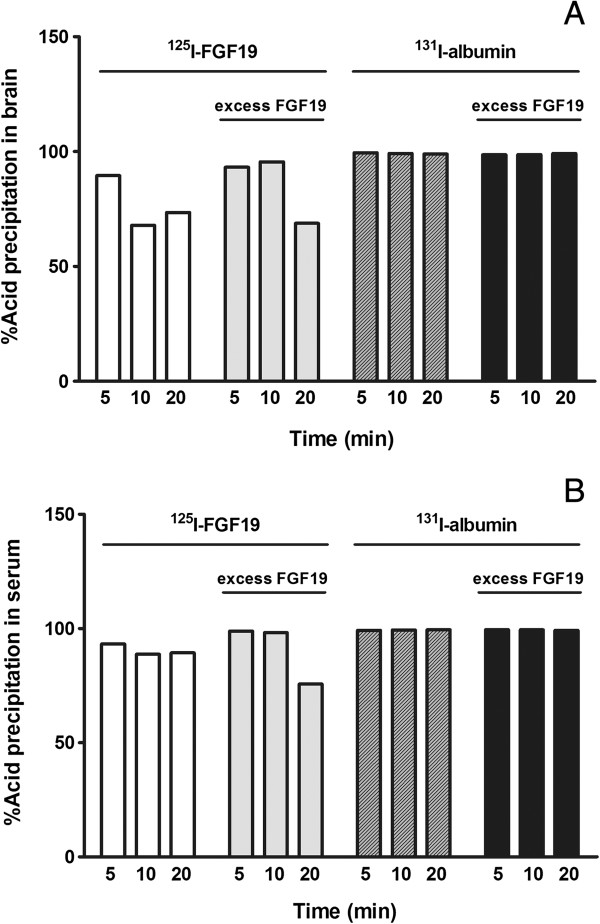
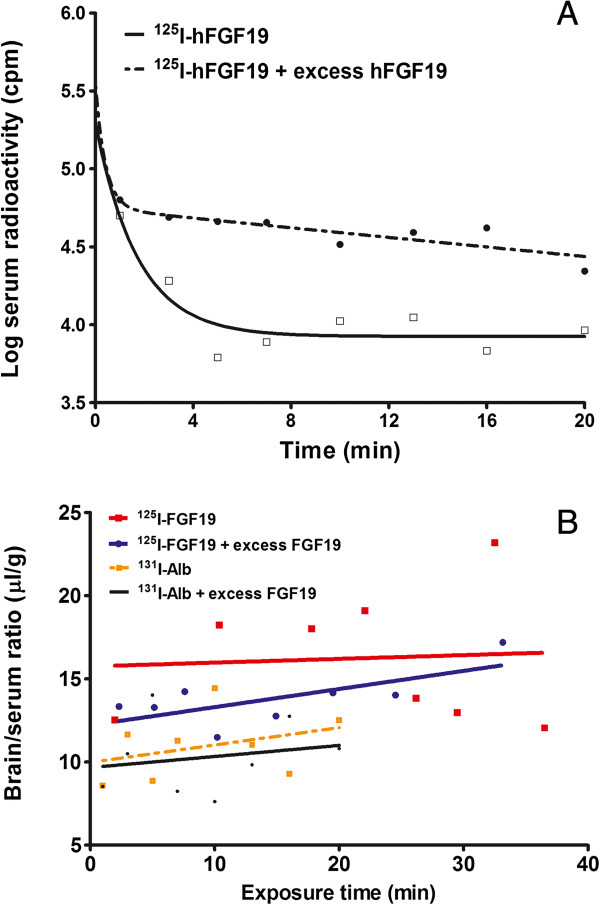
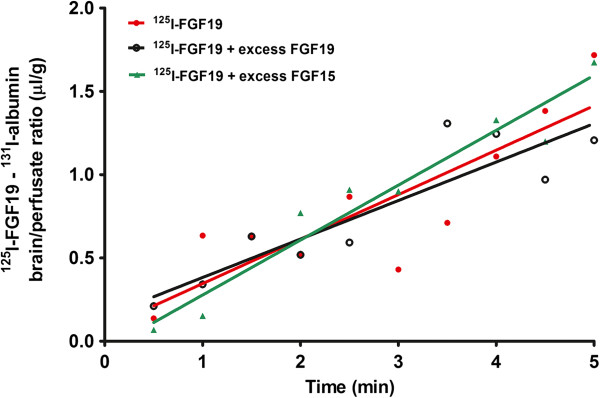
FGF19 was relatively stable in blood and in the brain compartment. Significant influx was seen in the presence of excess unlabeled FGF19 in blood. This coincided with a slower decline of 125I-FGF19 in blood which suggested there was decreased clearance or peripheral tissue uptake. In support of an altered pattern of peripheral processing of 125I-FGF19 by excess unlabeled FGF19, the high influx to liver was significantly attenuated, whereas the minimal renal uptake was linearly accelerated. In the present setting, we did not detect a saturable transport of FGF19 across the BBB, as the entry rate of 125I-FGF19 was not altered by excess unlabeled FGF19 or its mouse homologue FGF15 during in-situ brain perfusion.
FGF19 remained stable in the blood and brain compartments for up to 10 min. Its influx to the brain was non-linear, non-saturable, and affected by its blood concentration and distribution in peripheral organs. Liver showed a robust and specific uptake of FGF19 that could be inhibited by the presence of excess unlabeled FGF19, whereas kidney clearance was dose-dependent.
成纤维细胞生长因子 19(FGF-19)是一种主要由回肠产生的内分泌 FGF 蛋白,可刺激代谢活动并减轻肥胖。FGF19 经静脉或脑室内注射后可调节代谢,其受体 FGFR4 存在于下丘脑。这就引发了一个问题,即是否有血液来源的 FGF19 穿过血脑屏障(BBB)发挥其代谢作用。
我们比较了 FGF19 从血液向大脑渗透的药代动力学与其在周围器官中的分布。通过静脉推注、原位脑灌注和 HPLC 测定进行多次回归分析。
FGF19 在血液和大脑中相对稳定。在血液中存在过量未标记的 FGF19 时,观察到明显的内流。这与 125I-FGF19 在血液中的下降速度较慢相一致,这表明清除率降低或外周组织摄取增加。支持过量未标记的 FGF19 改变了 125I-FGF19 的外周处理模式,肝脏的高摄取量显著减弱,而最小的肾摄取量呈线性加速。在本研究中,我们没有检测到 FGF19 通过 BBB 的可饱和转运,因为在原位脑灌注期间,过量未标记的 FGF19 或其小鼠同源物 FGF15 并未改变 125I-FGF19 的进入速率。
FGF19 在血液和大脑中至少 10 分钟内保持稳定。其向大脑的内流是非线性的、不可饱和的,并且受到其血液浓度和在周围器官中的分布的影响。肝脏对 FGF19 具有强大而特异性的摄取作用,这种摄取作用可被过量未标记的 FGF19 抑制,而肾脏清除率则呈剂量依赖性。