Department of Pharmacology and Clinical Neurosciences, Division of Clinical Pharmacology and Department of Community Medicine and Rehabilitation, Geriatric Medicine, Umeå University, Umeå, Sweden.
BMC Pharmacol Toxicol. 2013 Nov 7;14:56. doi: 10.1186/2050-6511-14-56.
Psychotropic drugs are widely used among old people with dementia but few studies have described long-term treatment in this group of patients. The purpose of this study was to explore the long-term use of psychotropic drugs in old people with dementia.
Data on psychotropic drug use, functioning in the activities of daily living (ADL), cognitive function and behavioral and psychological symptoms were collected at baseline and six months later, using the Multi-Dimensional Dementia Assessment Scale (MDDAS). The data were collected in 2005-2006. Detailed data about the prescribing of psychotropic drugs were collected from prescription records. This study was conducted in 40 specialized care units in northern Sweden, with a study population of 278 people with dementia.
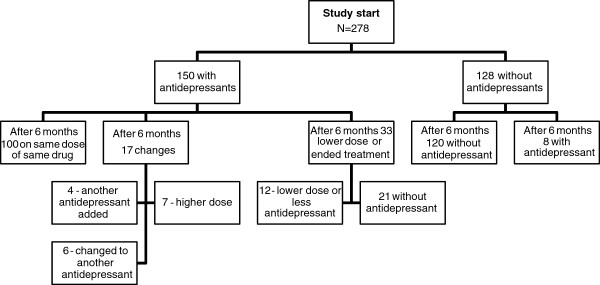
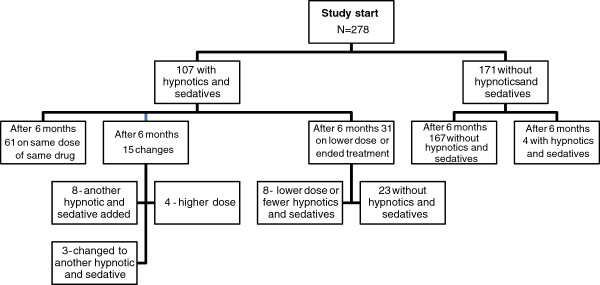
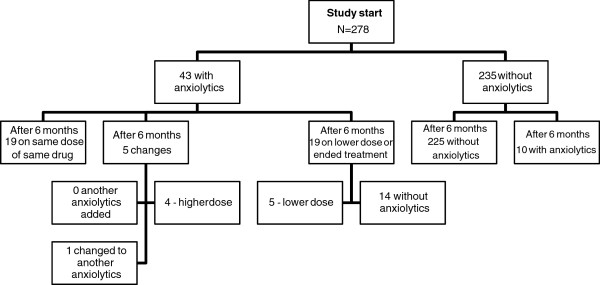
At the start of the study, 229 of the participants (82%) were prescribed at least one psychotropic drug; 150 (54%) used antidepressants, 43 (16%) used anxiolytics, 107 (38%) used hypnotics and sedatives, and 111 (40%) used antipsychotics. Among the baseline users of antidepressants, anxiolytics, hypnotics and sedatives and antipsychotics, 67%, 44%, 57% and 57% respectively, still used the same dose of the same psychotropic drug after six months. Associations were found between behavioral and psychological symptoms and different psychotropic drugs.
Psychotropic drug use was high among people with dementia living in specialized care units and in many cases the drugs were used for extended periods. It is very important to monitor the effects and adverse effects of the prescribed drug in this frail group of people.
精神药物在老年痴呆症患者中广泛使用,但很少有研究描述过这组患者的长期治疗情况。本研究旨在探讨老年痴呆症患者中长期使用精神药物的情况。
在 2005-2006 年期间,使用多维痴呆评估量表(MDDAS)收集了精神药物使用、日常生活活动(ADL)功能、认知功能以及行为和心理症状方面的数据,数据在基线和 6 个月后进行收集。本研究在瑞典北部的 40 个专门护理单位进行,研究对象为 278 名痴呆症患者。详细的精神药物处方信息从处方记录中收集。
在研究开始时,229 名参与者(82%)至少开了一种精神药物处方;150 名(54%)使用抗抑郁药,43 名(16%)使用安定药,107 名(38%)使用催眠镇静药,111 名(40%)使用抗精神病药。在基线使用抗抑郁药、安定药、催眠镇静药和抗精神病药的患者中,分别有 67%、44%、57%和 57%的患者在 6 个月后仍使用相同剂量的相同精神药物。行为和心理症状与不同的精神药物之间存在关联。
在专门护理单位居住的痴呆症患者中,精神药物的使用非常高,而且在许多情况下,这些药物的使用时间很长。在这个脆弱的患者群体中,监测处方药物的效果和不良反应非常重要。