Kittan Nicolai A, Allen Ronald M, Dhaliwal Abhay, Cavassani Karen A, Schaller Matthew, Gallagher Katherine A, Carson William F, Mukherjee Sumanta, Grembecka Jolanta, Cierpicki Tomasz, Jarai Gabor, Westwick John, Kunkel Steven L, Hogaboam Cory M
Department of Pathology, University of Michigan Medical School, Ann Arbor, Michigan, United States of America.
PLoS One. 2013 Oct 21;8(10):e78045. doi: 10.1371/journal.pone.0078045. eCollection 2013.
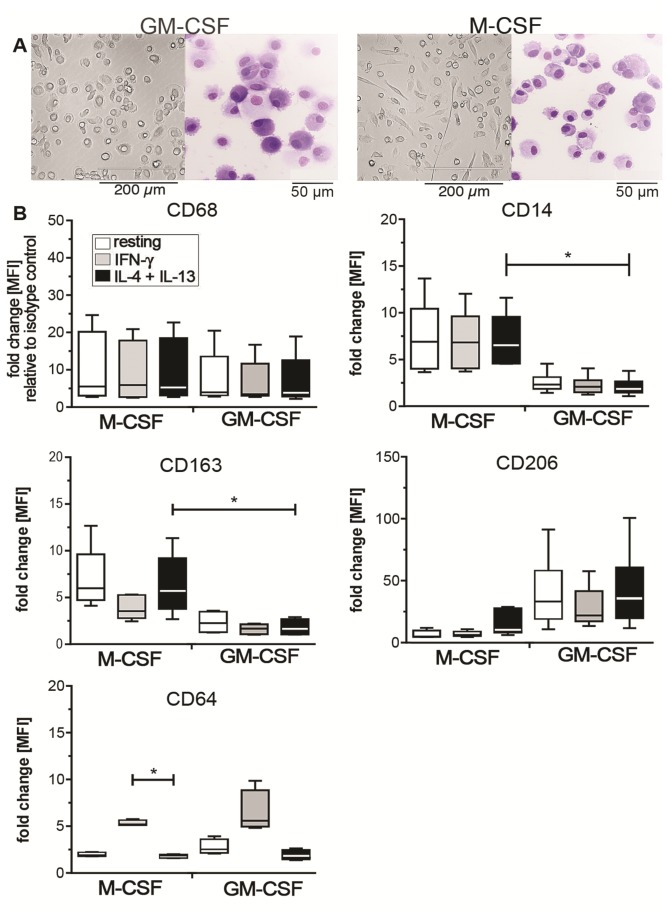
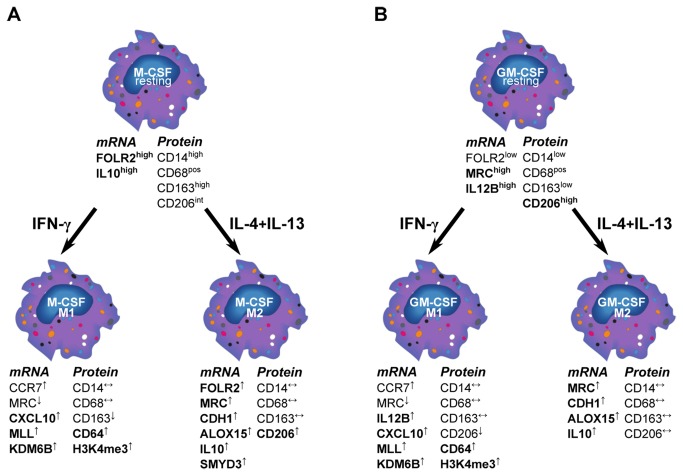
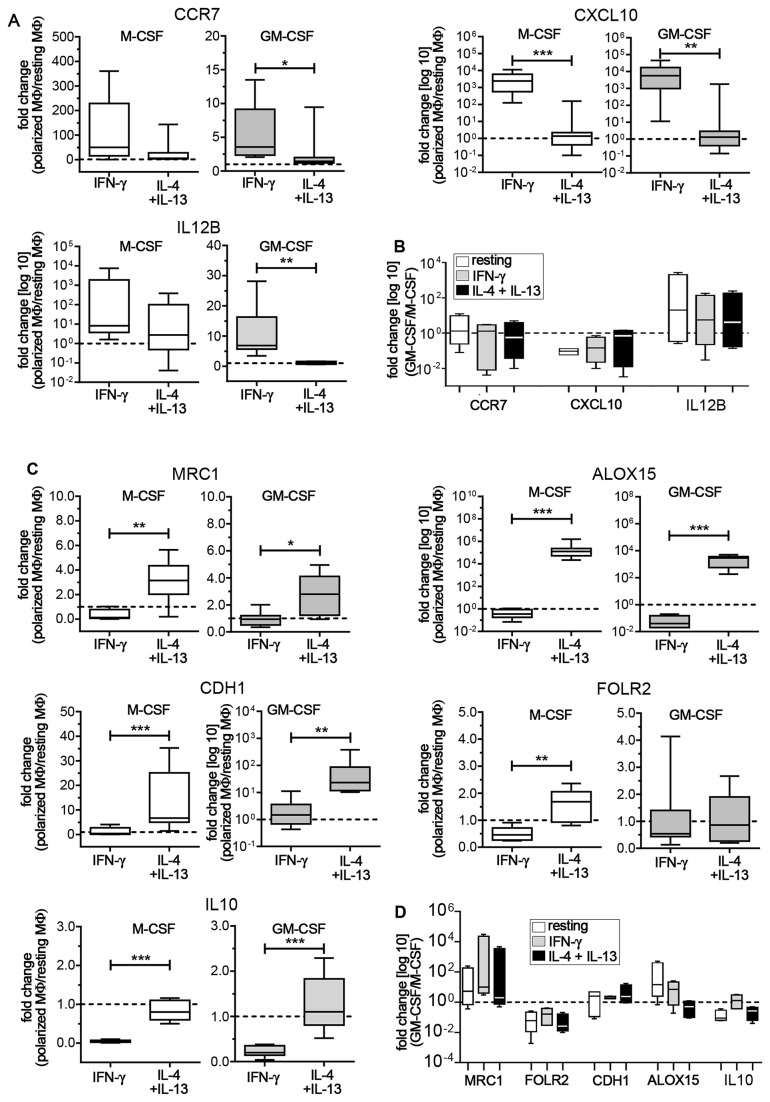
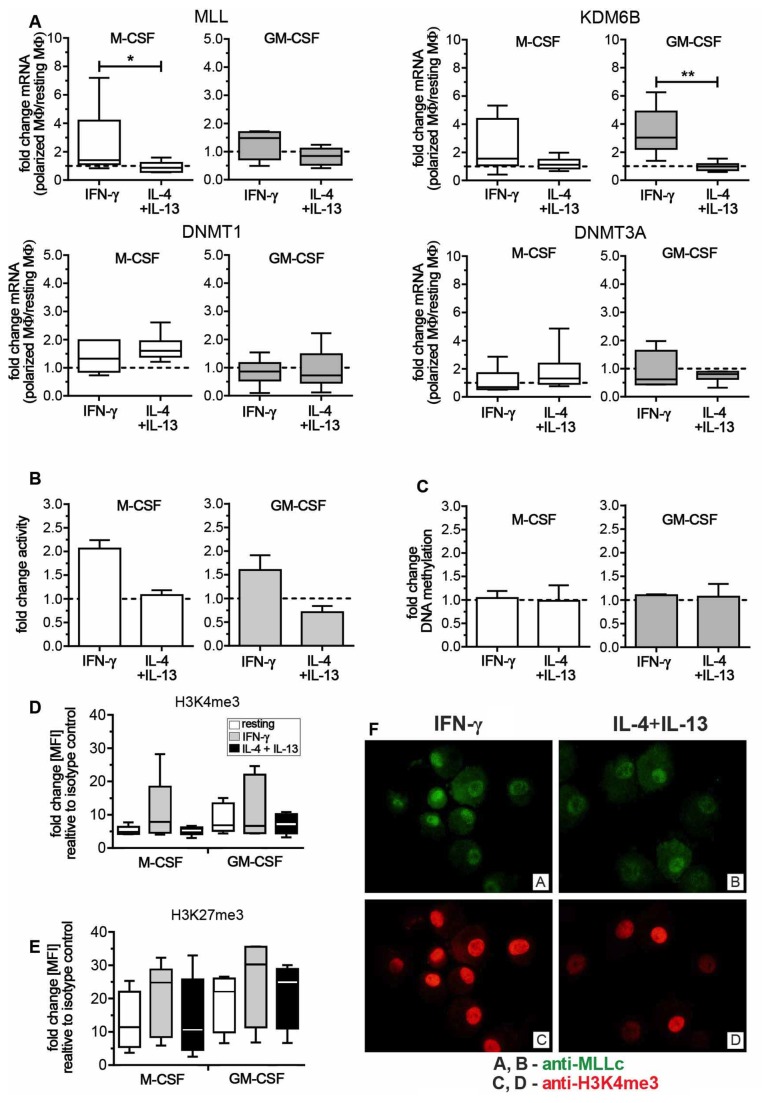
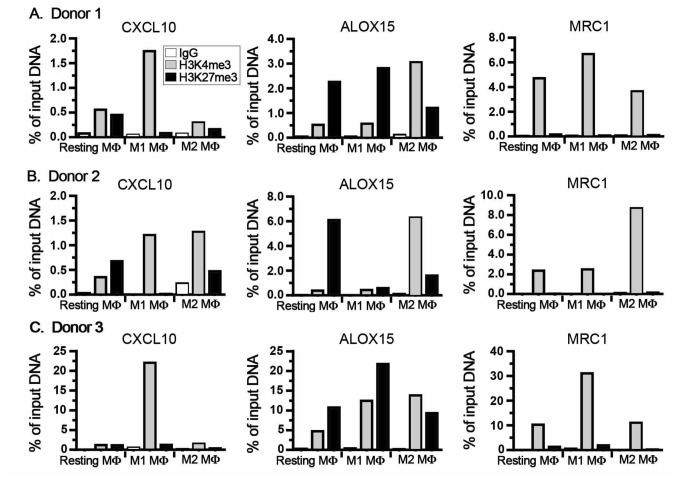
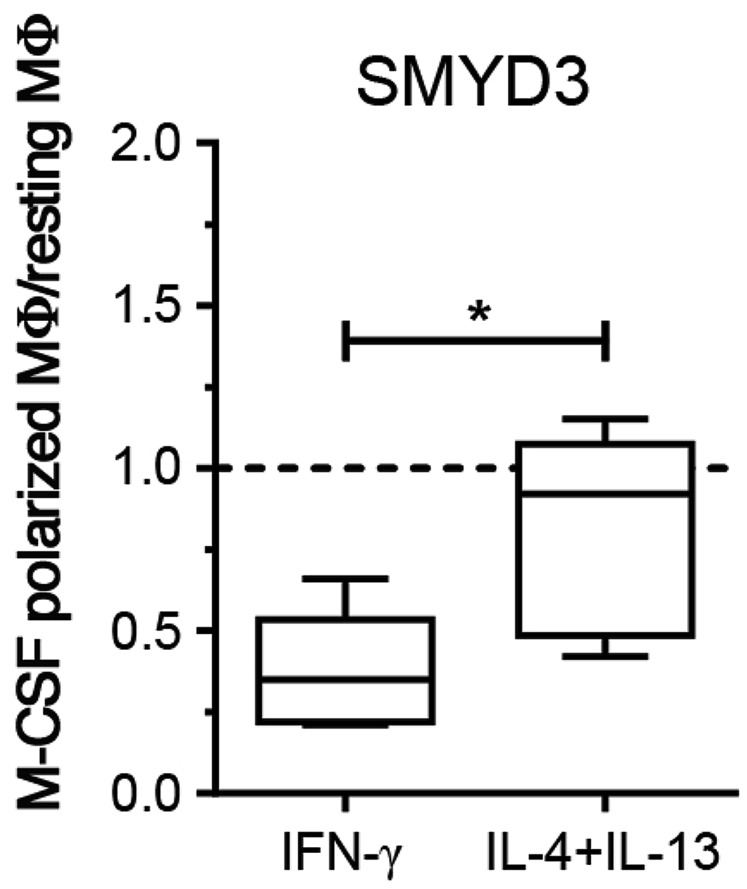
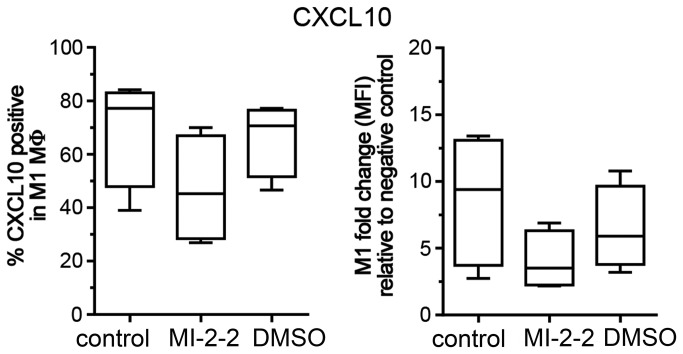
Macrophages (MΦ) play an essential role in innate immune responses and can either display a pro-inflammatory, classically activated phenotype (M1) or undergo an alternative activation program (M2) promoting immune regulation. M-CSF is used to differentiate monocytes into MΦ and IFN-γ or IL-4+IL-13 to further polarize these cells towards M1 or M2, respectively. Recently, differentiation using only GM-CSF or M-CSF has been described to induce a M1- or M2-like phenotype, respectively. In this study, we combined both approaches by differentiating human MΦ in GM-CSF or M-CSF followed by polarization with either IFN-γ or IL-4+IL-13. We describe the phenotypic differences between CD14(hi) CD163(hi) CD206(int) FOLR2-expressing M-CSF MΦ and CD14(lo) CD163(lo) CD206(hi) GM-CSF MΦ but show that both macrophage populations reacted similarly to further polarization with IFN-γ or IL-4+IL-13 with up- and down-regulation of common M1 and M2 marker genes. We also show that high expression of the mannose receptor (CD206), a marker of alternative activation, is a distinct feature of GM-CSF MΦ. Changes of the chromatin structure carried out by chromatin modification enzymes (CME) have been shown to regulate myeloid differentiation. We analyzed the expression patterns of CME during MΦ polarization and show that M1 up-regulate the histone methyltransferase MLL and demethylase KDM6B, while resting and M2 MΦ were characterized by DNA methyltransferases and histone deacetylases. We demonstrate that MLL regulates CXCL10 expression and that this effect could be abrogated using a MLL-Menin inhibitor. Taken together we describe the distinct phenotypic differences of GM-CSF or M-CSF MΦ and demonstrate that MΦ polarization is regulated by specific epigenetic mechanisms. In addition, we describe a novel role for MLL as marker for classical activation. Our findings provide new insights into MΦ polarization that could be helpful to distinguish MΦ activation states.
巨噬细胞(MΦ)在先天性免疫反应中发挥着重要作用,其可呈现促炎的、经典激活的表型(M1),或经历促进免疫调节的替代性激活程序(M2)。巨噬细胞集落刺激因子(M-CSF)用于将单核细胞分化为MΦ,而干扰素-γ(IFN-γ)或白细胞介素-4(IL-4)加白细胞介素-13(IL-13)则分别用于使这些细胞进一步向M1或M2极化。最近,有研究描述仅使用粒细胞-巨噬细胞集落刺激因子(GM-CSF)或M-CSF进行分化分别可诱导出M1样或M2样表型。在本研究中,我们将两种方法结合起来,先在GM-CSF或M-CSF中分化人MΦ,然后用IFN-γ或IL-4加IL-13进行极化。我们描述了表达CD14(高)CD163(高)CD206(中)FOLR2的M-CSF MΦ与CD14(低)CD163(低)CD206(高)GM-CSF MΦ之间的表型差异,但表明这两种巨噬细胞群体对IFN-γ或IL-4加IL-13的进一步极化反应相似,共同的M1和M2标记基因出现上调和下调。我们还表明,甘露糖受体(CD206)的高表达是GM-CSF MΦ的一个显著特征,甘露糖受体是替代性激活的一个标记。染色质修饰酶(CME)引起的染色质结构变化已被证明可调节髓系分化。我们分析了MΦ极化过程中CME的表达模式,结果表明M1上调组蛋白甲基转移酶MLL和去甲基化酶KDM6B,而静息态和M2 MΦ的特征是DNA甲基转移酶和组蛋白去乙酰化酶。我们证明MLL调节趋化因子CXCL10的表达,并且使用MLL- Menin抑制剂可消除这种作用。综上所述,我们描述了GM-CSF或M-CSF MΦ的明显表型差异,并证明MΦ极化受特定表观遗传机制调控。此外,我们描述了MLL作为经典激活标记的新作用。我们的发现为MΦ极化提供了新的见解,这可能有助于区分MΦ的激活状态。