Hematology and Oncology Division, Medicine Department, New York-Presbyterian Hospital, Meyer Cancer Center, Weill Cornell Medicine, Cornell University, New York, NY.
Blood. 2024 Mar 21;143(12):1101-1111. doi: 10.1182/blood.2023021002.
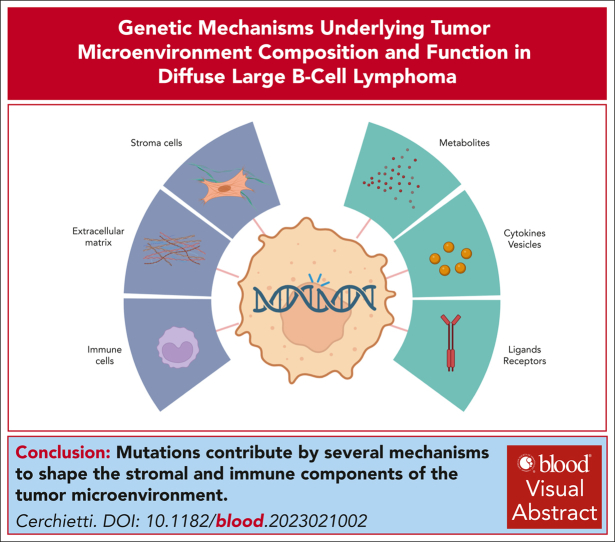
Cells in the tumor microenvironment (TME) of diffuse large B-cell lymphoma (DLBCL) show enormous diversity and plasticity, with functions that can range from tumor inhibitory to tumor supportive. The patient's age, immune status, and DLBCL treatments are factors that contribute to the shaping of this TME, but evidence suggests that genetic factors, arising principally in lymphoma cells themselves, are among the most important. Here, we review the current understanding of the role of these genetic drivers of DLBCL in establishing and modulating the lymphoma microenvironment. A better comprehension of the relationship between lymphoma genetic factors and TME biology should lead to better therapeutic interventions, especially immunotherapies.
弥漫性大 B 细胞淋巴瘤 (DLBCL) 肿瘤微环境 (TME) 中的细胞表现出巨大的多样性和可塑性,其功能可以从肿瘤抑制到肿瘤支持不等。患者的年龄、免疫状态和 DLBCL 治疗是导致这种 TME 形成的因素,但有证据表明,遗传因素主要来自淋巴瘤细胞本身,是最重要的因素之一。在这里,我们回顾了这些 DLBCL 遗传驱动因素在建立和调节淋巴瘤微环境中的作用的现有认识。更好地理解淋巴瘤遗传因素与 TME 生物学之间的关系,应该会导致更好的治疗干预措施,特别是免疫疗法。