Zhu Daochen, Tanabe Shoko-Hosoi, Yang Chong, Zhang Weimin, Sun Jianzhong
School of Environmental Engineering, Jiangsu University, Zhenjiang, Jiangsu, China ; State Key Laboratory of Applied Microbiology in South China (Ministry-Guangdong Province Jointly Breeding Base), Guangdong Institute of Microbiology, Guangzhou, China.
PLoS One. 2013 Oct 21;8(10):e78501. doi: 10.1371/journal.pone.0078501. eCollection 2013.
Subseafloor sediments accumulate large amounts of organic and inorganic materials that contain a highly diverse microbial ecosystem. The aim of this study was to survey the bacterial community of subseafloor sediments from the South China Sea.
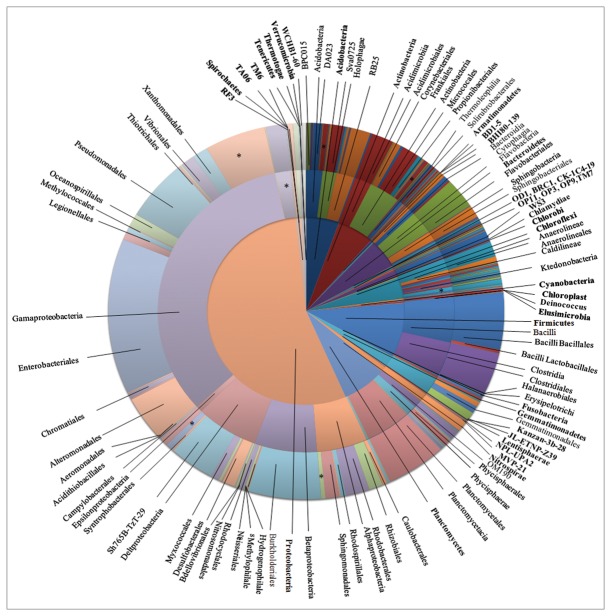
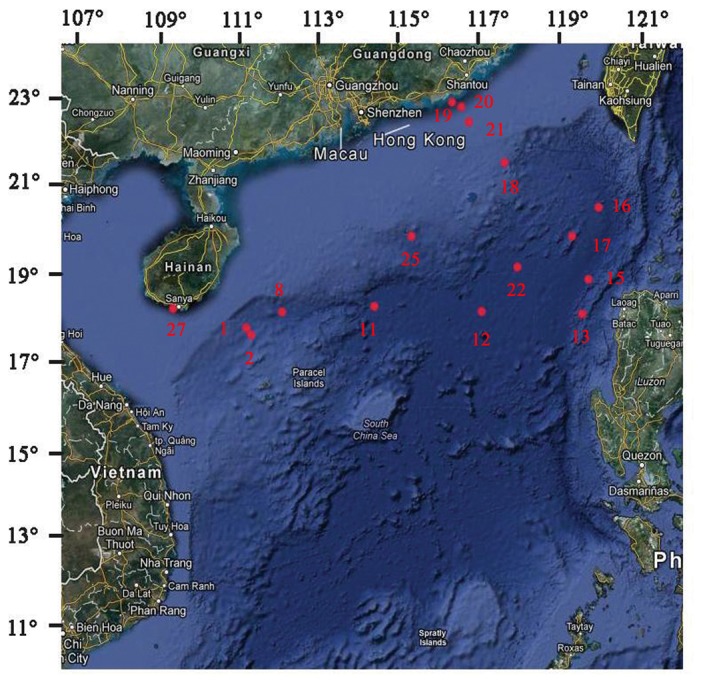
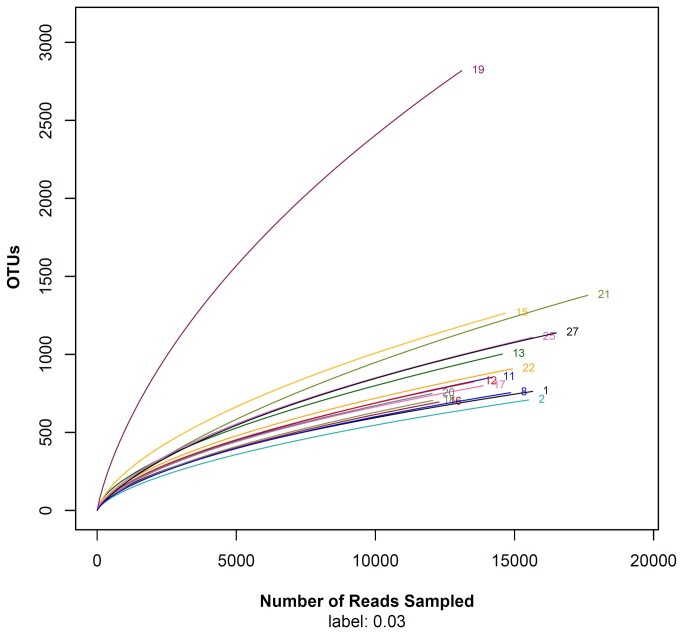
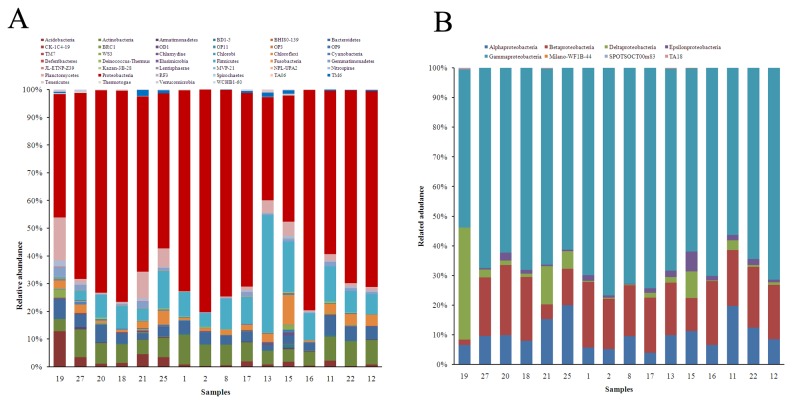
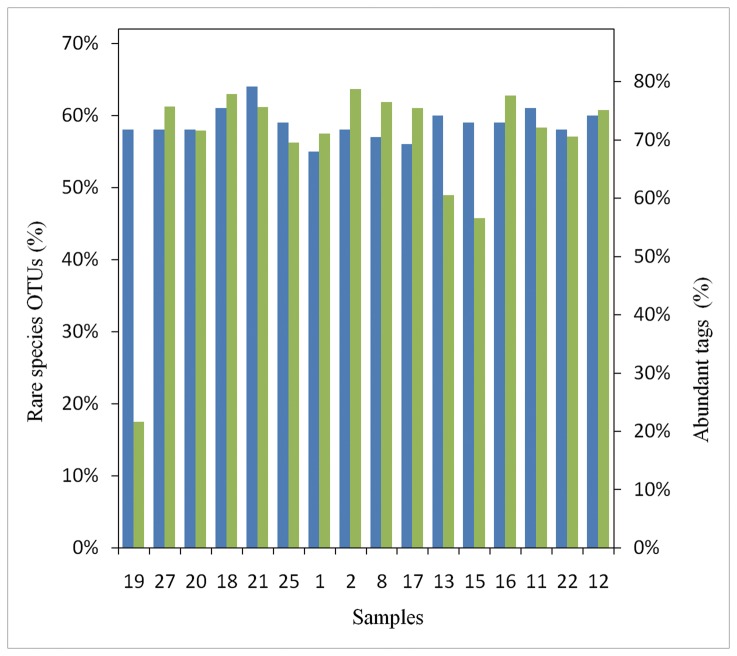
METHODOLOGY/PRINCIPAL FINDINGS: Pyrosequencing of over 265,000 amplicons of the V3 hypervariable region of the 16S ribosomal RNA gene was performed on 16 sediment samples collected from multiple locations in the northern region of the South China Sea from depths ranging from 35 to 4000 m. A total of 9,726 operational taxonomic units (OTUs; between 695 and 2819 unique OTUs per sample) at 97% sequence similarity level were generated. In total, 40 bacterial phyla including 22 formally described phyla and 18 candidate phyla, with Proteobacteria, Firmicutes, Planctomycetes, Actinobacteria and Chloroflexi being most diverse, were identified. The most abundant phylotype, accounting for 42.6% of all sequences, belonged to Gammaproteobacteria, which possessed absolute predominance in the samples analyzed. Among the 18 candidate phyla, 12 were found for the first time in the South China Sea.
This study provided a novel insight into the composition of bacterial communities of the South China Sea subseafloor. Furthermore, abundances and community similarity analysis showed that the compositions of the bacterial communities are very similar at phylum level at different depths from 35-4000 m.
海底以下沉积物积累了大量含有高度多样微生物生态系统的有机和无机物质。本研究的目的是调查南海海底以下沉积物的细菌群落。
方法/主要发现:对从南海北部多个地点采集的16个沉积物样本进行了16S核糖体RNA基因V3高变区超过265,000个扩增子的焦磷酸测序,样本深度范围为35至4000米。在97%序列相似性水平上共产生了9726个操作分类单元(OTU;每个样本有695至2819个独特OTU)。总共鉴定出40个细菌门,包括22个已正式描述的门和18个候选门,其中变形菌门、厚壁菌门、浮霉菌门、放线菌门和绿弯菌门最为多样。最丰富的系统发育型占所有序列的42.6%,属于γ-变形菌纲,在分析的样本中占绝对优势。在18个候选门中,有12个是首次在南海发现。
本研究为南海海底以下细菌群落的组成提供了新的见解。此外,丰度和群落相似性分析表明,在35 - 4000米不同深度处,细菌群落的组成在门水平上非常相似。