Department of Internal Medicine III, University Hospital Bonn, Sigmund-Freud-Strasse 25, Bonn 53127, Germany.
Cancers (Basel). 2011 Sep 20;3(3):3661-75. doi: 10.3390/cancers3033661.
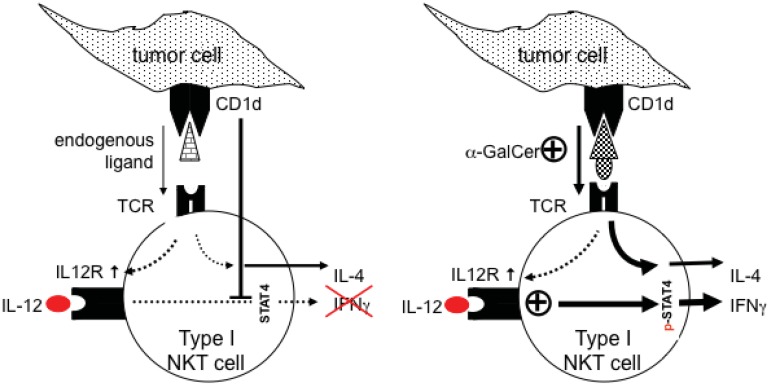
Natural killer T cells are T lymphocytes with unique activation and effector properties. The majority of NKT cells, termed type-I or iNKT cells, recognize lipid antigens presented on MHC-like CD1d molecules. Type-I NKT cells have the capacity to rapidly secrete various cytokines upon activation, thereby regulate immune responses exerts dominant anti-tumor and anti-microbial effector functions. Specific activation of type-I NKT cells in mouse models boosts immunity and prevents metastasis, which has led to a number of phase I-II clinical trials. Since the discovery of NKT cells other subsets with different specificities and effector functions have been described. This article briefly reviews the physiological functions of NKT cell subsets, their implications in cancer and the attempts that have been made to employ NKT cells for immune therapy of cancer.
自然杀伤 T 细胞是具有独特激活和效应特性的 T 淋巴细胞。大多数 NKT 细胞,称为 I 型或 iNKT 细胞,识别 MHC 样 CD1d 分子上呈现的脂质抗原。I 型 NKT 细胞在激活后能够迅速分泌各种细胞因子,从而调节免疫反应,发挥主导的抗肿瘤和抗微生物效应功能。在小鼠模型中特异性激活 I 型 NKT 细胞可增强免疫力并预防转移,这导致了许多 I 期- II 期临床试验。自从 NKT 细胞被发现以来,已经描述了具有不同特异性和效应功能的其他亚群。本文简要综述了 NKT 细胞亚群的生理功能、它们在癌症中的意义以及为利用 NKT 细胞进行癌症免疫治疗而进行的尝试。