Departamento de Biologia Vegetal, Facultat de Biologia, Universitat de Barcelona, Avinguda Diagonal 643, 08028 Barcelona, Spain.
J Exp Bot. 2014 Jan;65(1):287-97. doi: 10.1093/jxb/ert372. Epub 2013 Nov 11.
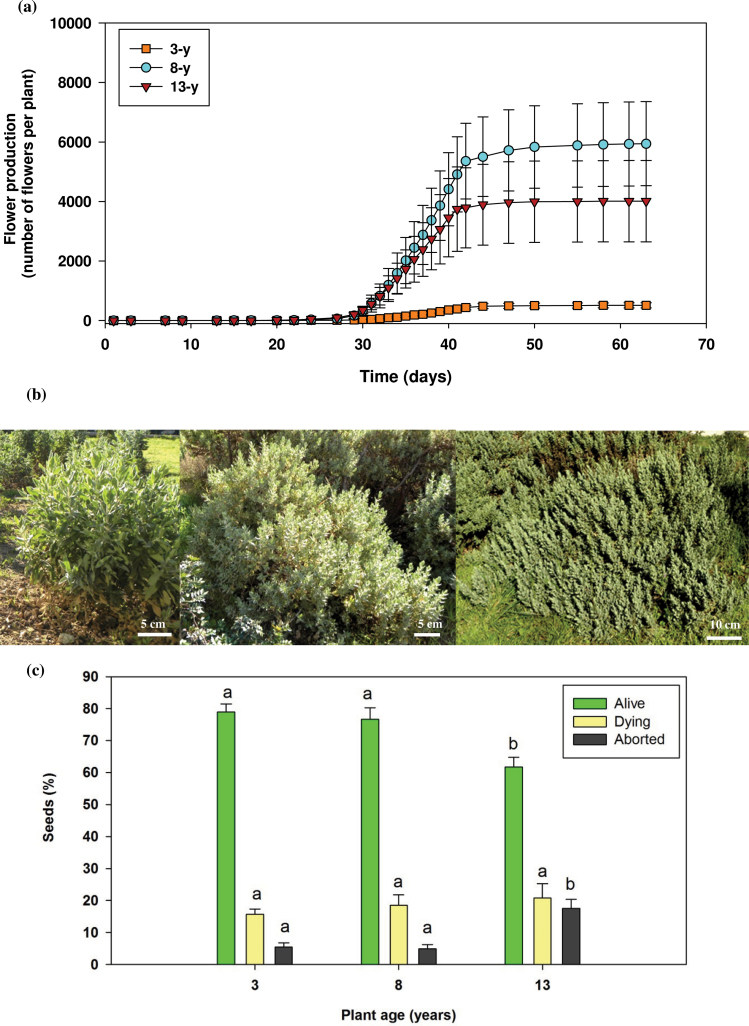
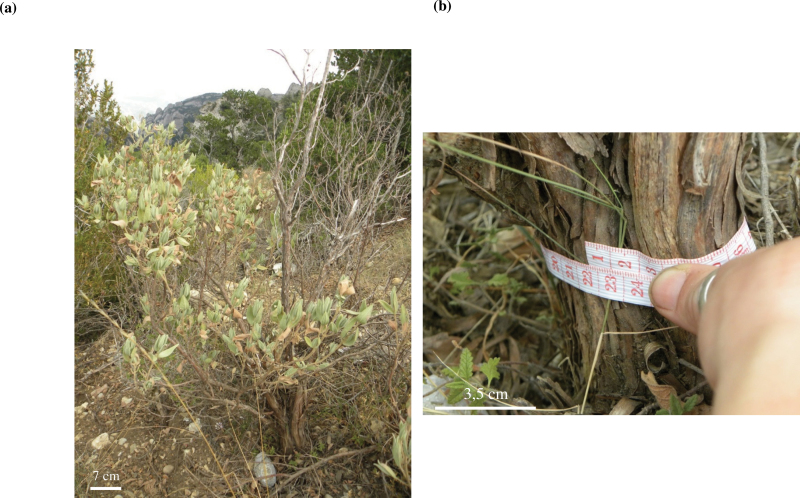
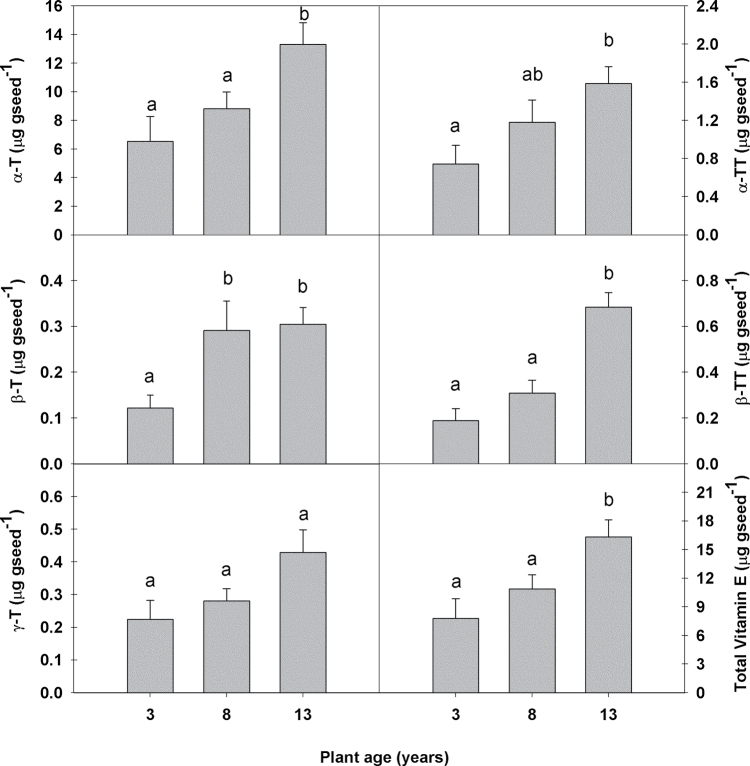
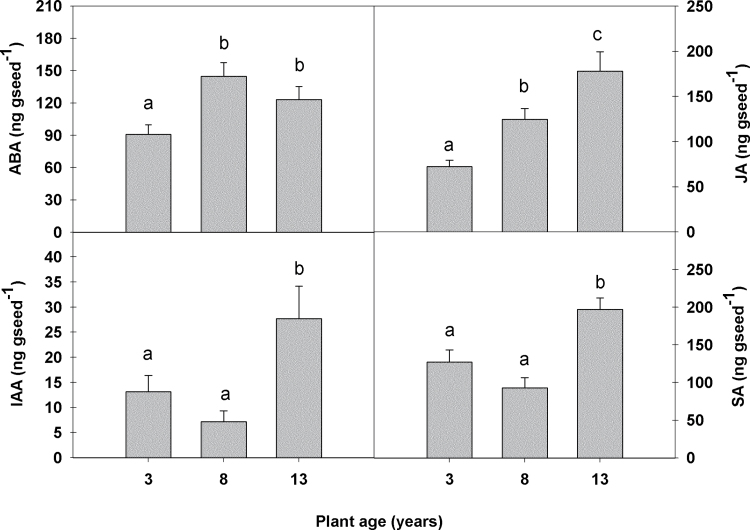
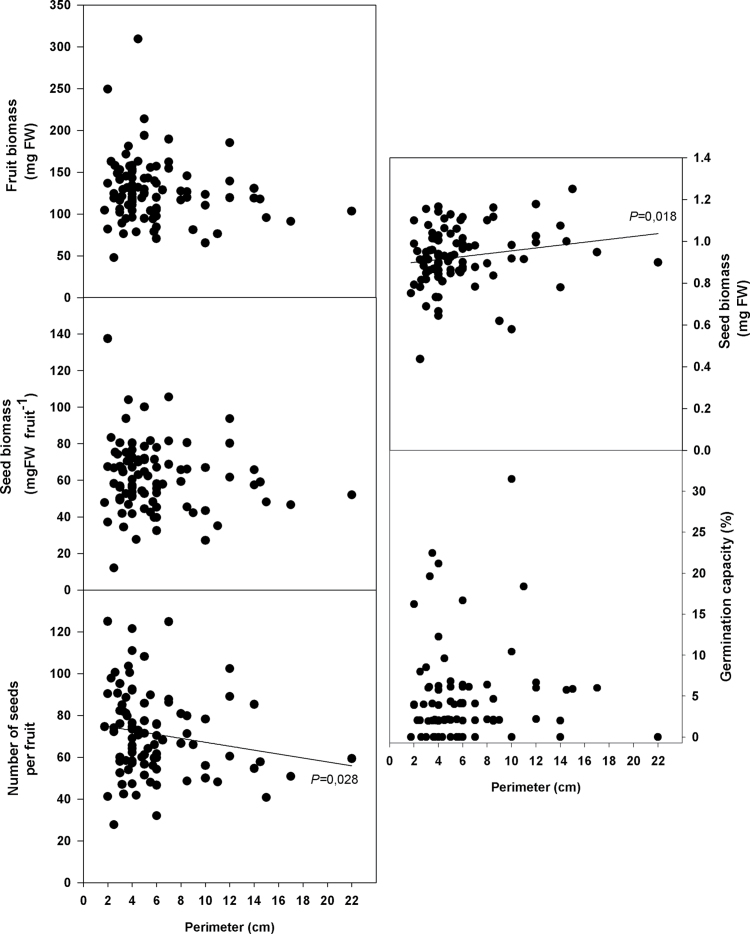
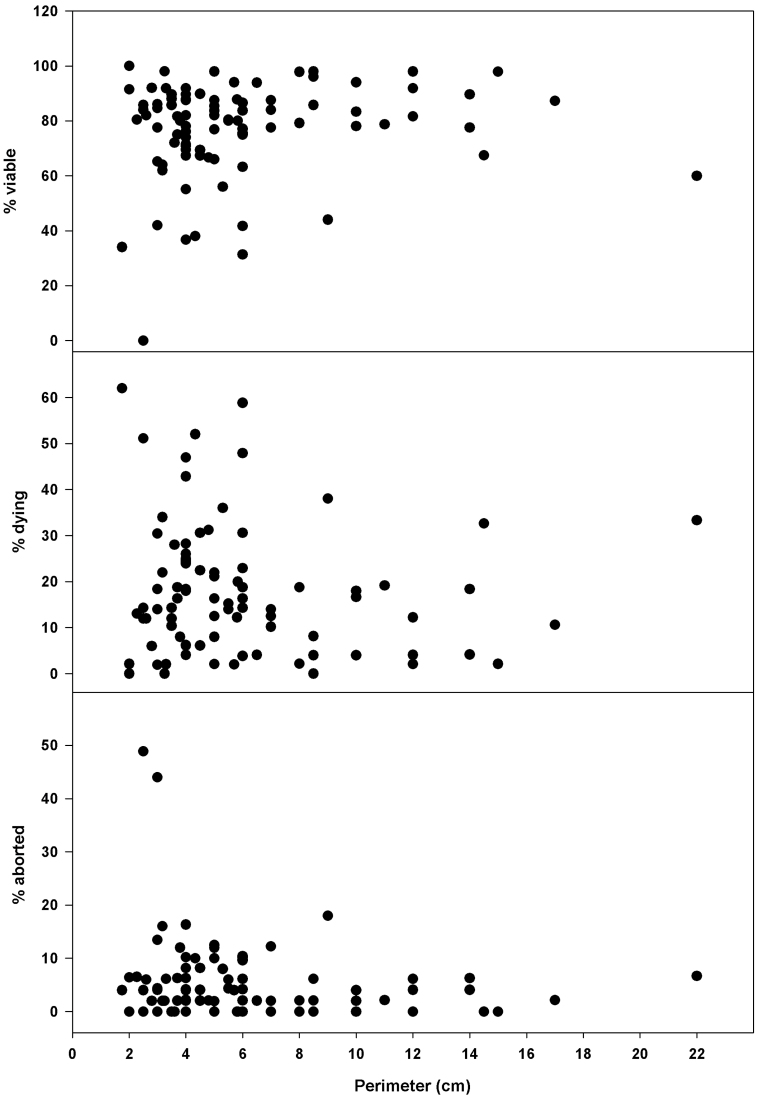
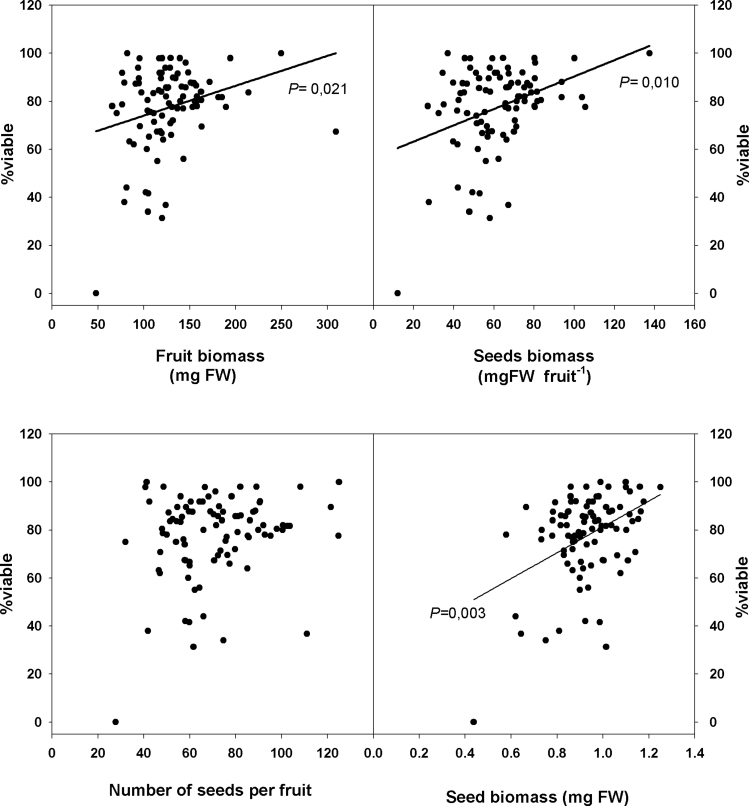
The question of whether or not perennial plants senesce at the organism level remains unresolved. The aim of this study was to unravel whether or not plant age can influence the production and composition of seeds. Flower and seed production was examined in 3-, 8-, and 13-year-old Cistus albidus plants growing in experimental plots corresponding to the F2, F1, and F0 generations of the same population. Furthermore, the phytohormone, fatty acid, and vitamin E content of the seeds was evaluated, and their viability was examined. Whether or not age-related differences in seed quality were observed in a natural population in the Montserrat Mountains (NE Spain) was also tested. The results indicate that under controlled conditions, the oldest plants not only produced fewer flowers, but also had higher rates of embryo abortion in mature seeds. However, germination capacity was not negatively affected by plant ageing. Seeds of the oldest plants contained significantly higher salicylic acid, jasmonic acid, and vitamin E levels compared with those from younger plants. Despite vigour (in terms of plant growth) being severely reduced due to harsh environmental conditions in the natural population, the oldest individuals produced seeds with no decline in viability. Seed biomass was instead positively correlated with seed viability. In conclusion, increased plant size may explain the loss of seed viability in the experimental field, but older smaller individuals in natural populations can escape senescence in terms of seed viability loss.
多年生植物在个体水平上是否会衰老的问题仍未解决。本研究旨在探讨植物年龄是否会影响种子的产生和组成。在实验小区中,对生长于其中的 3 年、8 年和 13 年生的 Cistus albidus 植株的花和种子的产生情况进行了研究,这些小区分别对应于同一群体的 F2、F1 和 F0 世代。此外,还评估了种子的植物激素、脂肪酸和维生素 E 含量,并检测了它们的活力。还测试了在西班牙东北部蒙塞拉特山的一个自然种群中是否存在与年龄相关的种子质量差异。结果表明,在受控条件下,最老的植株不仅产生的花较少,而且成熟种子中的胚胎流产率也较高。然而,种子的发芽能力不受植物老化的负面影响。与年轻植株的种子相比,最老植株的种子中水杨酸、茉莉酸和维生素 E 的含量明显更高。尽管由于自然种群中恶劣的环境条件,个体的活力(以植物生长为衡量标准)严重降低,但最老的个体所产生的种子活力并没有下降。种子生物量与种子活力呈正相关。总之,植物体型的增大可能解释了实验田中种子活力丧失的原因,但在自然种群中较小的较老个体可能会避免因种子活力丧失而衰老。