Abe Masanori, Hiasa Yoichi, Onji Morikazu
Department of Gastroenterology and Metabology, Ehime University Graduate School of Medicine, Shitsukawa, To-on, Ehime 791-0295, Japan.
Clin Dev Immunol. 2013;2013:607073. doi: 10.1155/2013/607073. Epub 2013 Oct 10.
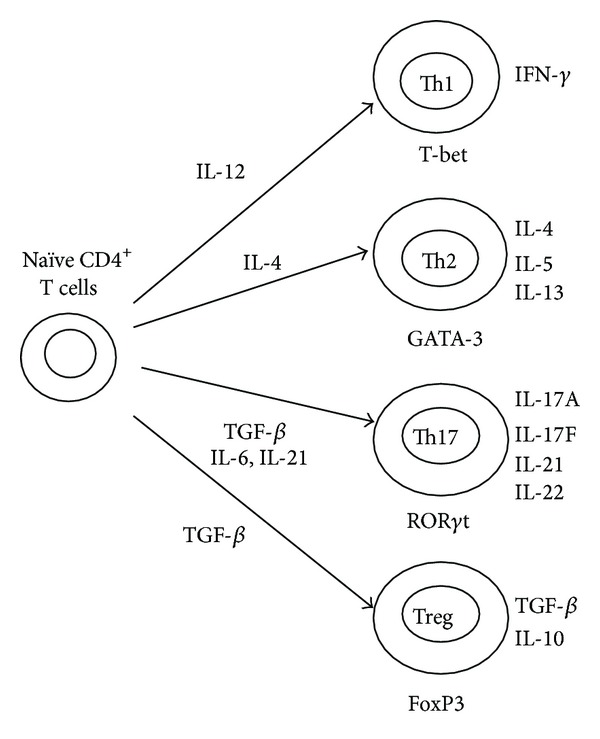
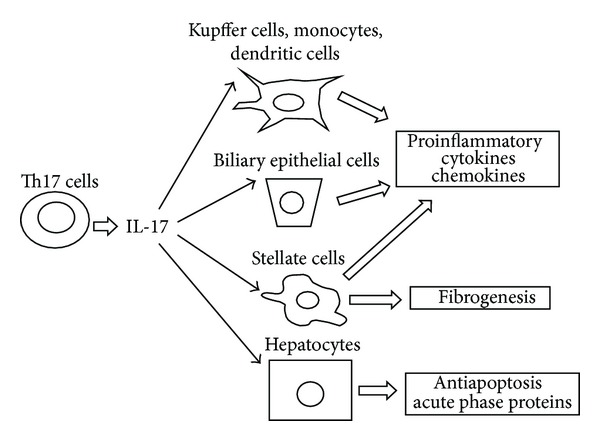
Many autoimmune diseases are driven by self-reactive T helper (Th) cells. A new population of effector CD4(+) T cells characterized by the secretion of interleukin (IL)-17, referred to as Th17 cells, has been demonstrated to be phenotypically, functionally, and developmentally distinct from Th1 and Th2 cells. Because the liver is known to be an important source of transforming growth factor- β and IL-6, which are cytokines that are crucial for Th17 differentiation, it is very likely that Th17 cells contribute to liver inflammation and autoimmunity. In contrast, another distinct subset of T cells, regulatory T cells (Treg), downregulate immune responses and play an important role in maintaining self-tolerance. In addition, there is a reciprocal relationship between Th17 cells and Tregs, in development and effector functions, and the balance between Th17 and Treg cells can affect the outcome of immune responses, particularly in autoimmune diseases. In this review, we will focus on the latest investigative findings related to Th17 cells in autoimmune liver disease.
许多自身免疫性疾病是由自身反应性辅助性T(Th)细胞驱动的。一种以分泌白细胞介素(IL)-17为特征的效应性CD4(+) T细胞新群体,即Th17细胞,已被证明在表型、功能和发育上与Th1细胞和Th2细胞不同。由于已知肝脏是转化生长因子-β和IL-6的重要来源,而这两种细胞因子对Th17细胞分化至关重要,因此Th17细胞很可能参与肝脏炎症和自身免疫。相反,另一个独特的T细胞亚群,即调节性T细胞(Treg),可下调免疫反应并在维持自身耐受性方面发挥重要作用。此外,Th17细胞与Treg细胞在发育和效应功能方面存在相互关系,Th17细胞与Treg细胞之间的平衡可影响免疫反应的结果,尤其是在自身免疫性疾病中。在本综述中,我们将重点关注自身免疫性肝病中与Th17细胞相关的最新研究发现。