Instituto de Investigación Interuniversitario en Bioingeniería y Tecnología Orientada al Ser Humano (I3BH), Universitat Politècnica de València, Valencia, Valencia, Spain.
PLoS One. 2013 Nov 4;8(11):e78328. doi: 10.1371/journal.pone.0078328. eCollection 2013.
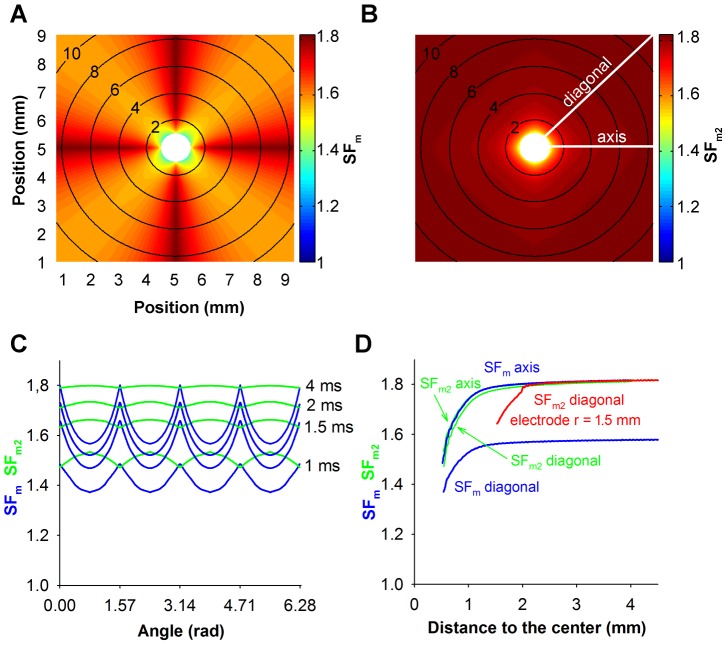
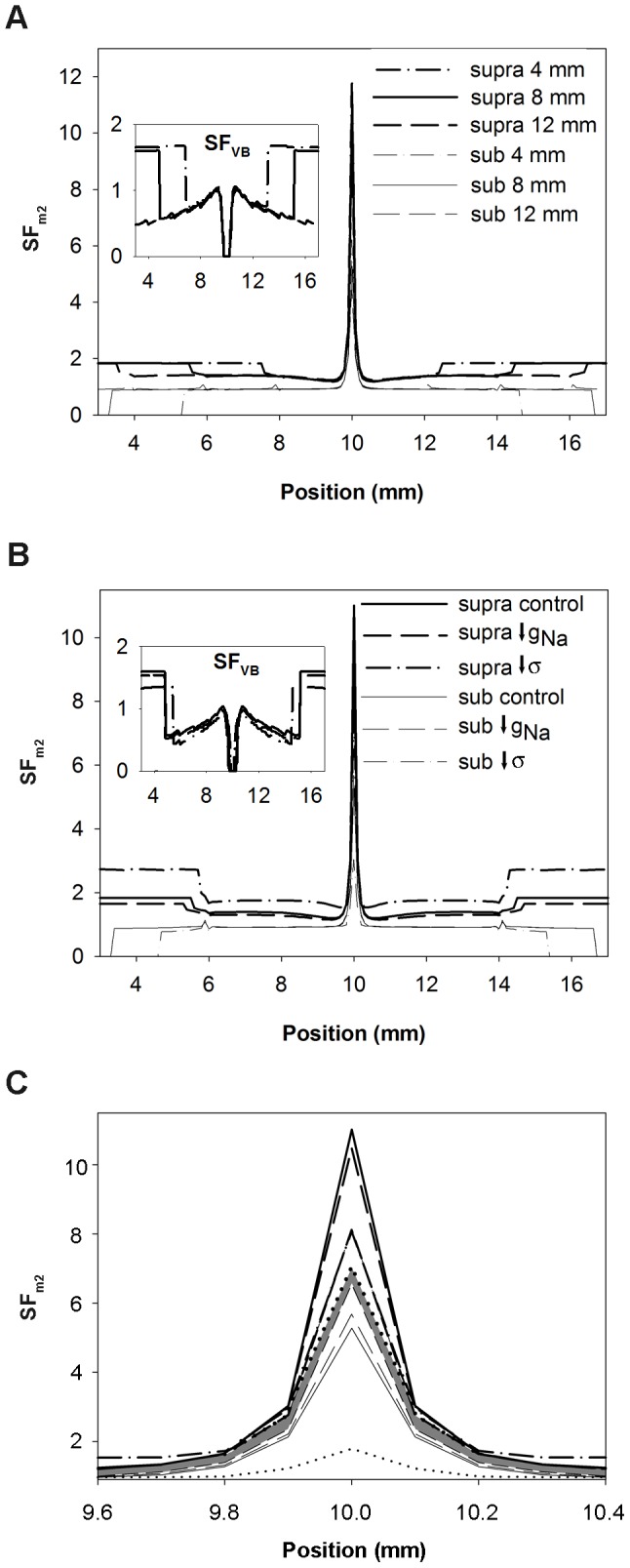
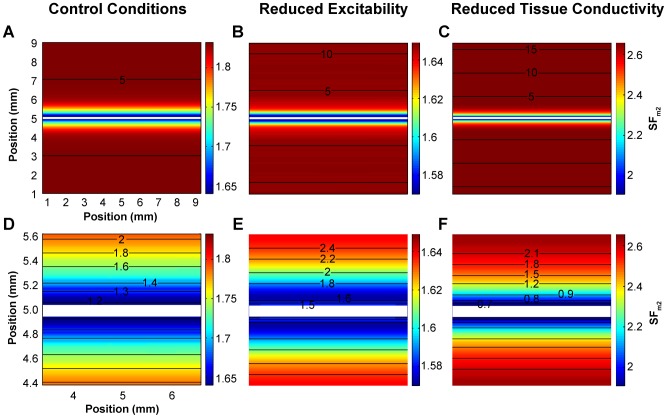
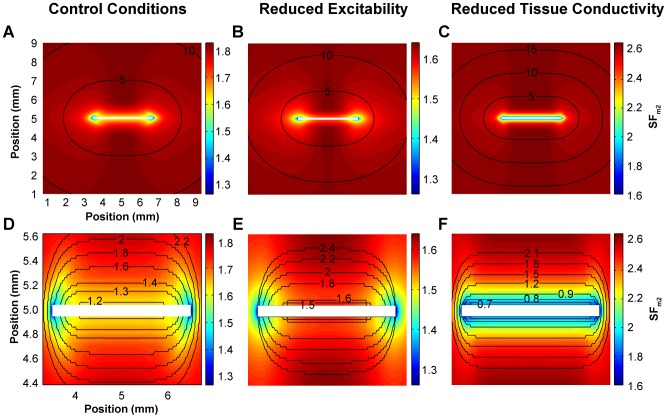
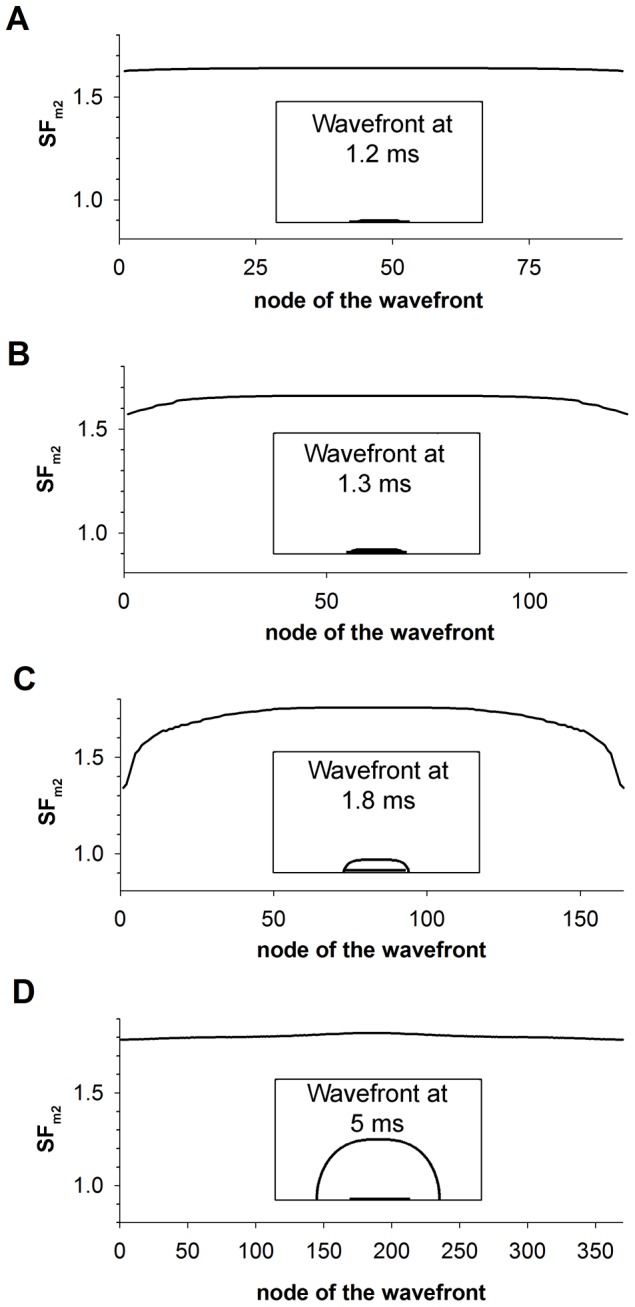
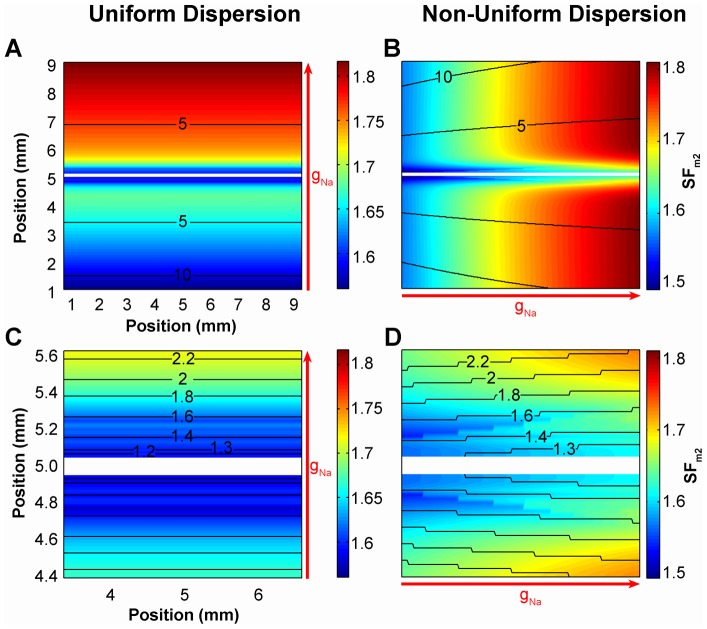
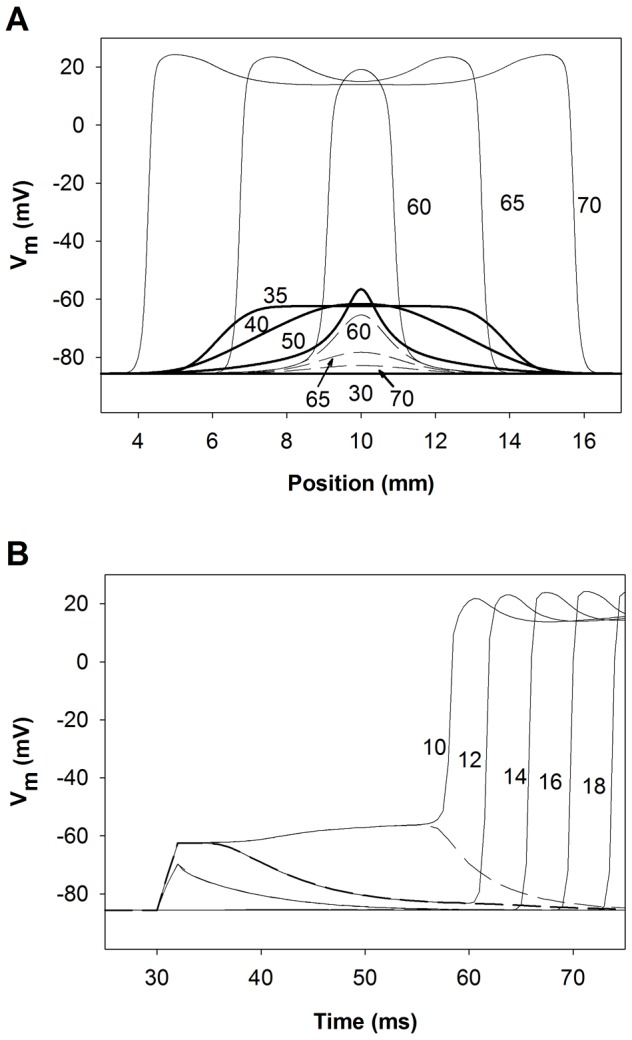
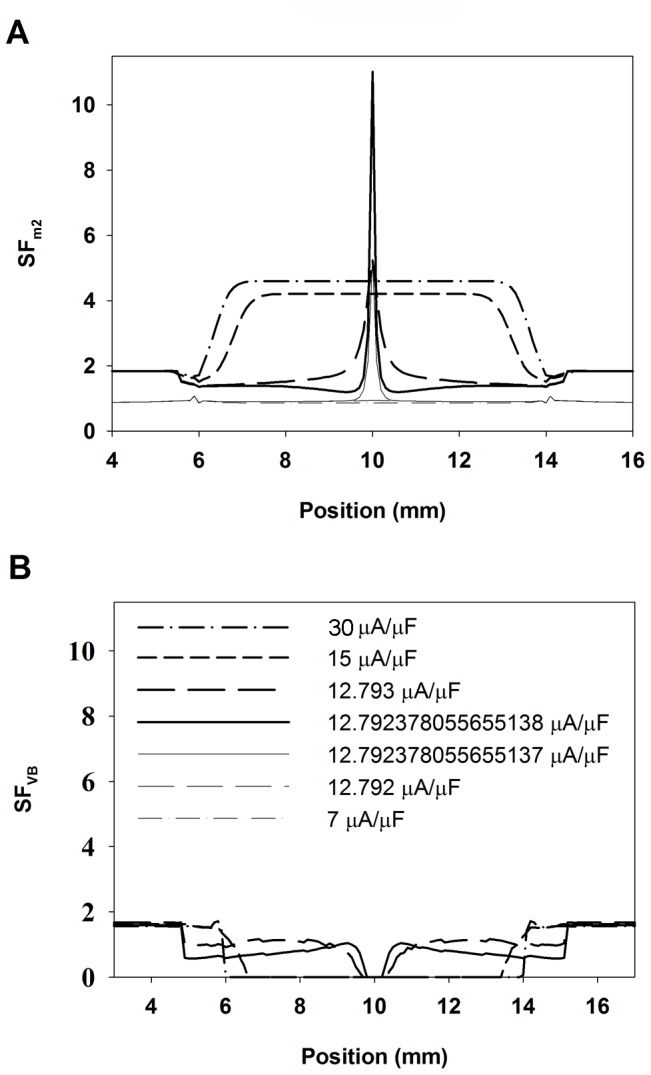
The distribution of cellular source-sink relationships plays an important role in cardiac propagation. It can lead to conduction slowing and block as well as wave fractionation. It is of great interest to unravel the mechanisms underlying evolution in wavefront geometry. Our goal is to investigate the role of the source-sink relationship on wavefront geometry using computer simulations. We analyzed the role of variability in the microscopic source-sink relationship in driving changes in wavefront geometry. The electrophysiological activity of a homogeneous isotropic tissue was simulated using the ten Tusscher and Panfilov 2006 action potential model and the source-sink relationship was characterized using an improved version of the Romero et al. safety factor formulation (SFm2). Our simulations reveal that non-uniform dispersion of the cellular source-sink relationship (dispersion along the wavefront) leads to alterations in curvature. To better understand the role of the source-sink relationship in the process of wave formation, the electrophysiological activity at the initiation of excitation waves in a 1D strand was examined and the source-sink relationship was characterized using the two recently updated safety factor formulations: the SFm2 and the Boyle-Vigmond (SFVB) definitions. The electrophysiological activity at the initiation of excitation waves was intimately related to the SFm2 profiles, while the SFVB led to several counterintuitive observations. Importantly, with the SFm2 characterization, a critical source-sink relationship for initiation of excitation waves was identified, which was independent of the size of the electrode of excitation, membrane excitability, or tissue conductivity. In conclusion, our work suggests that non-uniform dispersion of the source-sink relationship alters wavefront curvature and a critical source-sink relationship profile separates wave expansion from collapse. Our study reinforces the idea that the safety factor represents a powerful tool to study the mechanisms of cardiac propagation in silico, providing a better understanding of cardiac arrhythmias and their therapy.
细胞源汇关系的分布在心脏传播中起着重要作用。它可以导致传导减慢和阻滞以及波分裂。揭示波阵面几何形状演变背后的机制具有重要意义。我们的目标是使用计算机模拟研究源汇关系对波阵面几何形状的作用。我们分析了微观源汇关系的可变性在驱动波阵面几何形状变化中的作用。使用 ten Tusscher 和 Panfilov 2006 动作电位模型模拟均匀各向同性组织的电生理活动,并使用改进的 Romero 等人的安全系数公式 (SFm2) 来描述源汇关系。我们的模拟表明,细胞源汇关系的非均匀分散(沿着波阵面的分散)会导致曲率的改变。为了更好地理解源汇关系在波形成过程中的作用,我们检查了在一维束中兴奋波起始时的电生理活动,并使用最近更新的两种安全系数公式:SFm2 和 Boyle-Vigmond (SFVB) 定义来描述源汇关系。兴奋波起始时的电生理活动与 SFm2 分布密切相关,而 SFVB 导致了一些违反直觉的观察。重要的是,使用 SFm2 特征化,确定了兴奋波起始的关键源汇关系,该关系与激励电极的大小、膜兴奋性或组织电导率无关。总之,我们的工作表明,源汇关系的非均匀分散会改变波阵面曲率,而关键的源汇关系分布则将波的扩展与崩溃分开。我们的研究强化了这样一种观点,即安全系数是一种强大的工具,可以在计算机上研究心脏传播的机制,从而更好地理解心脏心律失常及其治疗。