
母体西式高脂肪饮食可诱导两周龄雄性和雌性幼鼠出现特定于性别的生理和分子变化。
Maternal Western-style high fat diet induces sex-specific physiological and molecular changes in two-week-old mouse offspring.
机构信息
Nutrition, Metabolism & Genomics Group, Division of Human Nutrition, Wageningen University, Wageningen, The Netherlands.
出版信息
PLoS One. 2013 Nov 5;8(11):e78623. doi: 10.1371/journal.pone.0078623. eCollection 2013.
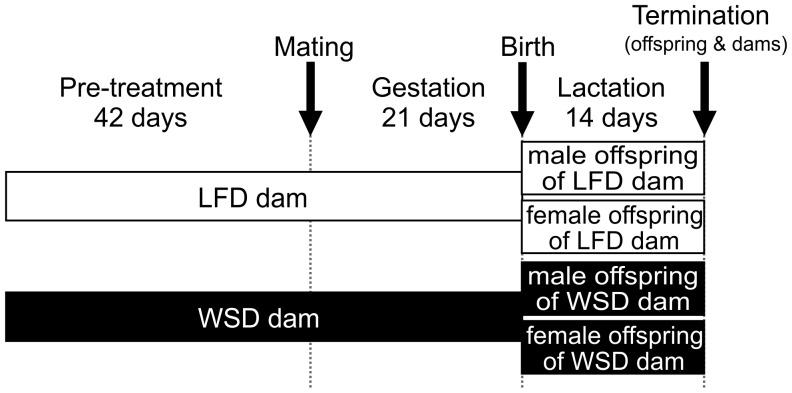
Maternal diet is associated with the development of metabolism-related and other non-communicable diseases in offspring. Underlying mechanisms, functional profiles, and molecular markers are only starting to be revealed. Here, we explored the physiological and molecular impact of maternal Western-style diet on the liver of male and female offspring. C57BL/6 dams were exposed to either a low fat/low cholesterol diet (LFD) or a Western-style high fat/high cholesterol diet (WSD) for six weeks before mating, as well as during gestation and lactation. Dams and offspring were sacrificed at postnatal day 14, and body, liver, and blood parameters were assessed. The impact of maternal WSD on the pups' liver gene expression was characterised by whole-transcriptome microarray analysis. Exclusively male offspring had significantly higher body weight upon maternal WSD. In offspring of both sexes of WSD dams, liver and blood parameters, as well as hepatic gene expression profiles were changed. In total, 686 and 604 genes were differentially expressed in liver (p≤0.01) of males and females, respectively. Only 10% of these significantly changed genes overlapped in both sexes. In males, in particular alterations of gene expression with respect to developmental functions and processes were observed, such as Wnt/beta-catenin signalling. In females, mainly genes important for lipid metabolism, including cholesterol synthesis, were changed. We conclude that maternal WSD affects physiological parameters and induces substantial changes in the molecular profile of the liver in two-week-old pups. Remarkably, the observed biological responses of the offspring reveal pronounced sex-specificity.
母体饮食与后代代谢相关和其他非传染性疾病的发展有关。潜在的机制、功能谱和分子标志物才刚刚开始被揭示。在这里,我们探讨了母体西式饮食对雄性和雌性后代肝脏的生理和分子影响。C57BL/6 母鼠在交配前六周、妊娠和哺乳期接受低脂/低胆固醇饮食(LFD)或西式高脂肪/高胆固醇饮食(WSD)。母鼠和幼崽在产后 14 天被处死,评估身体、肝脏和血液参数。母体 WSD 对幼崽肝脏基因表达的影响通过全转录组微阵列分析进行了表征。仅雄性后代在母体 WSD 下体重显著增加。WSD 母鼠后代的肝脏和血液参数以及肝基因表达谱在两性中均发生变化。总共,雄性和雌性后代的肝脏(p≤0.01)中有 686 和 604 个基因差异表达。这些显著变化的基因在两性中仅有 10%重叠。在雄性中,特别是观察到与发育功能和过程相关的基因表达的改变,例如 Wnt/β-连环蛋白信号通路。在雌性中,主要是与脂质代谢有关的基因发生了变化,包括胆固醇合成。我们得出结论,母体 WSD 影响生理参数,并在两周龄幼崽的肝脏分子谱中引起显著变化。值得注意的是,后代观察到的生物学反应显示出明显的性别特异性。



 Zotero 插件