Liu Di, Zhang Hong, Gu Wenjuan, Liu Yuqin, Zhang Mengren
Department of Traditional Chinese Medicine, Peking Union Medical College Hospital, Peking Union Medical College and Chinese Academy of Medical Sciences, Beijing, China.
PLoS One. 2013 Nov 1;8(11):e79399. doi: 10.1371/journal.pone.0079399. eCollection 2013.
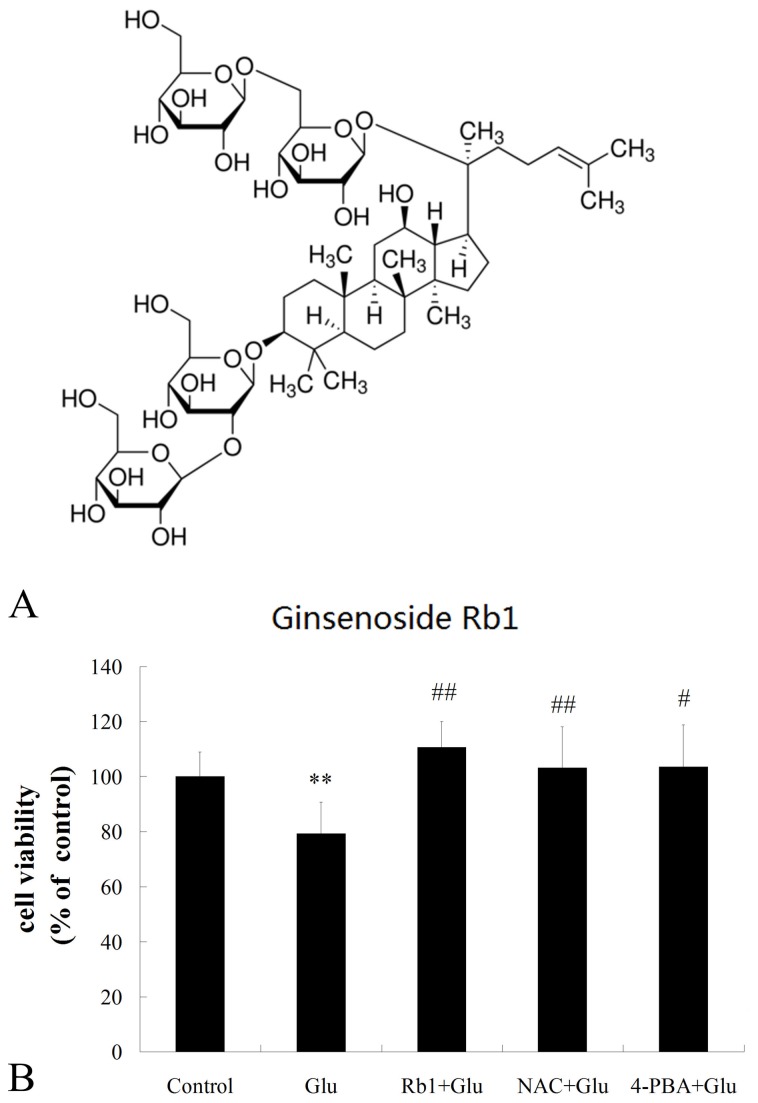
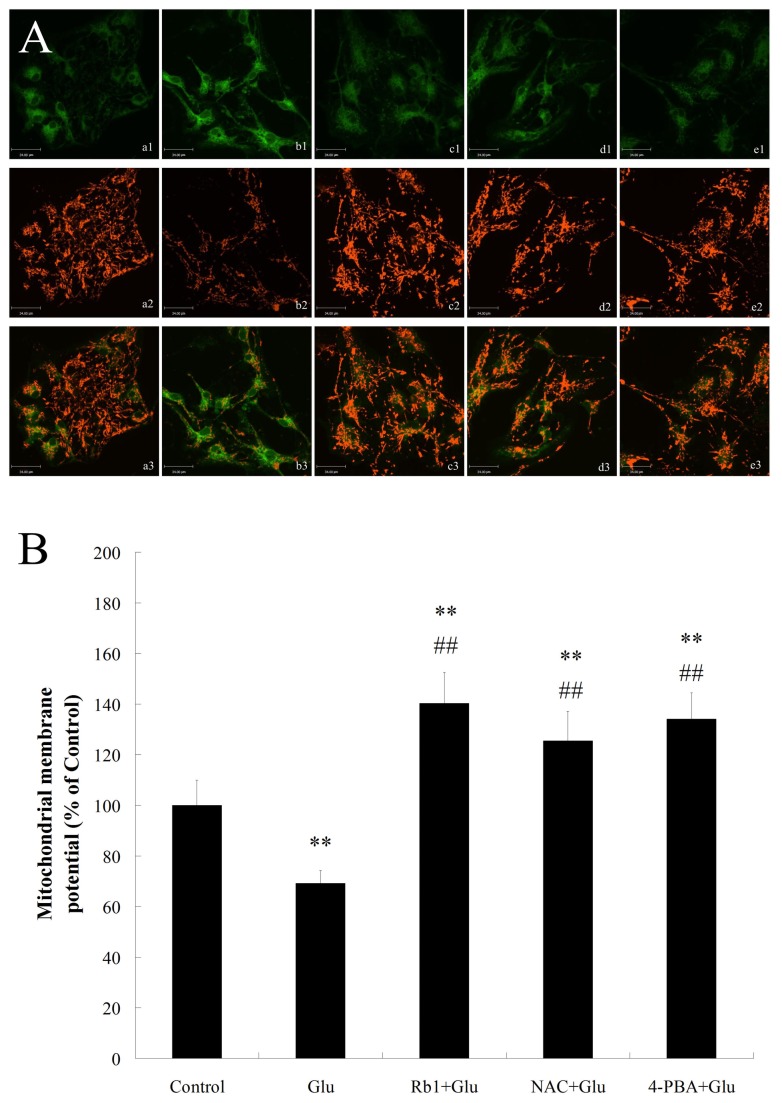
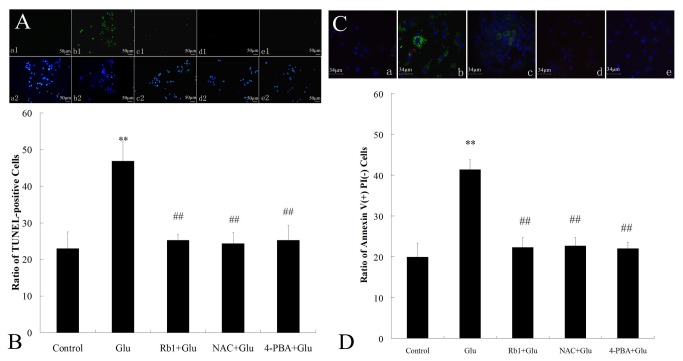
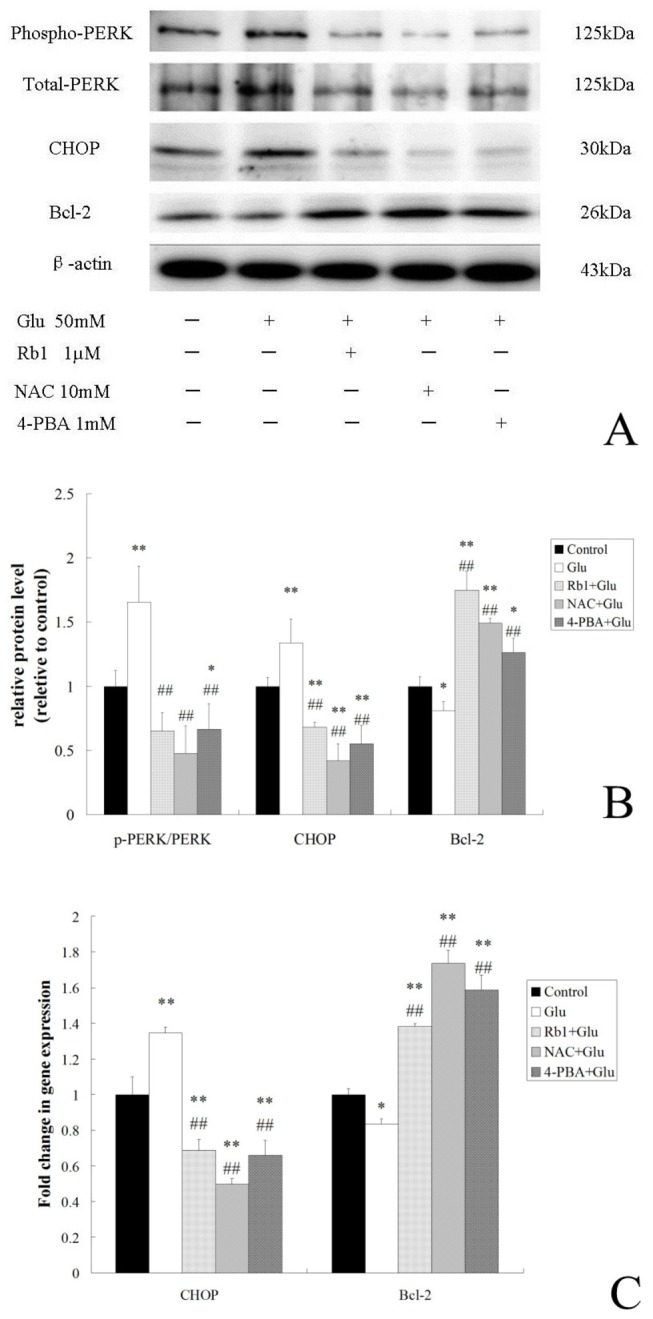
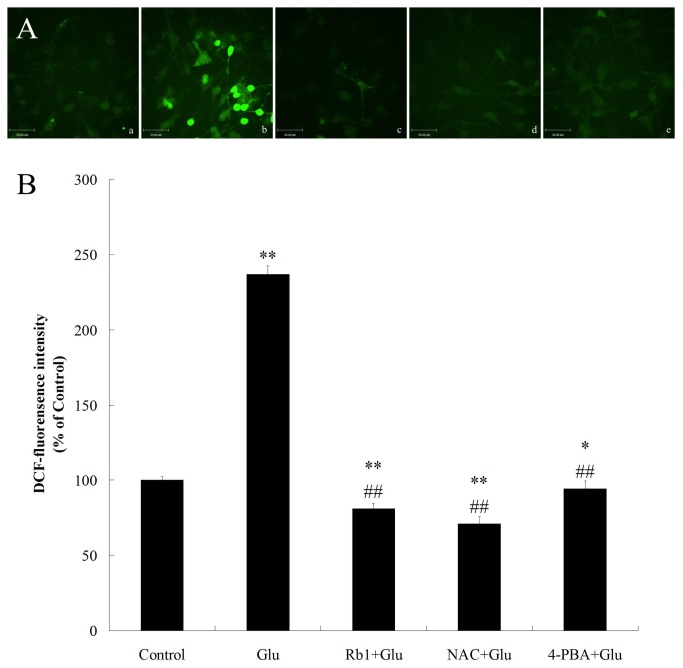
Ginsenoside Rb1 is one of the main active principles in traditional herb ginseng and has been reported to have a wide variety of neuroprotective effects. Endoplasmic reticulum (ER) stress has been implicated in neurodegenerative diseases, so the present study aimed to observe the effects of ginsenoside Rb1 on ER stress signaling pathways in high glucose-treated hippocampal neurons. The results from MTT, TUNEL labeling and Annexin V-FITC/PI/Hoechst assays showed that incubating neurons with 50 mM high glucose for 72 h decreased cell viability and increased the number of apoptotic cells whereas treating neurons with 1 μM Rb1 for 72 h protected the neurons against high glucose-induced cell damage. Further molecular mechanism study demonstrated that Rb1 suppressed the activation of ER stress-associated proteins including protein kinase RNA (PKR)-like ER kinase (PERK) and C/EBP homology protein (CHOP) and downregulation of Bcl-2 induced by high glucose. Moreover, Rb1 inhibited both the elevation of intracellular reactive oxygen species (ROS) and the disruption of mitochondrial membrane potential induced by high glucose. In addition, the high glucose-induced cell apoptosis, activation of ER stress, ROS accumulation and mitochondrial dysfunction can also be attenuated by the inhibitor of ER stress 4-phenylbutyric acid (4-PBA) and anti-oxidant N-acetylcysteine(NAC). In conclusion, these results suggest that Rb1 may protect neurons against high glucose-induced cell injury through inhibiting CHOP signaling pathway as well as oxidative stress and mitochondrial dysfunction.
人参皂苷Rb1是传统草药人参中的主要活性成分之一,据报道具有多种神经保护作用。内质网(ER)应激与神经退行性疾病有关,因此本研究旨在观察人参皂苷Rb1对高糖处理的海马神经元内质网应激信号通路的影响。MTT、TUNEL标记和Annexin V-FITC/PI/Hoechst检测结果表明,用50 mM高糖孵育神经元72小时会降低细胞活力并增加凋亡细胞数量,而用1 μM Rb1处理神经元72小时可保护神经元免受高糖诱导的细胞损伤。进一步的分子机制研究表明,Rb1抑制内质网应激相关蛋白的激活,包括蛋白激酶RNA(PKR)样内质网激酶(PERK)和C/EBP同源蛋白(CHOP),并下调高糖诱导的Bcl-2表达。此外,Rb1抑制高糖诱导的细胞内活性氧(ROS)升高和线粒体膜电位破坏。此外,内质网应激抑制剂4-苯基丁酸(4-PBA)和抗氧化剂N-乙酰半胱氨酸(NAC)也可减轻高糖诱导的细胞凋亡、内质网应激激活、ROS积累和线粒体功能障碍。总之,这些结果表明,Rb1可能通过抑制CHOP信号通路以及氧化应激和线粒体功能障碍来保护神经元免受高糖诱导的细胞损伤。