Department of Molecular and Cellular Physiology, LSU Health Sciences Center, 1501 Kings Highway, Shreveport, LA 71130-3932, USA.
BMC Med. 2013 Oct 11;11:219. doi: 10.1186/1741-7015-11-219.
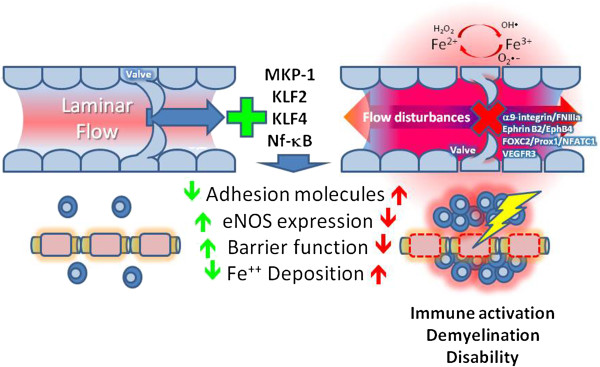
The role of the venous system in the pathogenesis of inflammatory neurological/neurodegenerative diseases remains largely unknown and underinvestigated. Aside from cerebral venous infarcts, thromboembolic events, and cerebrovascular bleeding, several inflammatory central nervous system (CNS) diseases, such as multiple sclerosis (MS), acute disseminated encephalomyelitis (ADEM), and optic neuritis, appear to be associated with venous vascular dysfunction, and the neuropathologic hallmark of these diseases is a perivenous, rather than arterial, lesion. Such findings raise fundamental questions about the nature of these diseases, such as the reasons why their pathognomonic lesions do not develop around the arteries and what exactly are the roles of cerebral venous inflammation in their pathogenesis. Apart from this inflammatory-based view, a new hypothesis with more focus on the hemodynamic features of the cerebral and extracerebral venous system suggests that MS pathophysiology might be associated with the venous system that drains the CNS. Such a hypothesis, if proven correct, opens new therapeutic windows in MS and other neuroinflammatory diseases. Here, we present a comprehensive review of the pathophysiology of MS, ADEM, pseudotumor cerebri, and optic neuritis, with an emphasis on the roles of venous vascular system programming and dysfunction in their pathogenesis. We consider the fundamental differences between arterial and venous endothelium, their dissimilar responses to inflammation, and the potential theoretical contributions of venous insufficiency in the pathogenesis of neurovascular diseases.
静脉系统在炎症性神经/神经退行性疾病发病机制中的作用在很大程度上仍然未知和研究不足。除了脑静脉梗死、血栓栓塞事件和脑血管出血外,几种炎症性中枢神经系统 (CNS) 疾病,如多发性硬化症 (MS)、急性播散性脑脊髓炎 (ADEM) 和视神经炎,似乎与静脉血管功能障碍有关,这些疾病的神经病理学特征是围绕静脉的病变,而不是动脉的病变。这些发现提出了关于这些疾病本质的基本问题,例如为什么它们特有的病变不会在动脉周围发展,以及大脑静脉炎症在其发病机制中的作用到底是什么。除了这种基于炎症的观点之外,一个更加关注脑和脑外静脉系统血流动力学特征的新假说表明,MS 病理生理学可能与引流 CNS 的静脉系统有关。如果这一假说被证明是正确的,它将为 MS 和其他神经炎症性疾病开辟新的治疗窗口。在这里,我们全面回顾了 MS、ADEM、假性脑瘤和视神经炎的病理生理学,重点介绍了静脉血管系统编程和功能障碍在其发病机制中的作用。我们考虑了动脉和静脉内皮之间的基本差异、它们对炎症的不同反应,以及静脉功能不全在神经血管疾病发病机制中的潜在理论贡献。