• 文献检索
  • 文档翻译
  • 深度研究
  • 学术资讯
  • Suppr Zotero 插件Zotero 插件
  • 邀请有礼
  • 套餐&价格
  • 历史记录
应用&插件
Suppr Zotero 插件Zotero 插件浏览器插件Mac 客户端Windows 客户端微信小程序
定价
高级版会员购买积分包购买API积分包
服务
文献检索文档翻译深度研究API 文档MCP 服务
关于我们
关于 Suppr公司介绍联系我们用户协议隐私条款
关注我们

Suppr 超能文献

核心技术专利:CN118964589B侵权必究
粤ICP备2023148730 号-1Suppr @ 2026

文献检索

告别复杂PubMed语法,用中文像聊天一样搜索,搜遍4000万医学文献。AI智能推荐,让科研检索更轻松。

立即免费搜索

文件翻译

保留排版,准确专业,支持PDF/Word/PPT等文件格式,支持 12+语言互译。

免费翻译文档

深度研究

AI帮你快速写综述,25分钟生成高质量综述,智能提取关键信息,辅助科研写作。

立即免费体验

来自粗糙脉孢菌的类人真核翻译起始因子3

Human-like eukaryotic translation initiation factor 3 from Neurospora crassa.

作者信息

Smith M Duane, Gu Yu, Querol-Audí Jordi, Vogan Jacob M, Nitido Adam, Cate Jamie H D

机构信息

Department of Molecular and Cell Biology, University of California, Berkeley, California, United States of America.

出版信息

PLoS One. 2013 Nov 8;8(11):e78715. doi: 10.1371/journal.pone.0078715. eCollection 2013.

DOI:10.1371/journal.pone.0078715
PMID:24250809
原文链接:https://pmc.ncbi.nlm.nih.gov/articles/PMC3826745/
Abstract

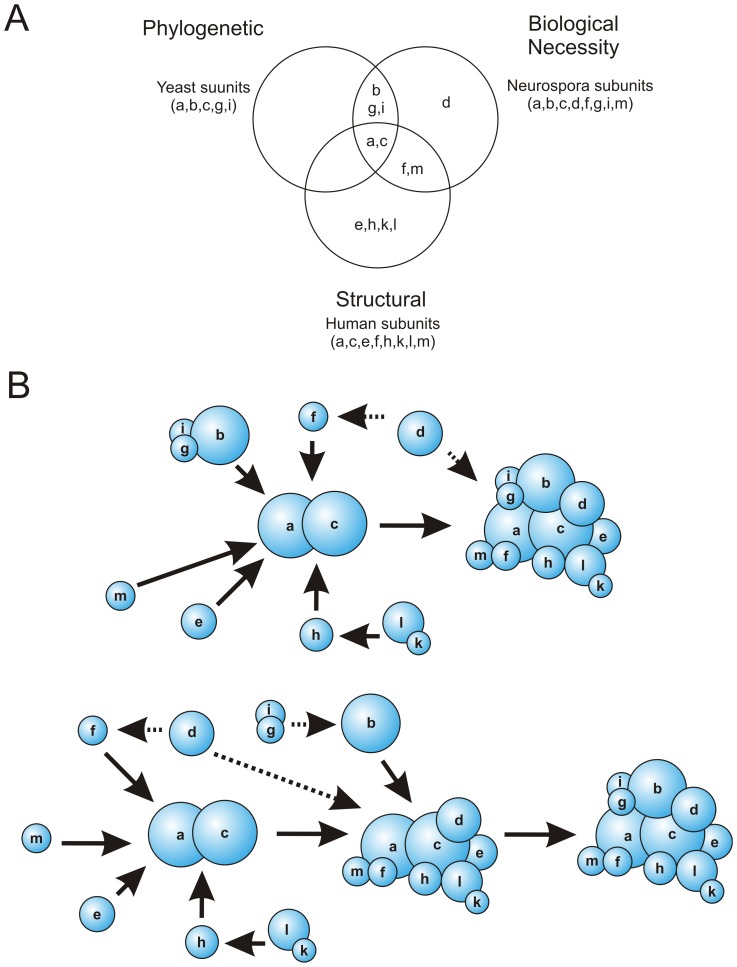
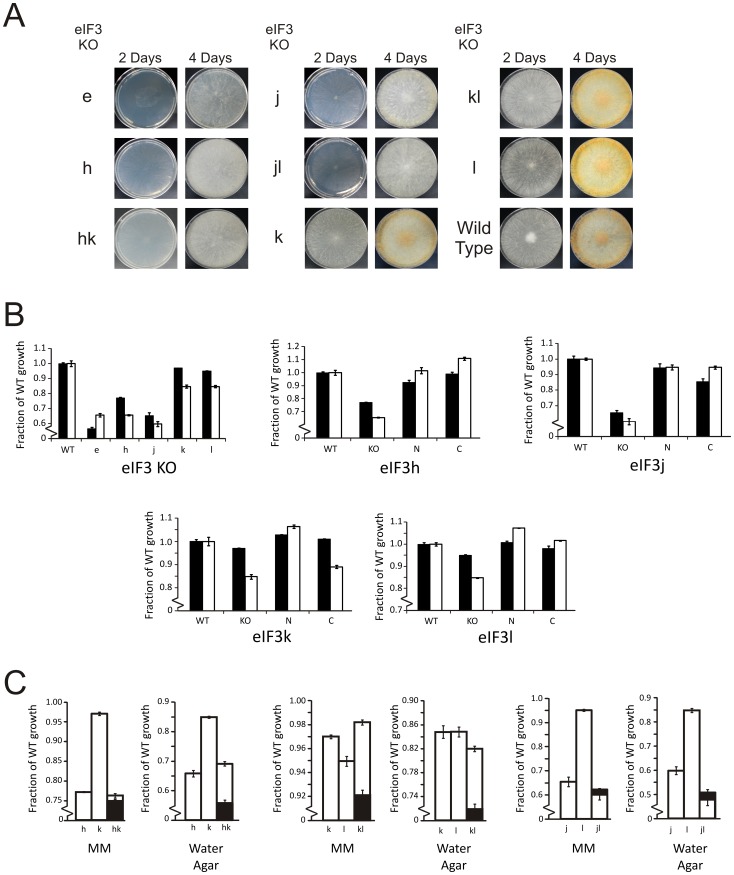
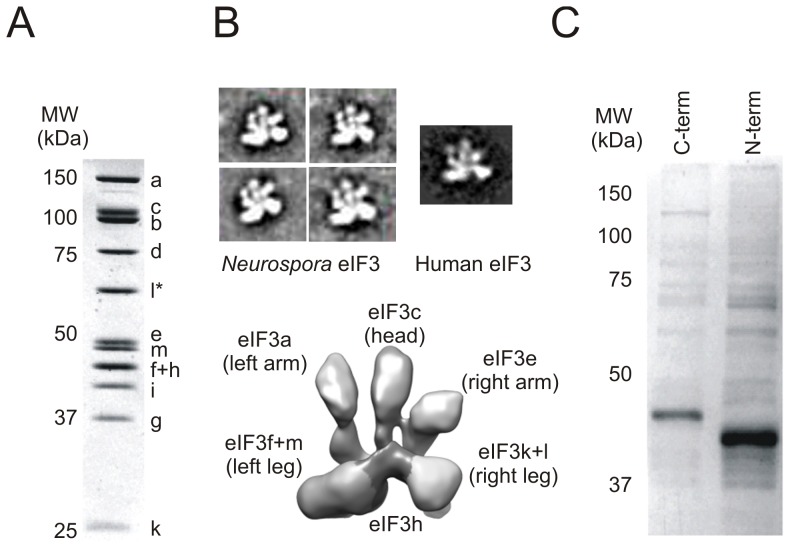
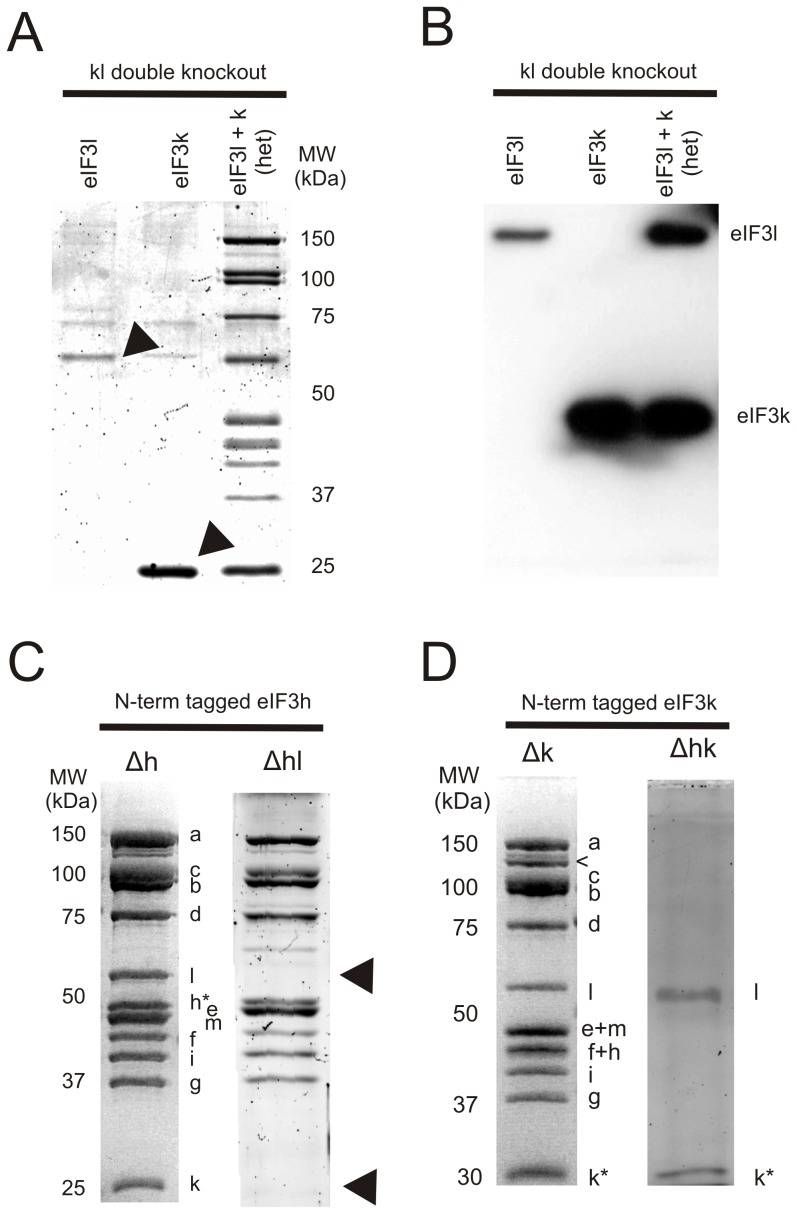
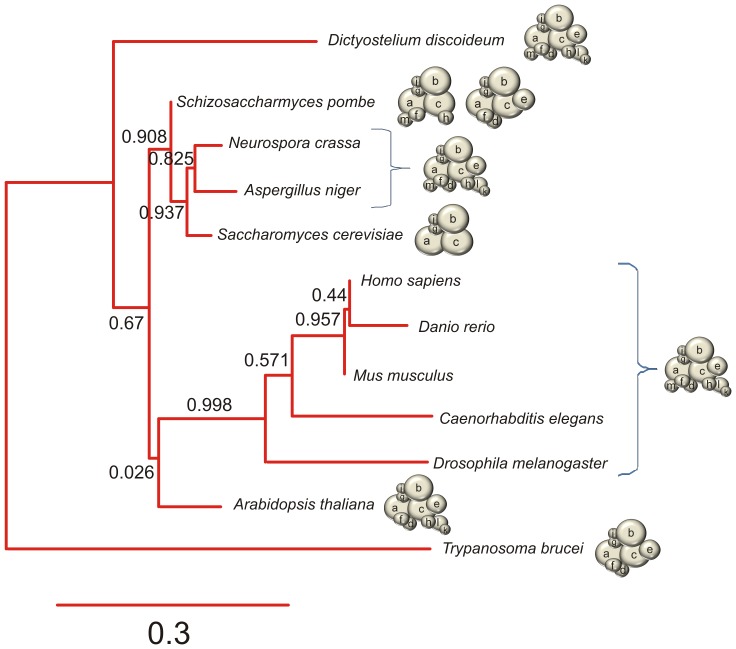
Eukaryotic translation initiation factor 3 (eIF3) is a key regulator of translation initiation, but its in vivo assembly and molecular functions remain unclear. Here we show that eIF3 from Neurospora crassa is structurally and compositionally similar to human eIF3. N. crassa eIF3 forms a stable 12-subunit complex linked genetically and biochemically to the 13(th) subunit, eIF3j, which in humans modulates mRNA start codon selection. Based on N. crassa genetic analysis, most subunits in eIF3 are essential. Subunits that can be deleted (e, h, k and l) map to the right side of the eIF3 complex, suggesting that they may coordinately regulate eIF3 function. Consistent with this model, subunits eIF3k and eIF3l are incorporated into the eIF3 complex as a pair, and their insertion depends on the presence of subunit eIF3h, a key regulator of vertebrate development. Comparisons to other eIF3 complexes suggest that eIF3 assembles around an eIF3a and eIF3c dimer, which may explain the coordinated regulation of human eIF3 levels. Taken together, these results show that Neurospora crassa eIF3 provides a tractable system for probing the structure and function of human-like eIF3 in the context of living cells.

摘要

真核生物翻译起始因子3(eIF3)是翻译起始的关键调节因子,但其体内组装和分子功能仍不清楚。在此我们表明,粗糙脉孢菌的eIF3在结构和组成上与人类eIF3相似。粗糙脉孢菌eIF3形成一个稳定的12亚基复合物,在遗传和生化上与第13个亚基eIF3j相连,而在人类中,eIF3j调节mRNA起始密码子的选择。基于粗糙脉孢菌的遗传分析,eIF3中的大多数亚基是必不可少的。可以缺失的亚基(e、h、k和l)定位于eIF3复合物的右侧,这表明它们可能协同调节eIF3的功能。与该模型一致,亚基eIF3k和eIF3l作为一对被纳入eIF3复合物,它们的插入依赖于亚基eIF3h的存在,eIF3h是脊椎动物发育的关键调节因子。与其他eIF3复合物的比较表明,eIF3围绕eIF3a和eIF3c二聚体组装,这可能解释了人类eIF3水平的协同调节。综上所述,这些结果表明,粗糙脉孢菌eIF3为在活细胞环境中探究类人eIF3的结构和功能提供了一个易于处理的系统。
https://cdn.ncbi.nlm.nih.gov/pmc/blobs/91fb/3826745/d4041a038df6/pone.0078715.g005.jpg
https://cdn.ncbi.nlm.nih.gov/pmc/blobs/91fb/3826745/b2203c501cb5/pone.0078715.g001.jpg
https://cdn.ncbi.nlm.nih.gov/pmc/blobs/91fb/3826745/b7712f7a3712/pone.0078715.g002.jpg
https://cdn.ncbi.nlm.nih.gov/pmc/blobs/91fb/3826745/157bf38b38ef/pone.0078715.g003.jpg
https://cdn.ncbi.nlm.nih.gov/pmc/blobs/91fb/3826745/5cfb508175c6/pone.0078715.g004.jpg
https://cdn.ncbi.nlm.nih.gov/pmc/blobs/91fb/3826745/d4041a038df6/pone.0078715.g005.jpg
https://cdn.ncbi.nlm.nih.gov/pmc/blobs/91fb/3826745/b2203c501cb5/pone.0078715.g001.jpg
https://cdn.ncbi.nlm.nih.gov/pmc/blobs/91fb/3826745/b7712f7a3712/pone.0078715.g002.jpg
https://cdn.ncbi.nlm.nih.gov/pmc/blobs/91fb/3826745/157bf38b38ef/pone.0078715.g003.jpg
https://cdn.ncbi.nlm.nih.gov/pmc/blobs/91fb/3826745/5cfb508175c6/pone.0078715.g004.jpg
https://cdn.ncbi.nlm.nih.gov/pmc/blobs/91fb/3826745/d4041a038df6/pone.0078715.g005.jpg

相似文献

1
Human-like eukaryotic translation initiation factor 3 from Neurospora crassa.来自粗糙脉孢菌的类人真核翻译起始因子3
PLoS One. 2013 Nov 8;8(11):e78715. doi: 10.1371/journal.pone.0078715. eCollection 2013.
2
Adapted formaldehyde gradient cross-linking protocol implicates human eIF3d and eIF3c, k and l subunits in the 43S and 48S pre-initiation complex assembly, respectively.改良甲醛梯度交联实验方案表明,人类 eIF3d 和 eIF3c 的 k 和 l 亚基分别参与了 43S 和 48S 起始前复合物的组装。
Nucleic Acids Res. 2020 Feb 28;48(4):1969-1984. doi: 10.1093/nar/gkz1185.
3
Characterization of eIF3k: a newly discovered subunit of mammalian translation initiation factor elF3.真核生物翻译起始因子3k(eIF3k)的特性:哺乳动物翻译起始因子eIF3的一个新发现的亚基。
Eur J Biochem. 2003 Oct;270(20):4133-9. doi: 10.1046/j.1432-1033.2003.03807.x.
4
Two RNA-binding motifs in eIF3 direct HCV IRES-dependent translation.两个 eIF3 中的 RNA 结合基序指导 HCV IRES 依赖的翻译。
Nucleic Acids Res. 2013 Aug;41(15):7512-21. doi: 10.1093/nar/gkt510. Epub 2013 Jun 13.
5
Translational regulation via 5' mRNA leader sequences revealed by mutational analysis of the Arabidopsis translation initiation factor subunit eIF3h.通过对拟南芥翻译起始因子亚基eIF3h的突变分析揭示的5' mRNA前导序列介导的翻译调控
Plant Cell. 2004 Dec;16(12):3341-56. doi: 10.1105/tpc.104.026880. Epub 2004 Nov 17.
6
eIF3 Peripheral Subunits Rearrangement after mRNA Binding and Start-Codon Recognition.eIF3 外周亚基在 mRNA 结合和起始密码子识别后的重排。
Mol Cell. 2016 Jul 21;63(2):206-217. doi: 10.1016/j.molcel.2016.05.033. Epub 2016 Jun 30.
7
Fission yeast translation initiation factor 3 subunit eIF3h is not essential for global translation initiation, but deletion of eif3h+ affects spore formation.裂殖酵母翻译起始因子3亚基eIF3h对于整体翻译起始并非必需,但缺失eif3h+会影响孢子形成。
Yeast. 2008 Nov;25(11):809-23. doi: 10.1002/yea.1635.
8
eIF3 mRNA selectivity profiling reveals eIF3k as a cancer-relevant regulator of ribosome content.真核起始因子 3 mRNA 选择性分析揭示 eIF3k 作为一种与癌症相关的核糖体含量调控因子。
EMBO J. 2023 Jun 15;42(12):e112362. doi: 10.15252/embj.2022112362. Epub 2023 May 8.
9
Functional and biochemical characterization of human eukaryotic translation initiation factor 3 in living cells.在活细胞中对人真核翻译起始因子 3 的功能和生化特性进行研究。
Mol Cell Biol. 2014 Aug;34(16):3041-52. doi: 10.1128/MCB.00663-14. Epub 2014 Jun 9.
10
Coordinated assembly of human translation initiation complexes by the hepatitis C virus internal ribosome entry site RNA.丙型肝炎病毒内部核糖体进入位点RNA对人类翻译起始复合物的协同组装
Proc Natl Acad Sci U S A. 2004 Dec 7;101(49):16990-5. doi: 10.1073/pnas.0407402101. Epub 2004 Nov 24.

引用本文的文献

1
The structure of a human translation initiation complex reveals two independent roles for the helicase eIF4A.人类翻译起始复合物的结构揭示了解旋酶 eIF4A 的两个独立作用。
Nat Struct Mol Biol. 2024 Mar;31(3):455-464. doi: 10.1038/s41594-023-01196-0. Epub 2024 Jan 29.
2
The molecular basis of translation initiation and its regulation in eukaryotes.真核生物翻译起始的分子基础及其调控。
Nat Rev Mol Cell Biol. 2024 Mar;25(3):168-186. doi: 10.1038/s41580-023-00624-9. Epub 2023 Dec 5.
3
The GUL-1 Protein Binds Multiple RNAs Involved in Cell Wall Remodeling and Affects the MAK-1 Pathway in .

本文引用的文献

1
Two RNA-binding motifs in eIF3 direct HCV IRES-dependent translation.两个 eIF3 中的 RNA 结合基序指导 HCV IRES 依赖的翻译。
Nucleic Acids Res. 2013 Aug;41(15):7512-21. doi: 10.1093/nar/gkt510. Epub 2013 Jun 13.
2
Translation initiation factor eIF3h targets specific transcripts to polysomes during embryogenesis.翻译起始因子 eIF3h 在胚胎发生过程中将特定的转录本靶向多核糖体。
Proc Natl Acad Sci U S A. 2013 Jun 11;110(24):9818-23. doi: 10.1073/pnas.1302934110. Epub 2013 May 28.
3
Structure of the mammalian ribosomal 43S preinitiation complex bound to the scanning factor DHX29.
GUL-1蛋白结合多种参与细胞壁重塑的RNA,并影响线虫中的MAK-1途径。
Front Fungal Biol. 2021 Apr 16;2:672696. doi: 10.3389/ffunb.2021.672696. eCollection 2021.
4
Aging of Leads to Alterations of OXPHOS and the Induction of Non-Mitochondrial Salvage Pathways.衰老导致 OXPHOS 的改变和非线粒体补救途径的诱导。
Cells. 2021 Nov 26;10(12):3319. doi: 10.3390/cells10123319.
5
Structure of the translating ribosome arrested by cycloheximide.环己酰亚胺抑制的翻译核糖体的结构。
Proc Natl Acad Sci U S A. 2021 Nov 30;118(48). doi: 10.1073/pnas.2111862118.
6
eIF3k Domain-Containing Protein Regulates Conidiogenesis, Appressorium Turgor, Virulence, Stress Tolerance, and Physiological and Pathogenic Development of .含eIF3k结构域蛋白调控分生孢子形成、附着胞膨压、毒力、胁迫耐受性以及……的生理和致病发育
Front Plant Sci. 2021 Oct 18;12:748120. doi: 10.3389/fpls.2021.748120. eCollection 2021.
7
Knockdown of eIF3a attenuated cell growth in K1 human thyroid cancer cells.敲低真核生物翻译起始因子3a(eIF3a)可减弱K1人甲状腺癌细胞的生长。
Genes Genomics. 2021 Apr;43(4):379-388. doi: 10.1007/s13258-021-01048-5. Epub 2021 Feb 17.
8
Structure of a human 48 translational initiation complex.人源 48 翻译起始复合物的结构。
Science. 2020 Sep 4;369(6508):1220-1227. doi: 10.1126/science.aba4904.
9
eIF-Three to Tango: emerging functions of translation initiation factor eIF3 in protein synthesis and disease.真核翻译起始因子 3 的三人探戈:其在蛋白质合成和疾病中的新兴功能。
J Mol Cell Biol. 2020 Jul 3;12(6):403-409. doi: 10.1093/jmcb/mjaa018.
10
Quantitative global studies reveal differential translational control by start codon context across the fungal kingdom.定量全局研究揭示了真菌界中起始密码子上下文对翻译控制的差异。
Nucleic Acids Res. 2020 Mar 18;48(5):2312-2331. doi: 10.1093/nar/gkaa060.
哺乳动物核糖体 43S 起始前复合物与扫描因子 DHX29 结合的结构。
Cell. 2013 May 23;153(5):1108-19. doi: 10.1016/j.cell.2013.04.036.
4
Architecture of human translation initiation factor 3.人类翻译起始因子 3 的结构。
Structure. 2013 Jun 4;21(6):920-8. doi: 10.1016/j.str.2013.04.002. Epub 2013 Apr 25.
5
Reconstitution of eukaryotic translation initiation factor 3 by co-expression of the subunits in a human cell-derived in vitro protein synthesis system.通过在人细胞来源的体外蛋白质合成系统中共表达亚基来重建真核翻译起始因子3
Protein Expr Purif. 2013 Jan;87(1):5-10. doi: 10.1016/j.pep.2012.10.001. Epub 2012 Oct 11.
6
Functional reconstitution of human eukaryotic translation initiation factor 3 (eIF3).人类真核翻译起始因子 3(eIF3)的功能重建。
Proc Natl Acad Sci U S A. 2011 Dec 20;108(51):20473-8. doi: 10.1073/pnas.1116821108. Epub 2011 Dec 1.
7
Regulation of protein synthesis and the role of eIF3 in cancer.蛋白质合成的调控及 eIF3 在癌症中的作用。
Braz J Med Biol Res. 2010 Oct;43(10):920-30. doi: 10.1590/s0100-879x2010007500098. Epub 2010 Oct 1.
8
Alternative ways to think about cellular internal ribosome entry.细胞内核糖体进入的另类思考方式。
J Biol Chem. 2010 Sep 17;285(38):29033-8. doi: 10.1074/jbc.R110.150532. Epub 2010 Jun 24.
9
The h subunit of eIF3 promotes reinitiation competence during translation of mRNAs harboring upstream open reading frames.真核翻译起始因子 3 的 h 亚基促进了含有上游开放阅读框的 mRNA 在翻译过程中的再起始能力。
RNA. 2010 Apr;16(4):748-61. doi: 10.1261/rna.2056010. Epub 2010 Feb 23.
10
Systems analysis of plant cell wall degradation by the model filamentous fungus Neurospora crassa.通过模式丝状真菌粗糙脉孢菌对植物细胞壁降解的系统分析。
Proc Natl Acad Sci U S A. 2009 Dec 29;106(52):22157-62. doi: 10.1073/pnas.0906810106. Epub 2009 Dec 15.