Biomedical Sciences Graduate Program, The Ohio State University, Columbus, OH 43210, USA.
Acta Neuropathol Commun. 2013 Oct 23;1:70. doi: 10.1186/2051-5960-1-70.
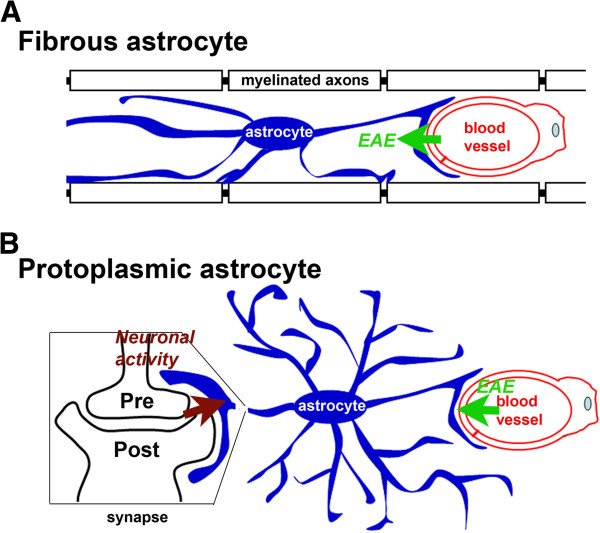
Neuronal activity intimately communicates with blood flow through the blood-brain barrier (BBB) in the central nervous system (CNS). Astrocyte endfeet cover more than 90% of brain capillaries and interact with synapses and nodes of Ranvier. The roles of astrocytes in neurovascular coupling in the CNS remain poorly understood.
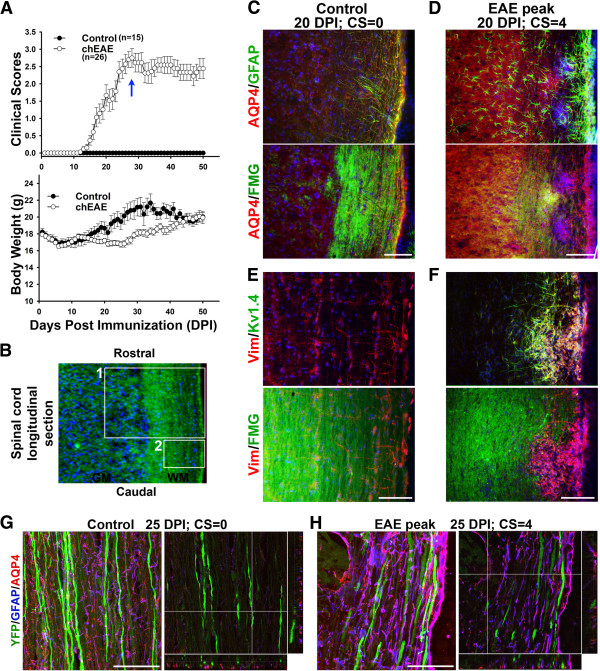
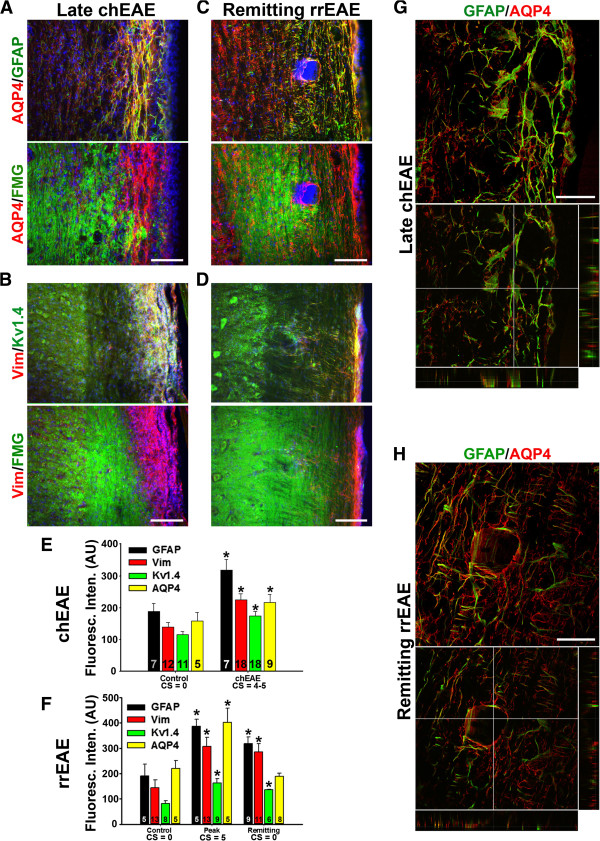
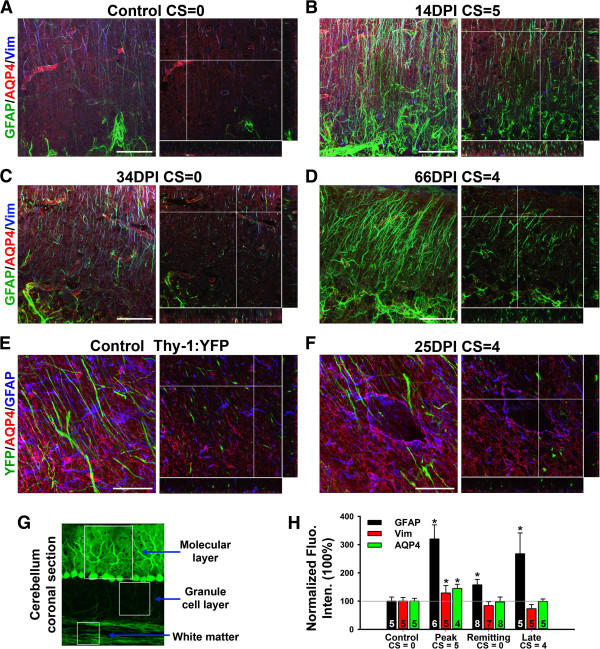
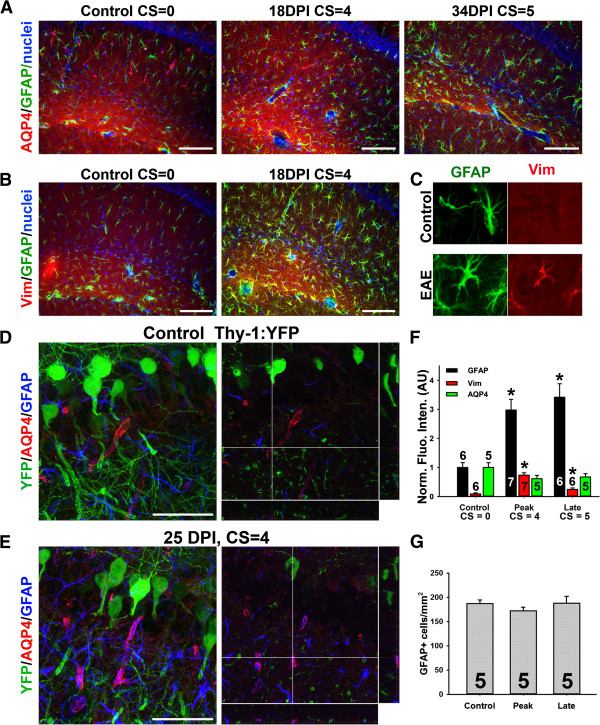
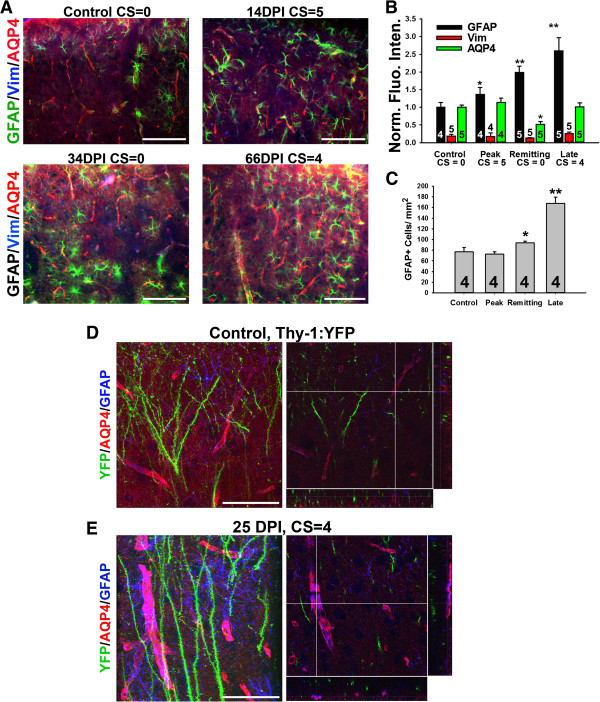
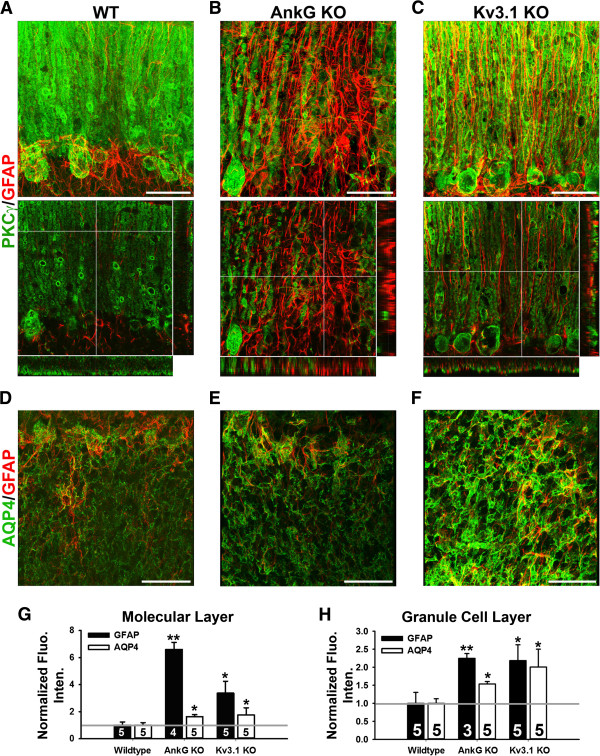
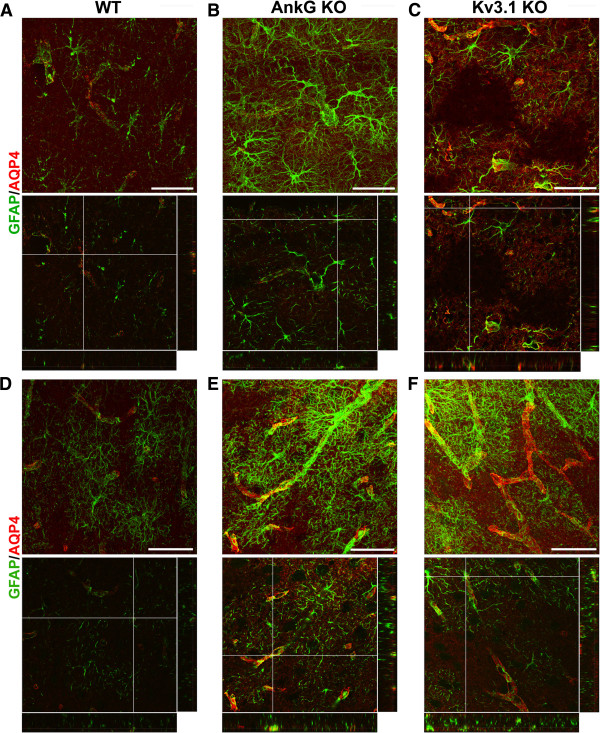
Here we show that astrocytes that are intrinsically different are activated by inflammatory autoimmune insults and alterations of neuronal activity. In the progression of experimental autoimmune encephalomyelitis (EAE), both fibrous and protoplasmic astrocytes were broadly and reversibly activated in the brain and spinal cord, indicated by marked upregulation of glial fibrillary acidic protein (GFAP) and other astrocytic proteins. In early and remitting EAE, upregulated GFAP and astrocytic endfoot water channel aquaporin 4 (AQP4) enclosed white matter lesions in spinal cord, whereas they markedly increased and formed bundles in exacerbated lesions in late EAE. In cerebellar cortex, upregulation of astrocytic proteins correlated with EAE severity. On the other hand, protoplasmic astrocytes were also markedly activated in the brains of ankyrin-G (AnkG) and Kv3.1 KO mice, where neuronal activities are altered. Massive astrocytes replaced degenerated Purkinje neurons in AnkG KO mice. In Kv3.1 KO mice, GFAP staining significantly increased in cerebellar cortex, where Kv3.1 is normally highly expressed, but displayed in a patchy pattern in parts of the hippocampus.
Thus, astrocytes can detect changes in both blood and neurons, which supports their central role in neurovascular coupling. These studies contribute to the development of new strategies of neuroprotection and repair for various diseases, through activity-dependent regulation of neurovascular coupling.
中枢神经系统(CNS)中的血脑屏障(BBB)使神经元活动与血液流动密切沟通。星形胶质细胞足突覆盖了超过 90%的脑毛细血管,并与突触和郎飞结相互作用。星形胶质细胞在 CNS 神经血管耦联中的作用仍知之甚少。
我们发现,炎症性自身免疫损伤和神经元活动改变会激活内在不同的星形胶质细胞。在实验性自身免疫性脑脊髓炎(EAE)的进展过程中,脑和脊髓中的纤维状和原浆状星形胶质细胞广泛而可逆地被激活,这表现为胶质纤维酸性蛋白(GFAP)和其他星形胶质细胞蛋白的显著上调。在早期和缓解性 EAE 中,上调的 GFAP 和星形胶质细胞足突水通道水通道蛋白 4(AQP4)包围脊髓中的白质病变,而在晚期 EAE 的加剧病变中,它们显著增加并形成束状。在小脑皮质中,星形胶质细胞蛋白的上调与 EAE 严重程度相关。另一方面,在神经元活动改变的 ankG(AnkG)和 Kv3.1 KO 小鼠的大脑中,原浆状星形胶质细胞也被显著激活。在 AnkG KO 小鼠中,大量星形胶质细胞取代了变性的浦肯野神经元。在 Kv3.1 KO 小鼠中,GFAP 染色在小脑皮质中显著增加,Kv3.1 通常在小脑皮质中高度表达,但在海马的某些部位呈斑片状表达。
因此,星形胶质细胞可以检测血液和神经元的变化,这支持了它们在神经血管耦联中的核心作用。这些研究通过对神经血管耦联的活性依赖性调节,为各种疾病的神经保护和修复策略的发展做出了贡献。