Division of Surgical Sciences, Department of General Surgery, Wake Forest School of Medicine, Winston-Salem, North Carolina.
Department of Pathology, Wake Forest School of Medicine, Winston-Salem, North Carolina.
J Surg Res. 2014 Apr;187(2):412-26. doi: 10.1016/j.jss.2013.10.032. Epub 2013 Oct 21.
M protein mutant vesicular stomatitis virus (M51R-VSV) has oncolytic properties against many cancers. However, some cancer cells are resistant to M51R-VSV. Herein, we evaluate the molecular determinants of vesicular stomatitis virus (VSV) resistance in pancreatic adenocarcinoma cells.
Cell viability and the effect of β-interferon (IFN) were analyzed using 3-(4,5-dimethylthiazol-2-yl)-5-(3-carboxymethoxyphenyl)-2-(4-sulfophenyl)-2H-tetrazolium assay. Gene expression was evaluated via microarray analysis. Cell infectability was measured by flow cytometry. Xenografts were established in athymic nude mice and treated with intratumoral M51R-VSV.
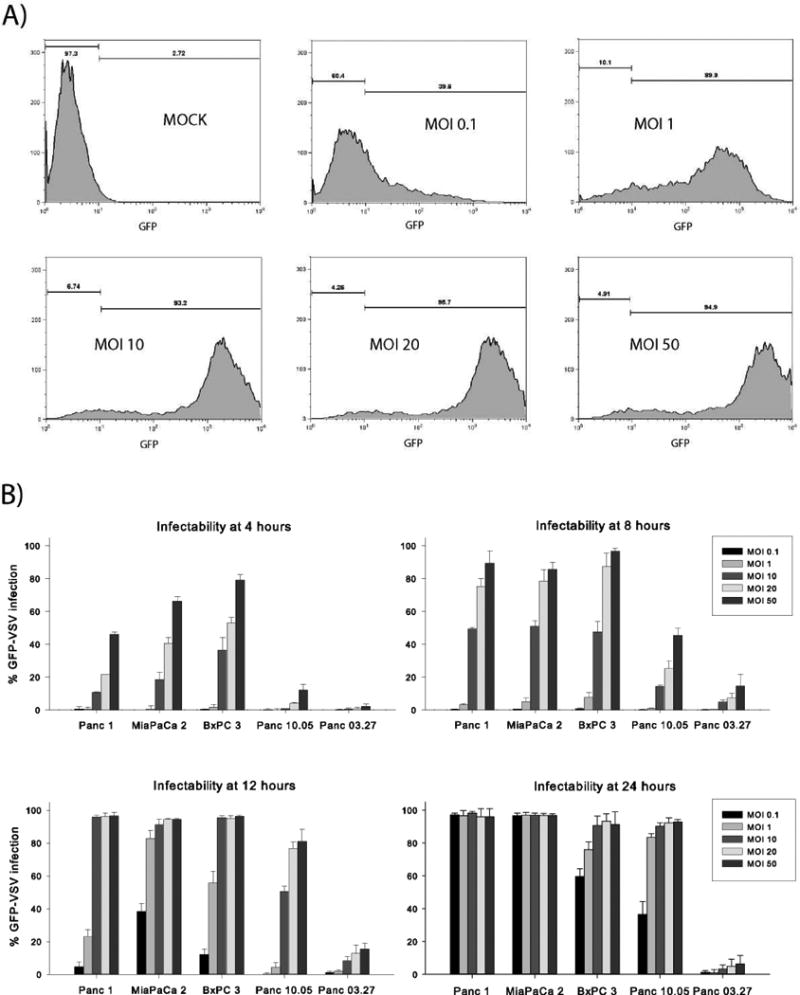
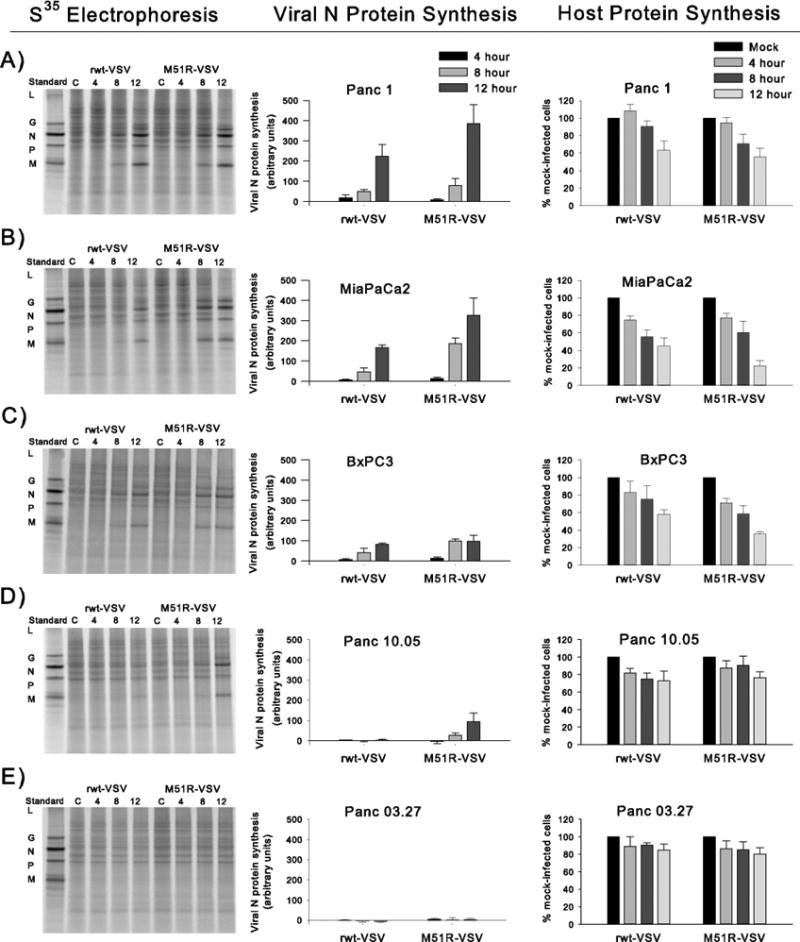
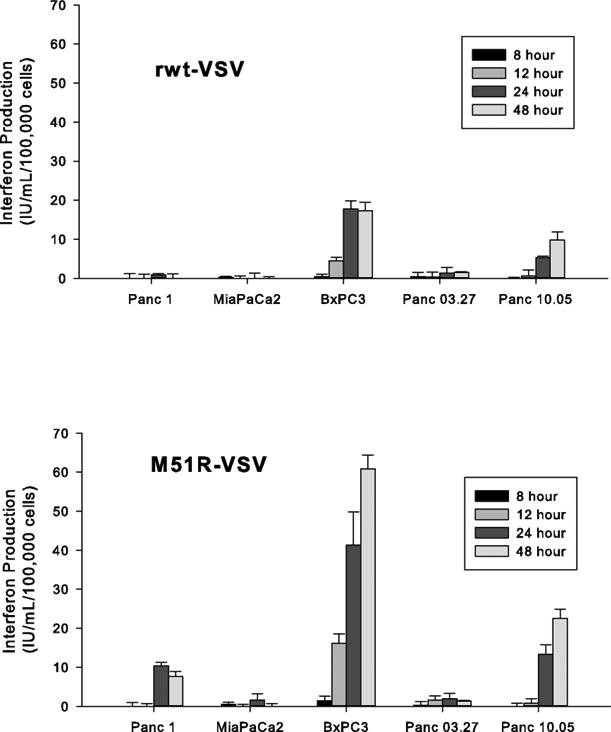
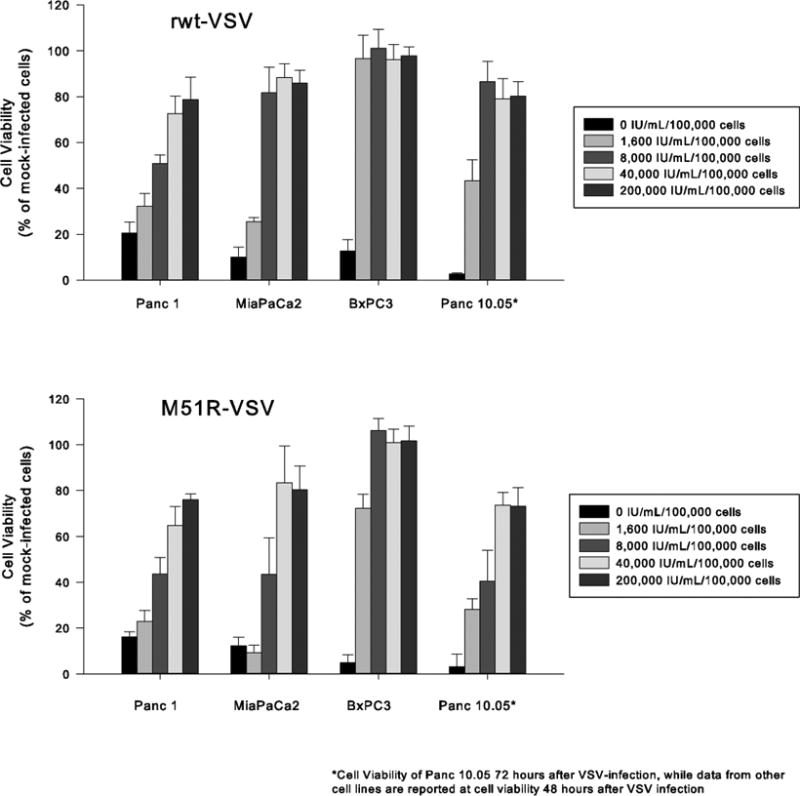
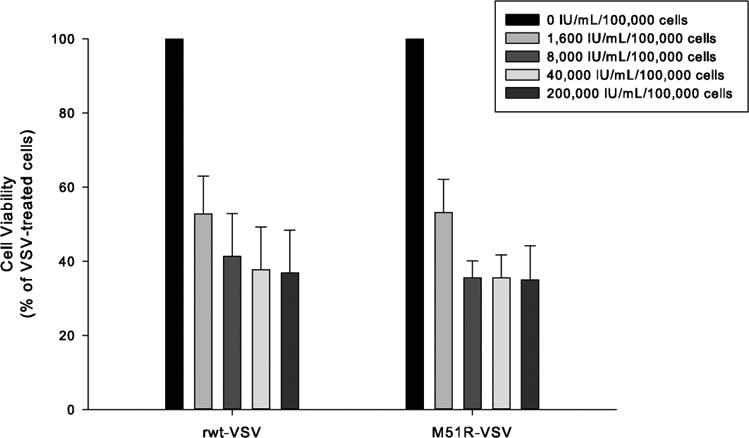
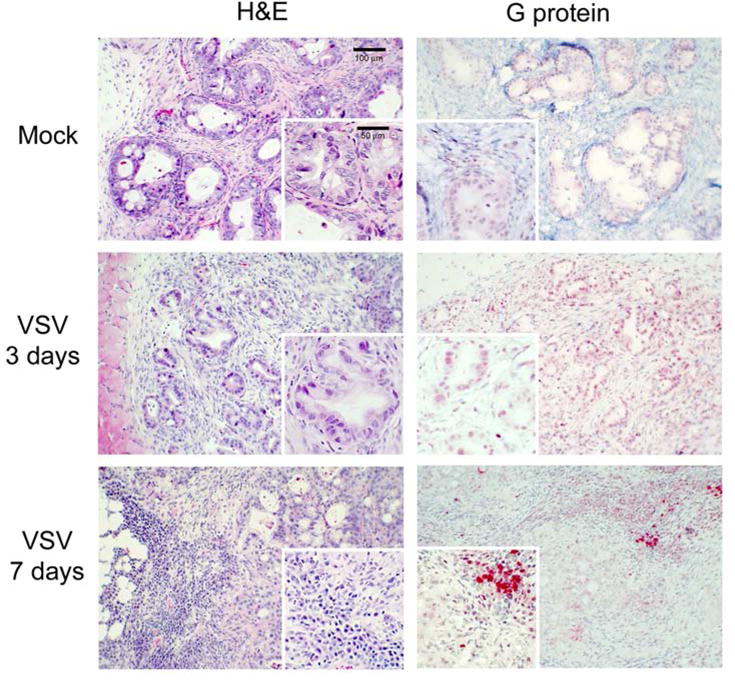
Four of five pancreatic cancer cell lines were sensitive to M51R-VSV, whereas Panc 03.27 cells remained resistant (81 ± 3% viability 72 h after single-cycle infection). Comparing sensitive MiaPaCa2 cells with resistant Panc 03.27 cells, significant differences in gene expression were found relating to IFN signaling (P = 2 × 10(-5)), viral entry (P = 3 × 10(-4)), and endocytosis (P = 7 × 10(-4)). MiaPaCa2 cells permitted high levels of VSV infection, whereas Panc 03.27 cells were capable of resisting VSV cell entry even at high multiplicities of infection. Extrinsic β-IFN overcame apparent defects in IFN-mediated pathways in MiaPaCa2 cells conferring VSV resistance. In contrast, β-IFN decreased cell viability in Panc 3.27 cells, suggesting intact antiviral mechanisms. VSV-treated xenografts exhibited reduced tumor growth relative to controls in both MiaPaCa2 (1423 ± 345% versus 164 ± 136%; P < 0.001) and Panc 3.27 (979 ± 153% versus 50 ± 56%; P = 0.002) tumors. Significant lymphocytic infiltration was seen in M51R-VSV-treated Panc 03.27 xenografts.
Inhibition of VSV endocytosis and intact IFN-mediated defenses are responsible for M51R-VSV resistance in pancreatic adenocarcinoma cells. M51R-VSV treatment appears to induce antitumor cellular immunity in vivo, which may expand its clinical efficacy.
M 蛋白突变型水疱性口炎病毒(M51R-VSV)对多种癌症具有溶瘤特性。然而,一些癌细胞对 M51R-VSV 具有抗性。在此,我们评估了胰腺腺癌细胞对水疱性口炎病毒(VSV)抗性的分子决定因素。
通过 3-(4,5-二甲基噻唑-2-基)-5-(3-羧基甲氧基苯基)-2-(4-磺苯基)-2H-四唑测定法分析细胞活力和 β-干扰素(IFN)的作用。通过微阵列分析评估基因表达。通过流式细胞术测量细胞感染性。在无胸腺裸鼠中建立异种移植瘤,并进行瘤内 M51R-VSV 治疗。
五种胰腺癌细胞系中的四种对 M51R-VSV 敏感,而 Panc 03.27 细胞仍具有抗性(单次感染循环 72 小时后细胞活力为 81 ± 3%)。将敏感的 MiaPaCa2 细胞与耐药的 Panc 03.27 细胞进行比较,发现与 IFN 信号转导(P=2×10(-5))、病毒进入(P=3×10(-4))和内吞作用(P=7×10(-4))相关的基因表达存在显著差异。MiaPaCa2 细胞允许高水平的 VSV 感染,而 Panc 03.27 细胞即使在高感染复数下也能够抵抗 VSV 细胞进入。外源性 β-IFN 克服了 MiaPaCa2 细胞中 IFN 介导途径的明显缺陷,赋予了 VSV 抗性。相比之下,β-IFN 降低了 Panc 3.27 细胞的细胞活力,表明抗病毒机制完整。与对照组相比,VSV 治疗的异种移植瘤在 MiaPaCa2 肿瘤中(1423 ± 345%对 164 ± 136%;P<0.001)和 Panc 3.27 肿瘤中(979 ± 153%对 50 ± 56%;P=0.002)的肿瘤生长均减少。在 M51R-VSV 治疗的 Panc 03.27 异种移植瘤中观察到明显的淋巴细胞浸润。
VSV 内吞作用的抑制和完整的 IFN 介导的防御是胰腺腺癌细胞中 M51R-VSV 抗性的原因。M51R-VSV 治疗似乎在体内诱导抗肿瘤细胞免疫,这可能扩大其临床疗效。