CIMAR/CIIMAR, Centro Interdisciplinar de Investigação Marinha e Ambiental, Universidade do Porto, Rua dos Bragas, 177, Porto 4050-123, Portugal.
Toxins (Basel). 2013 Nov 18;5(11):2172-208. doi: 10.3390/toxins5112172.
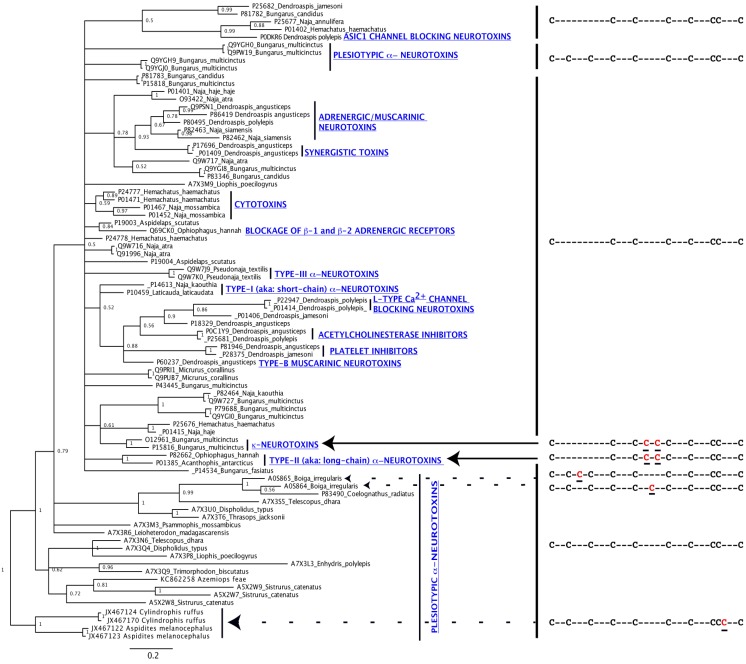
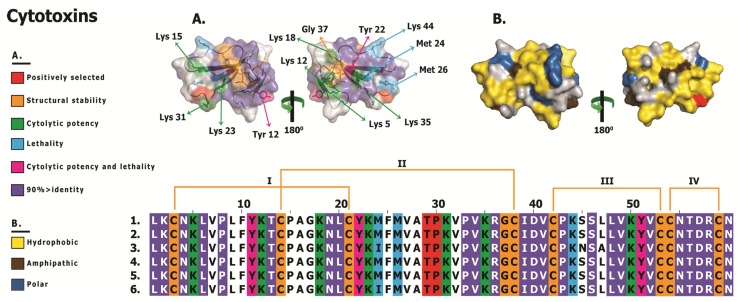
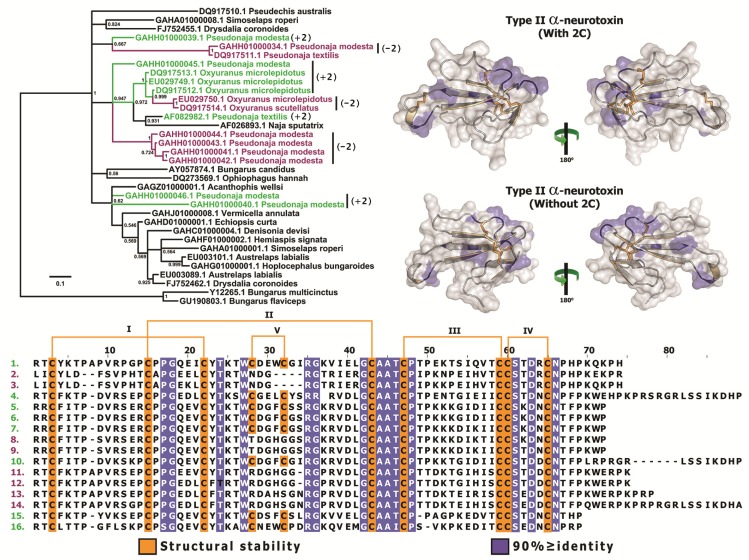
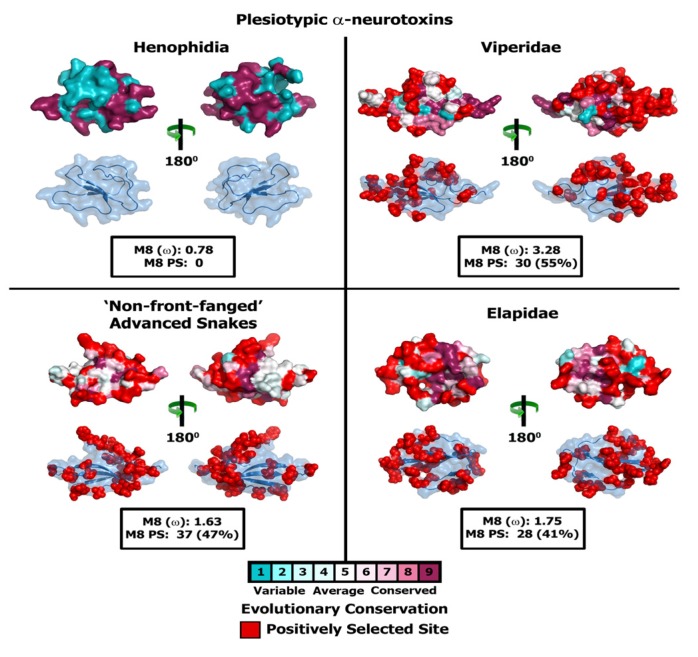
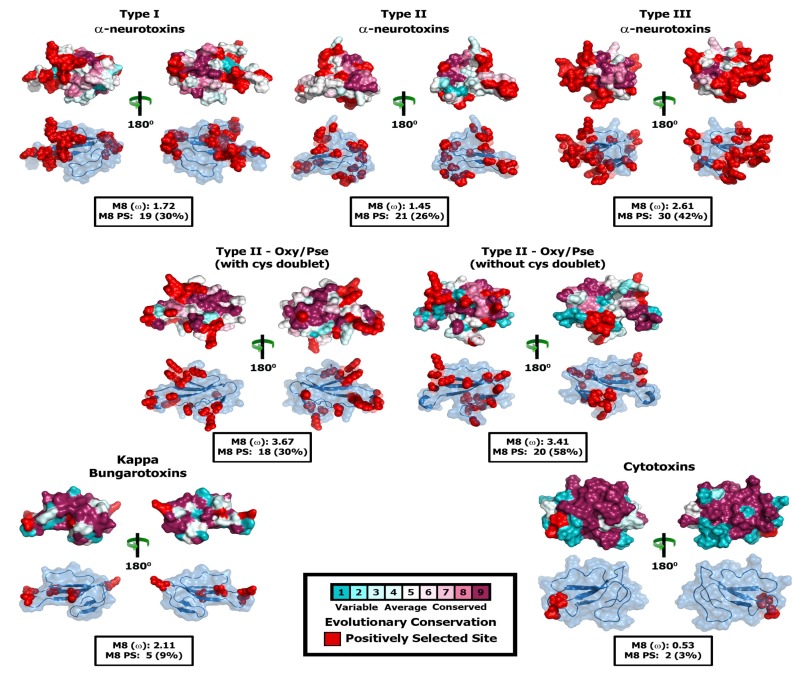
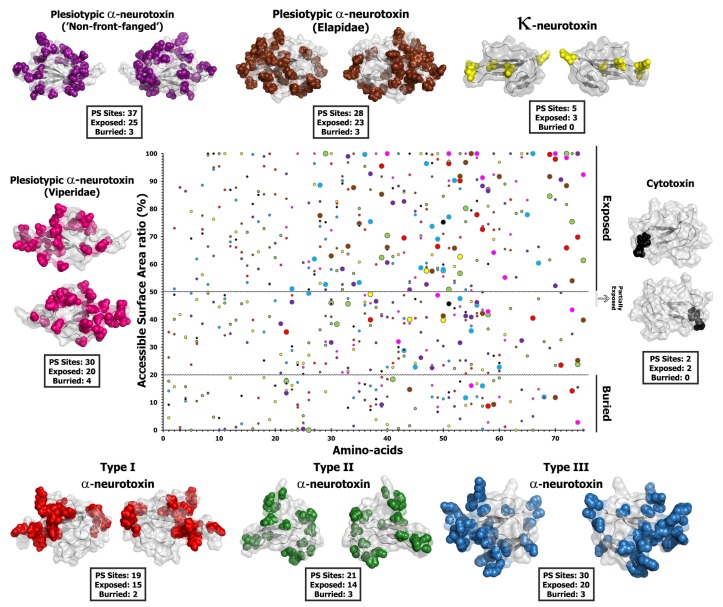
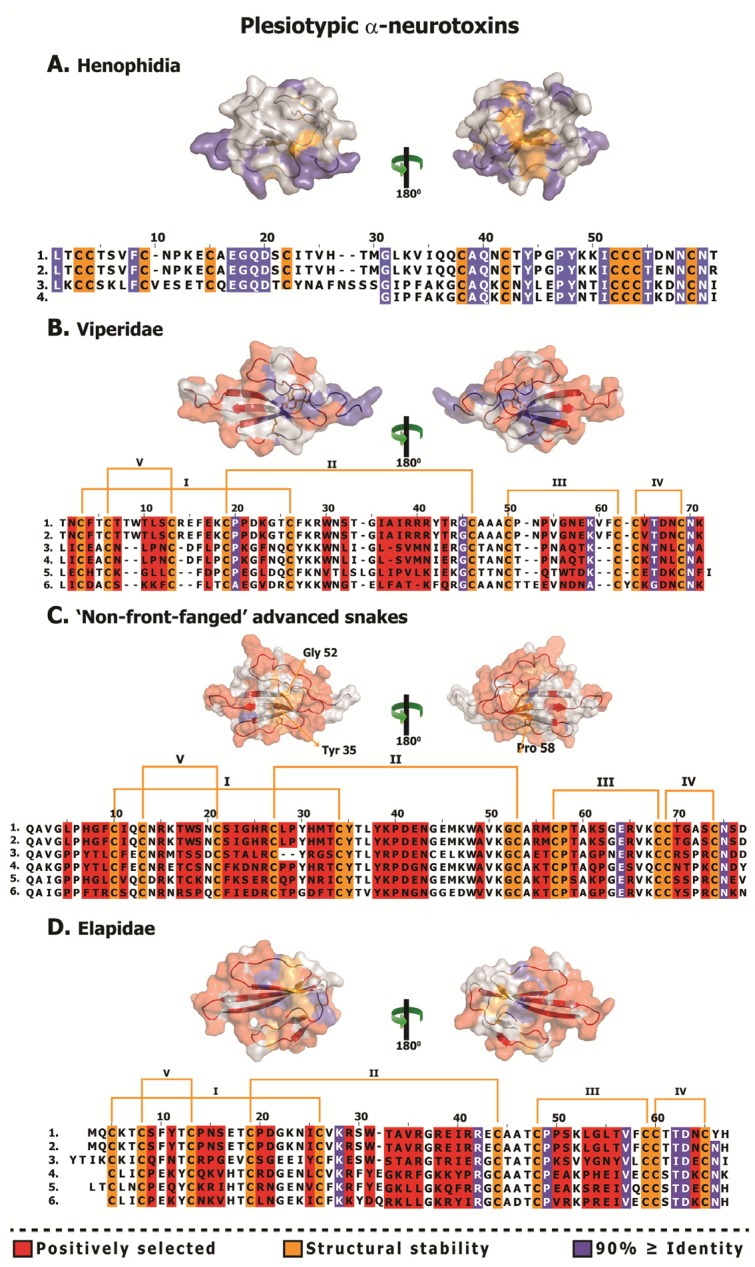
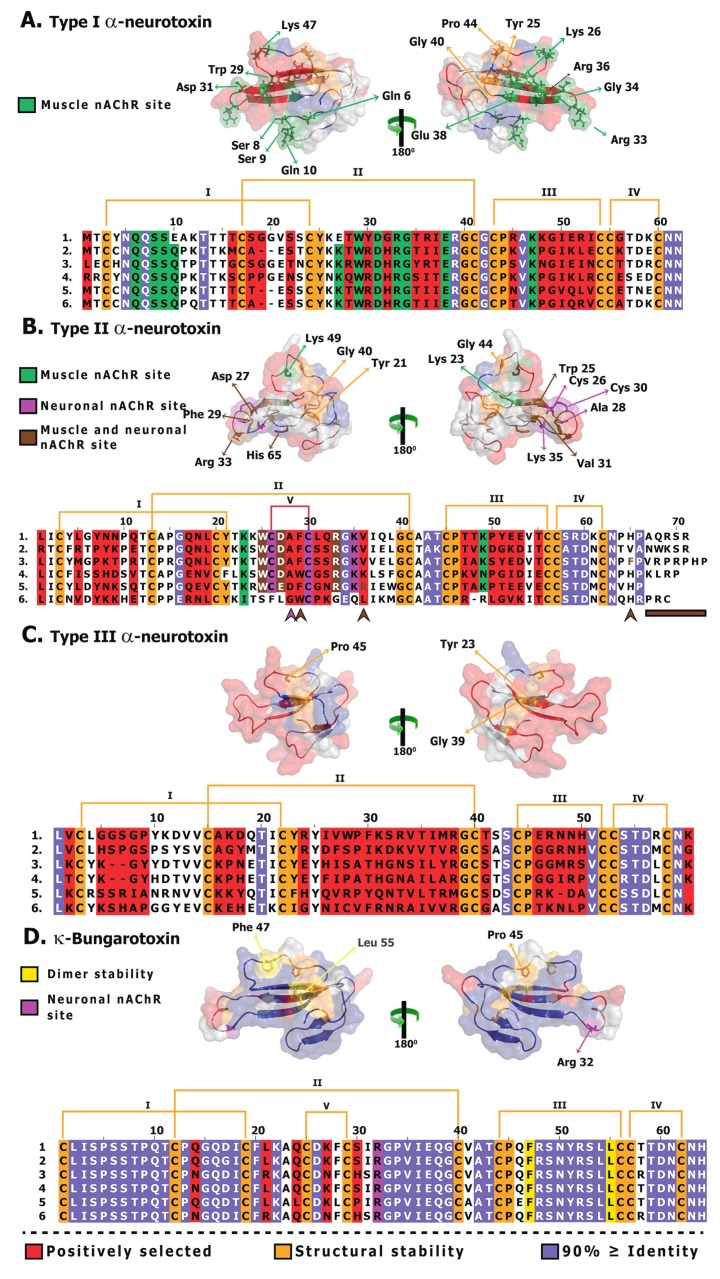
Three-finger toxins (3FTx) represent one of the most abundantly secreted and potently toxic components of colubrid (Colubridae), elapid (Elapidae) and psammophid (Psammophiinae subfamily of the Lamprophidae) snake venom arsenal. Despite their conserved structural similarity, they perform a diversity of biological functions. Although they are theorised to undergo adaptive evolution, the underlying diversification mechanisms remain elusive. Here, we report the molecular evolution of different 3FTx functional forms and show that positively selected point mutations have driven the rapid evolution and diversification of 3FTx. These diversification events not only correlate with the evolution of advanced venom delivery systems (VDS) in Caenophidia, but in particular the explosive diversification of the clade subsequent to the evolution of a high pressure, hollow-fanged VDS in elapids, highlighting the significant role of these toxins in the evolution of advanced snakes. We show that Type I, II and III α-neurotoxins have evolved with extreme rapidity under the influence of positive selection. We also show that novel Oxyuranus/Pseudonaja Type II forms lacking the apotypic loop-2 stabilising cysteine doublet characteristic of Type II forms are not phylogenetically basal in relation to other Type IIs as previously thought, but are the result of secondary loss of these apotypic cysteines on at least three separate occasions. Not all 3FTxs have evolved rapidly: κ-neurotoxins, which form non-covalently associated heterodimers, have experienced a relatively weaker influence of diversifying selection; while cytotoxic 3FTx, with their functional sites, dispersed over 40% of the molecular surface, have been extremely constrained by negative selection. We show that the a previous theory of 3FTx molecular evolution (termed ASSET) is evolutionarily implausible and cannot account for the considerable variation observed in very short segments of 3FTx. Instead, we propose a theory of Rapid Accumulation of Variations in Exposed Residues (RAVER) to illustrate the significance of point mutations, guided by focal mutagenesis and positive selection in the evolution and diversification of 3FTx.
三指毒素(3FTx)是蛇毒中含量最丰富、毒性最强的成分之一,主要存在于游蛇科(Colubridae)、眼镜蛇科(Elapidae)和沙蟒科(Psammophiinae 亚科的 Lamprophiidae)中。尽管它们在结构上具有保守的相似性,但却具有多样化的生物学功能。虽然它们被认为经历了适应性进化,但潜在的多样化机制仍然难以捉摸。在这里,我们报告了不同 3FTx 功能形式的分子进化,并表明正选择的点突变驱动了 3FTx 的快速进化和多样化。这些多样化事件不仅与 Caenophidia 中先进毒液输送系统(VDS)的进化相关,而且特别是在眼镜蛇科中空尖牙的高压 VDS 进化后,该进化支的爆炸式多样化,突出了这些毒素在先进蛇类进化中的重要作用。我们表明,I 型、II 型和 III 型α-神经毒素在正选择的影响下进化得非常迅速。我们还表明,新型的 Oxyuranus/Pseudonaja II 型形式缺乏 II 型形式特有的Loop-2 稳定半胱氨酸二联体,与之前认为的其他 IIs 相比,在进化上并不是基础形式,而是这些典型半胱氨酸在至少三个不同的场合发生了二次丢失的结果。并非所有的 3FTx 都进化得很快:κ-神经毒素形成非共价结合的异二聚体,经历了较弱的多样化选择影响;而具有功能位点的细胞毒性 3FTx,其功能位点分散在分子表面的 40%以上,受到负选择的极大限制。我们表明,之前提出的 3FTx 分子进化理论(称为 ASSET)在进化上是不可信的,无法解释在 3FTx 的非常短的片段中观察到的大量变异。相反,我们提出了一个快速积累暴露残基变异的理论(RAVER)来阐明点突变的意义,该理论由焦点诱变和正选择指导,在 3FTx 的进化和多样化中。