Department of Microbiology, Immunology, and Parasitology, Louisiana State University Health Sciences Center, New Orleans, LA; Stanley S. Scott Cancer Center, Louisiana State University Health Sciences Center, New Orleans, LA.
Int J Cancer. 2014 Jun 15;134(12):2853-64. doi: 10.1002/ijc.28622. Epub 2013 Dec 3.
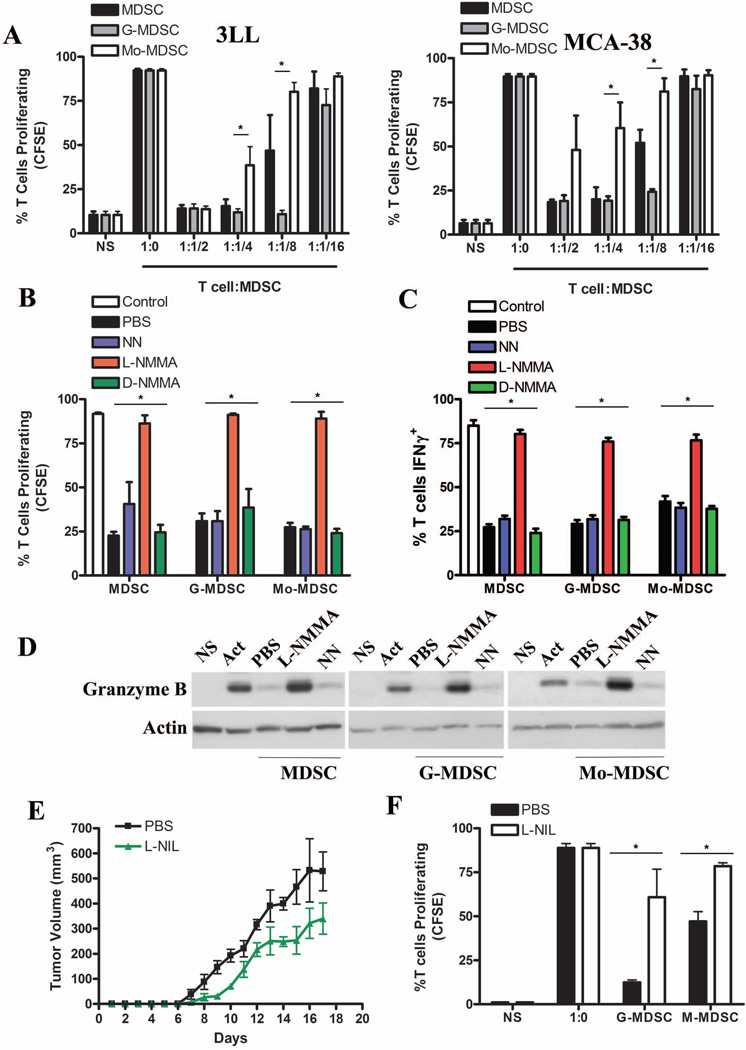
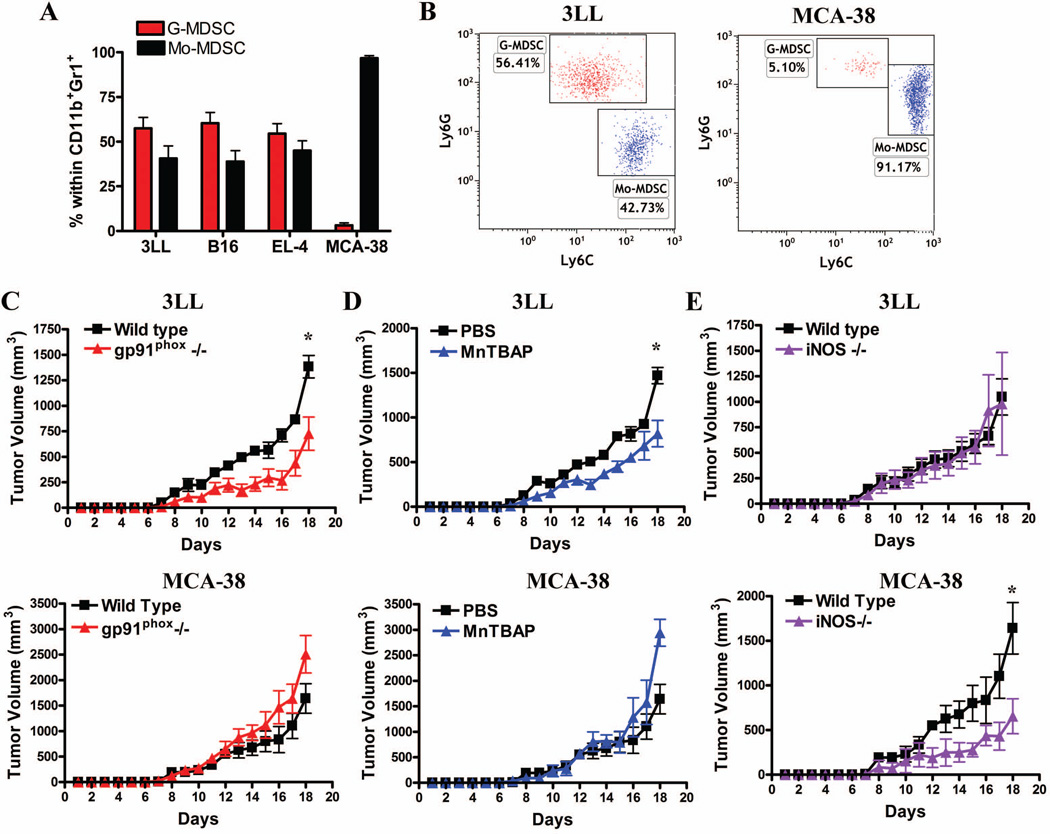
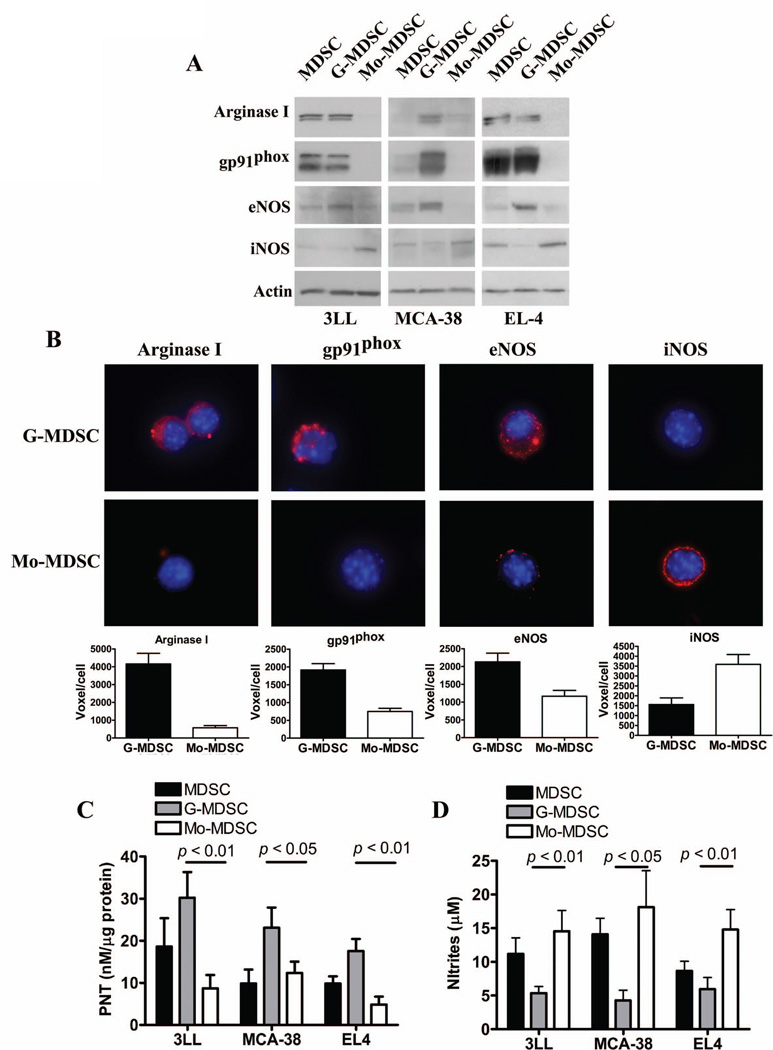
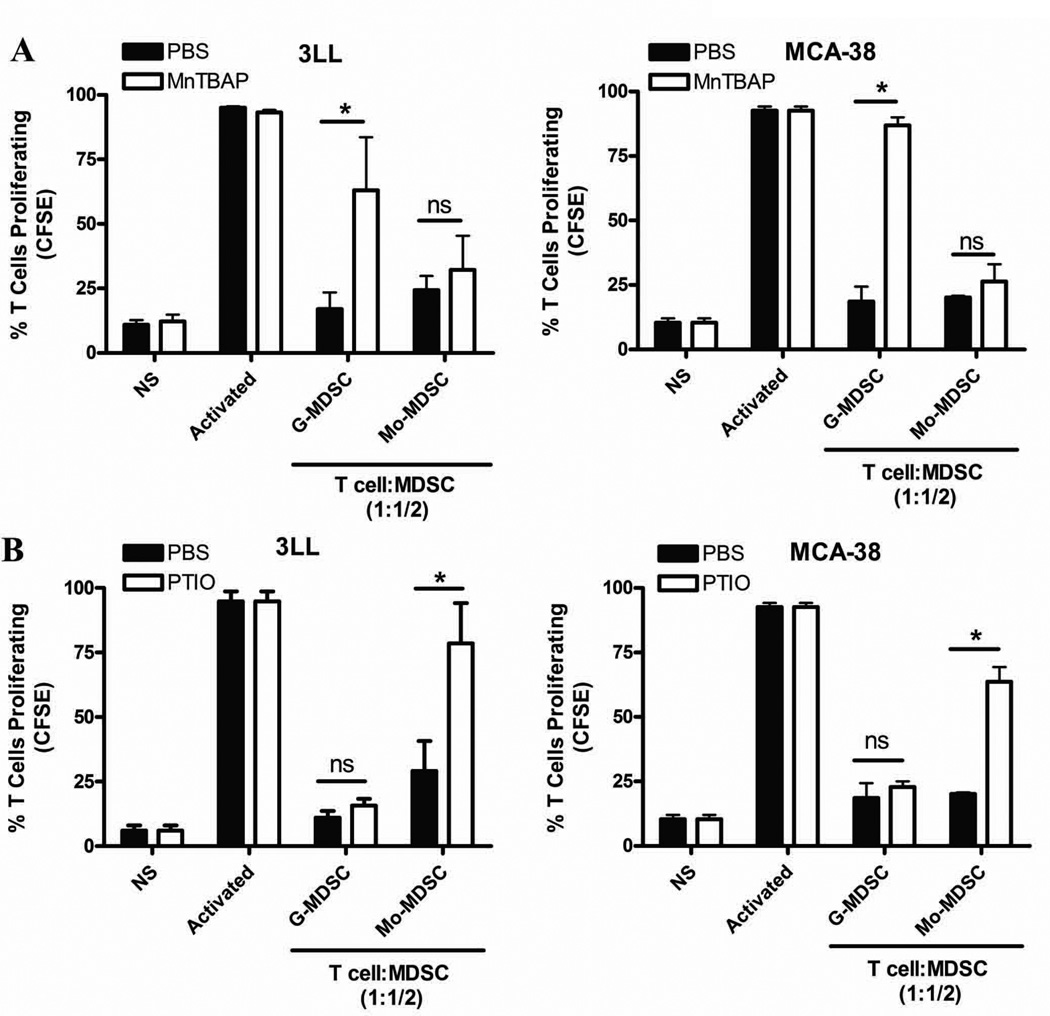
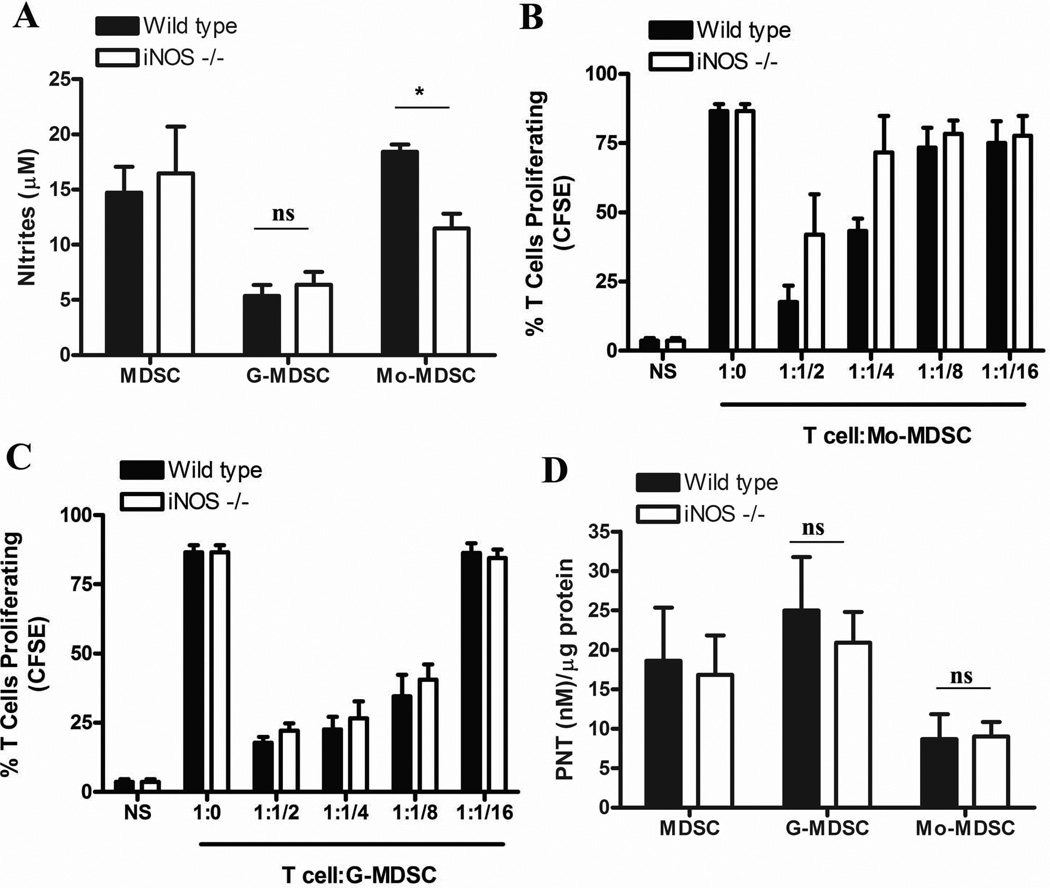
The accumulation of myeloid-derived suppressor cells (MDSC) in tumor-bearing hosts is a hallmark of malignancy-associated inflammation and a major mediator for the induction of T cell suppression in cancer. MDSC can be divided phenotypically into granulocytic (G-MDSC) and monocytic (Mo-MDSC) subgroups. Several mechanisms mediate the induction of T cell anergy by MDSC; however, the specific role of these pathways in the inhibitory activity of MDSC subpopulations remains unclear. Therefore, we aimed to determine the effector mechanisms by which subsets of tumor-infiltrating MDSC block T cell function. We found that G-MDSC had a higher ability to impair proliferation and expression of effector molecules in activated T cells, as compared to Mo-MDSC. Interestingly, both MDSC subgroups inhibited T cells through nitric oxide (NO)-related pathways, but expressed different effector inhibitory mechanisms. Specifically, G-MDSC impaired T cells through the production of peroxynitrites (PNT), while Mo-MDSC suppressed by the release of NO. The production of PNT in G-MDSC depended on the expression of gp91(phox) and endothelial NO synthase (eNOS), while inducible NO synthase (iNOS) mediated the generation of NO in Mo-MDSC. Deletion of eNOS and gp91(phox) or scavenging of PNT blocked the suppressive function of G-MDSC and induced anti-tumoral effects, without altering Mo-MDSC inhibitory activity. Furthermore, NO-scavenging or iNOS knockdown prevented Mo-MDSC function, but did not affect PNT production or suppression by G-MDSC. These results suggest that MDSC subpopulations utilize independent effector mechanisms to regulate T cell function. Inhibition of these pathways is expected to specifically block MDSC subsets and overcome immune suppression in cancer.
髓系来源抑制细胞(MDSC)在荷瘤宿主中的积累是恶性肿瘤相关炎症的标志,也是癌症中 T 细胞抑制诱导的主要介质。MDSC 可以表型上分为粒细胞(G-MDSC)和单核细胞(Mo-MDSC)亚群。几种机制介导 MDSC 诱导 T 细胞失能;然而,这些途径在 MDSC 亚群抑制活性中的具体作用尚不清楚。因此,我们旨在确定肿瘤浸润 MDSC 亚群阻断 T 细胞功能的效应机制。我们发现,与 Mo-MDSC 相比,G-MDSC 具有更高的损伤激活 T 细胞增殖和效应分子表达的能力。有趣的是,两组 MDSC 亚群均通过一氧化氮(NO)相关途径抑制 T 细胞,但表达不同的效应抑制机制。具体而言,G-MDSC 通过产生过氧亚硝酸盐(PNT)来损伤 T 细胞,而 Mo-MDSC 通过释放 NO 来抑制。G-MDSC 中 PNT 的产生依赖于 gp91(phox)和内皮型一氧化氮合酶(eNOS)的表达,而诱导型一氧化氮合酶(iNOS)介导 Mo-MDSC 中 NO 的产生。eNOS 和 gp91(phox)的缺失或 PNT 的清除阻断了 G-MDSC 的抑制功能,并诱导了抗肿瘤作用,而不改变 Mo-MDSC 的抑制活性。此外,NO 清除或 iNOS 敲低阻止了 Mo-MDSC 的功能,但不影响 G-MDSC 产生或抑制 PNT。这些结果表明,MDSC 亚群利用独立的效应机制来调节 T 细胞功能。抑制这些途径有望特异性阻断 MDSC 亚群并克服癌症中的免疫抑制。