Soda Naoki, Ueki Tsutomu, Aoki Takaaki
Department of Rehabilitation, Major in Physical Therapy, Heisei College of Health Sciences ; Department of Orthopaedic Surgery, Gifu University Graduate School of Medicine.
J Phys Ther Sci. 2013 Jun;25(6):747-9. doi: 10.1589/jpts.25.747. Epub 2013 Jul 23.
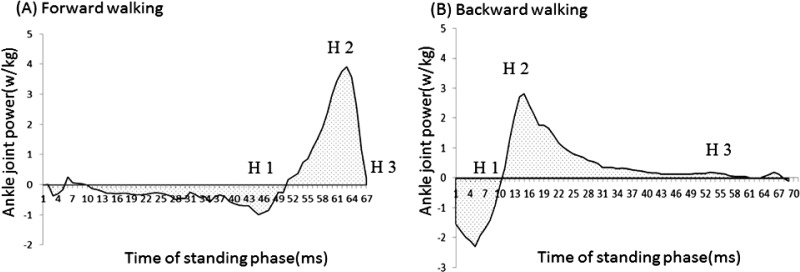
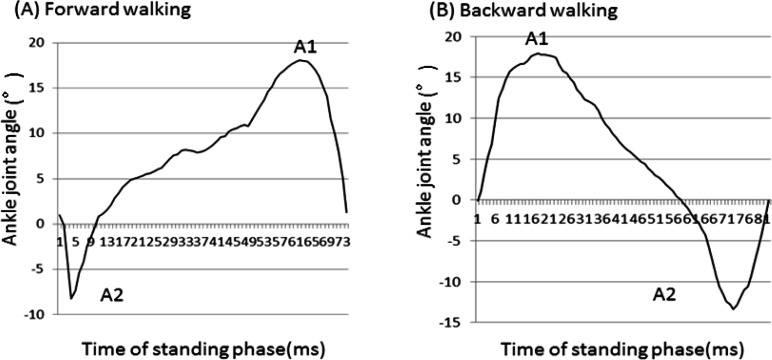
[Purpose] The purpose of this study was to perform kinematic and kinetic analyses of the ankle during both forward and backward walking using three-dimensional motion analysis. [Subjects] The subjects were 11 healthy adults. [Methods] Measurements of forward and backward walking motions were taken using a three-dimensional motion analysis device and 3 ground reaction force plates. The analysis segment was the standing phase and the items analyzed were walking time, maximum dorsal flexion of the ankle, maximum angle of plantar flexion, peak ankle power in the sagittal plane, workload of the ankle, and work rate. Statistical analysis consisted of comparisons using the t-test for each of the items measured during both forward and backward walking. [Results] The backward walking group had significantly lower ankle power, workload, and work rate. [Conclusion] The propulsive force in backward walking must come from some factor other than the ankle. The analysis of joint power is an important index for understanding the motion.
[目的]本研究旨在利用三维运动分析对向前和向后行走过程中的踝关节进行运动学和动力学分析。[对象]研究对象为11名健康成年人。[方法]使用三维运动分析设备和3块地面反力板对向前和向后行走运动进行测量。分析阶段为站立期,分析项目包括行走时间、踝关节最大背屈、最大跖屈角度、矢状面踝关节峰值功率、踝关节负荷及工作率。统计分析包括对向前和向后行走过程中测量的各项目进行t检验比较。[结果]向后行走组的踝关节功率、负荷及工作率显著较低。[结论]向后行走时的推进力必定来自踝关节以外的某些因素。关节功率分析是理解运动的重要指标。