Shanghai University of TCM, Shanghai, China.
PLoS One. 2013 Nov 18;8(11):e79382. doi: 10.1371/journal.pone.0079382. eCollection 2013.
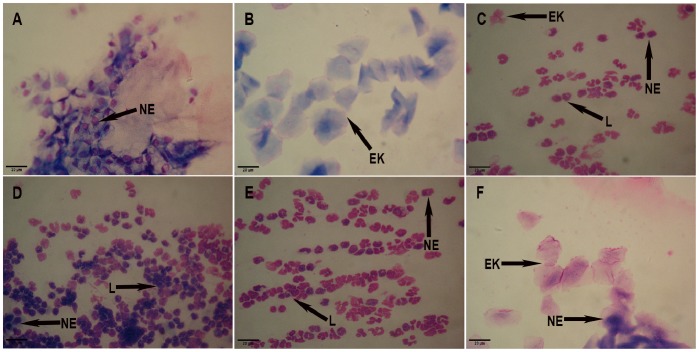
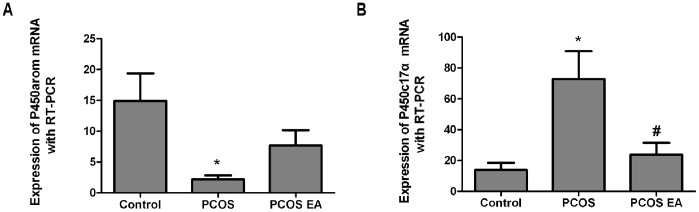
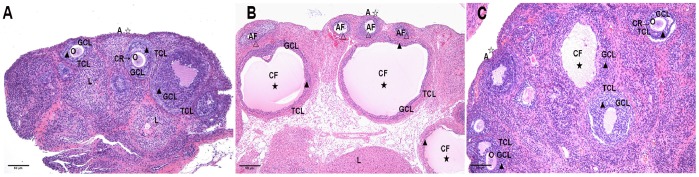
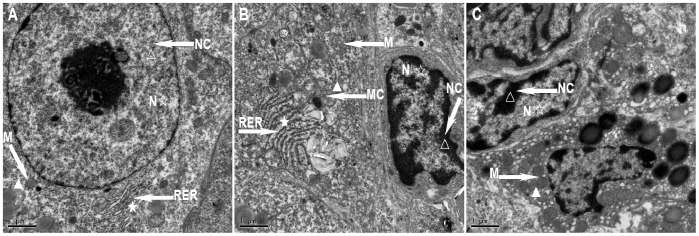
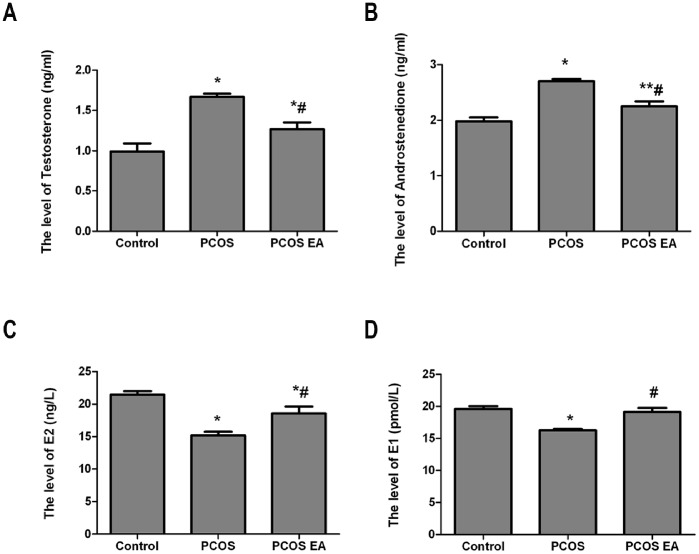
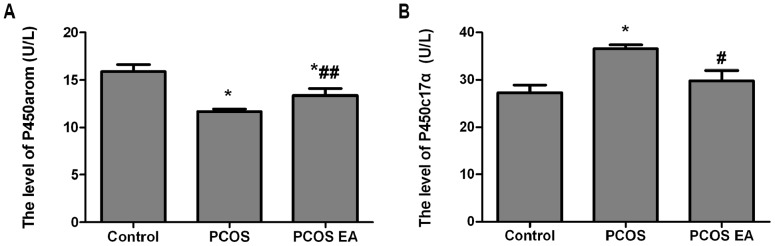
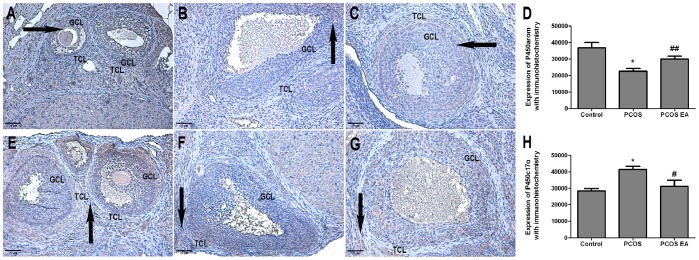
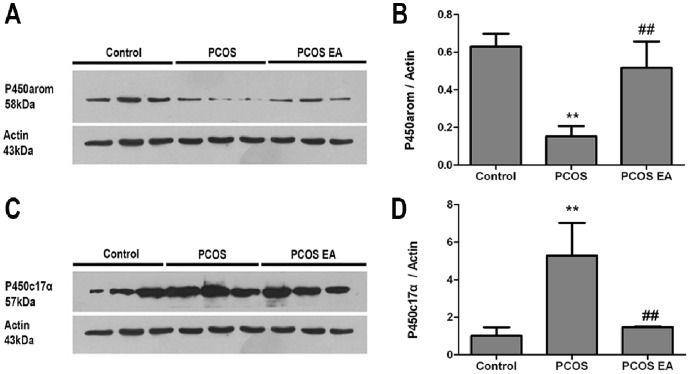
Hyperandrogenism is a core factor in the series of reproductive and endocrine metabolic disorders involved in polycystic ovary syndrome (PCOS). Abnormalities in enzymatic activity and the expression of ovarian granular cell layer P450arom and theca cell P450c17α can lead to an atypical environment of local ovarian hormones, including excessive androgen levels. Rat models prepared with letrozole exhibit similar endocrine and histological changes to those that occur in human PCOS. We used such a model to study the role of electro-acupuncture (EA) in regulating ovarian P450arom and P450c17α enzymatic activity and mRNA expression in PCOS rats. Female Sprague Dawley (SD) rats aged 42 days were randomly divided into 3 groups (control, PCOS, and PCOS EA) consisting of 10 rats each. The PCOS and PCOS EA groups were administered a gavage of 1.0 mg/kg(-1) of letrozole solution once daily for 21 consecutive days. Beginning in the ninth week, the PCOS EA group was administered low-frequency EA treatment daily for 14 consecutive days. After the treatment, we obtained the following results. The estrous cycles were restored in 8 of the 10 rats in the PCOS EA group, and their ovarian morphologies and ultrastructures normalized. The peripheral blood measurements (with ELISA) showed significantly decreased androgens (i.e., androstenedione and testosterone) with significantly increased estrogens (i.e., estrone, estradiol) and increased P450arom with decreased P450C17α. Immunohistochemistry and Western blotting methods showed enhanced expression of ovarian granular cell layer P450arom as well as decreased expression of theca cell layer P450C17α. Fluorescence quantitative PCR methods showed enhanced expression of ovarian granular cell layer P450arom mRNA as well as decreased expression of theca cell layer P450C17α mRNA. These results may help explain the effects of electro-acupuncture in changing the local ovarian hyperandrogenic environment and improving reproductive and endocrine metabolic disorders in PCOS.
高雄激素血症是多囊卵巢综合征(PCOS)涉及的生殖和内分泌代谢紊乱系列的核心因素。卵巢颗粒细胞层 P450arom 和卵泡膜细胞层 P450c17α 的酶活性和表达异常可导致局部卵巢激素的非典型环境,包括雄激素水平过高。用来曲唑制备的大鼠模型表现出与人类 PCOS 相似的内分泌和组织学变化。我们使用这种模型来研究电针对 PCOS 大鼠卵巢 P450arom 和 P450c17α 酶活性和 mRNA 表达的调节作用。42 天大的雌性 Sprague Dawley(SD)大鼠随机分为 3 组(对照组、PCOS 组和 PCOS EA 组),每组 10 只。PCOS 和 PCOS EA 组每天给予 1.0mg/kg(-1)的来曲唑溶液灌胃,连续 21 天。从第 9 周开始,PCOS EA 组每天进行低频电针治疗,连续 14 天。治疗后,我们得到以下结果。PCOS EA 组的 10 只大鼠中有 8 只恢复了动情周期,其卵巢形态和超微结构恢复正常。外周血测量(用 ELISA 法)显示雄激素(即雄烯二酮和睾酮)显著降低,雌激素(即雌酮、雌二醇)显著升高,P450arom 增加,P450C17α 减少。免疫组织化学和 Western blot 方法显示卵巢颗粒细胞层 P450arom 表达增强,卵泡膜细胞层 P450C17α 表达降低。荧光定量 PCR 方法显示卵巢颗粒细胞层 P450arom mRNA 表达增强,卵泡膜细胞层 P450C17α mRNA 表达降低。这些结果可能有助于解释电针对改变局部卵巢高雄激素环境和改善 PCOS 生殖和内分泌代谢紊乱的作用。