Department of Thoracic and Cardiovascular Surgery, Chosun University College of Medicine, 375 Susukdong, Kwangju 501-709, Korea.
Toxicol Res. 2011 Jun;27(2):71-6. doi: 10.5487/TR.2011.27.2.071.
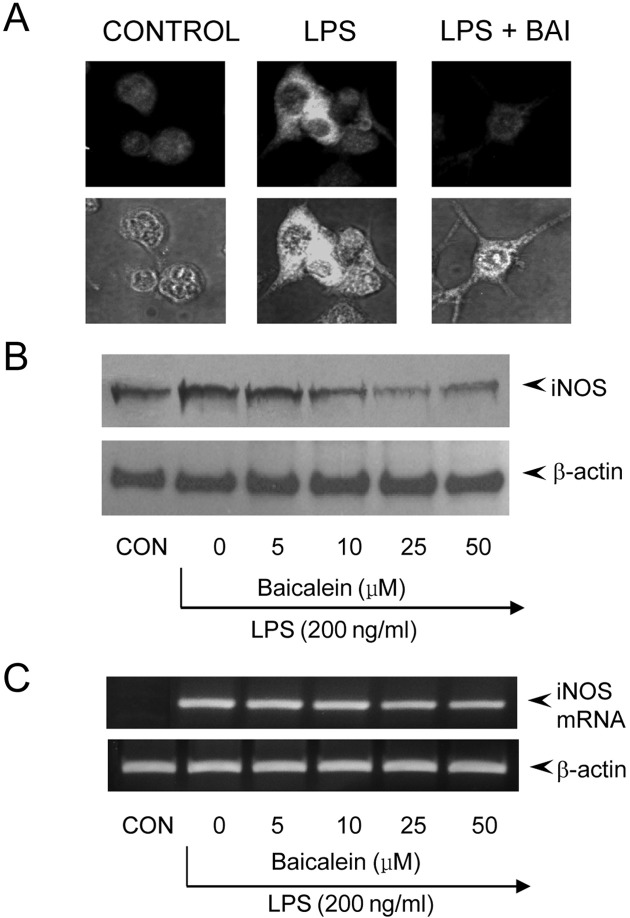
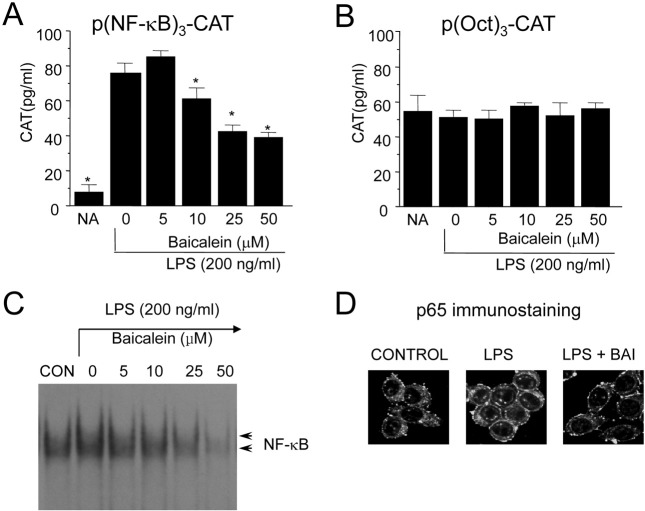
We demonstrate that baicalein, a bioactive flavonoid originally isolated from Scutellaria baicalensis, inhibits LPS-induced expression of iNOS gene in RAW 264.7 cells. Treatment of peritoneal macrophages and RAW 264.7 cells with baicalein inhibited LPS-stimulated nitric oxide production in a dose-related manner. Immunohistochemical staining of iNOS and RT-PCR analysis showed that the decrease of NO was due to the inhibition of iNOS gene expression in RAW 264.7 cells. Immunostaining of p65, EMSA, and reporter gene assay showed that baicalein inhibited NF-κB nuclear translocation, DNA binding, and transcriptional activation, respectively. Collectively, these series of experiments indicate that baicalein inhibits iNOS gene expression by blocking NF-κB nuclear translocation. Due to the critical role that NO release plays in mediating inflammatory responses, the inhibitory effects of baicalein on iNOS suggest that baicalein may represent a useful anti-inflammatory agent.
我们证明,黄芩素是一种从黄芩中分离出来的生物活性黄酮类化合物,可抑制 LPS 诱导的 RAW 264.7 细胞中 iNOS 基因的表达。黄芩素处理腹腔巨噬细胞和 RAW 264.7 细胞可剂量依赖性地抑制 LPS 刺激的一氧化氮产生。iNOS 的免疫组化染色和 RT-PCR 分析表明,NO 的减少是由于 RAW 264.7 细胞中 iNOS 基因表达的抑制。免疫染色、EMSA 和报告基因分析表明,黄芩素分别抑制 NF-κB 核易位、DNA 结合和转录激活。综上所述,这些实验系列表明,黄芩素通过阻断 NF-κB 核易位抑制 iNOS 基因表达。由于 NO 释放在介导炎症反应中起着关键作用,黄芩素对 iNOS 的抑制作用表明黄芩素可能是一种有用的抗炎剂。