Cancer Metabolism DPU, GlaxoSmithKline, Collegeville PA, USA.
Cancer Metab. 2013 Sep 6;1(1):19. doi: 10.1186/2049-3002-1-19.
Most normal cells in the presence of oxygen utilize glucose for mitochondrial oxidative phosphorylation. In contrast, many cancer cells rapidly convert glucose to lactate in the cytosol, a process termed aerobic glycolysis. This glycolytic phenotype is enabled by lactate dehydrogenase (LDH), which catalyzes the inter-conversion of pyruvate and lactate. The purpose of this study was to identify and characterize potent and selective inhibitors of LDHA.
High throughput screening and lead optimization were used to generate inhibitors of LDHA enzymatic activity. Effects of these inhibitors on metabolism were evaluated using cell-based lactate production, oxygen consumption, and 13C NMR spectroscopy assays. Changes in comprehensive metabolic profile, cell proliferation, and apoptosis were assessed upon compound treatment.
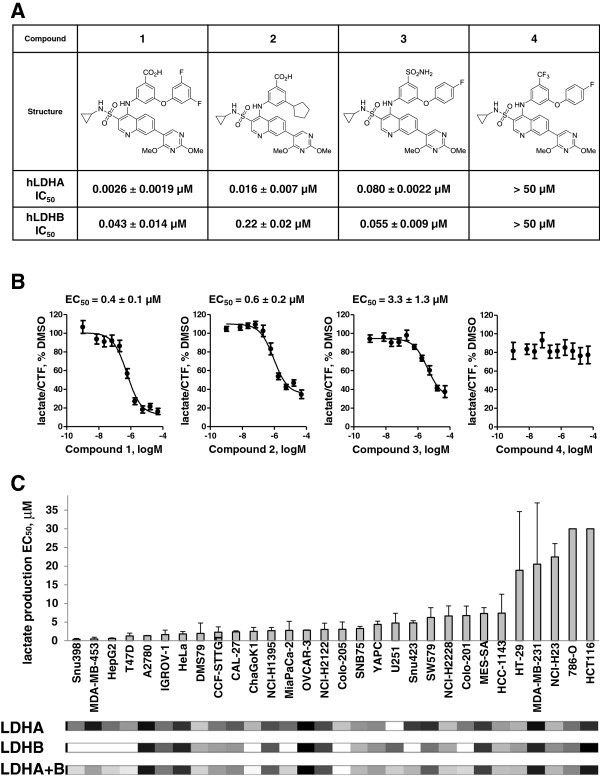
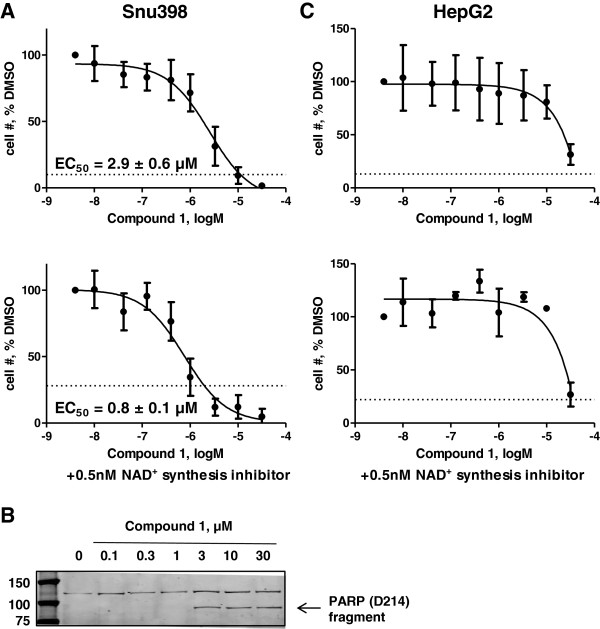
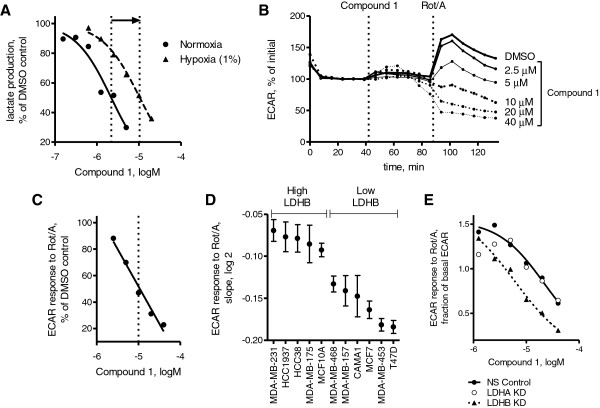
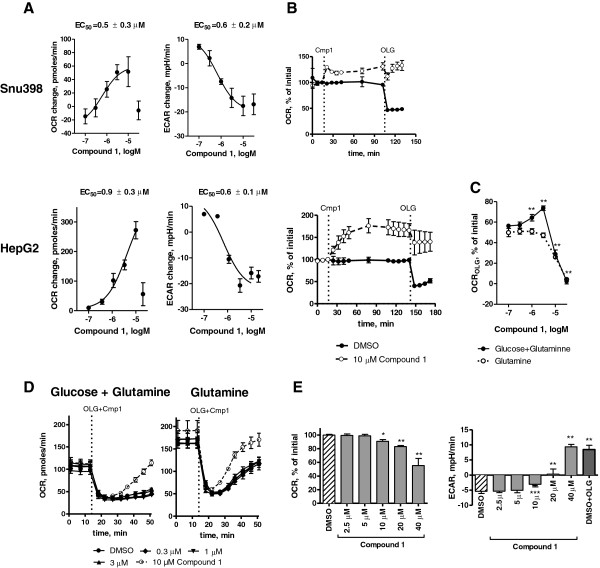
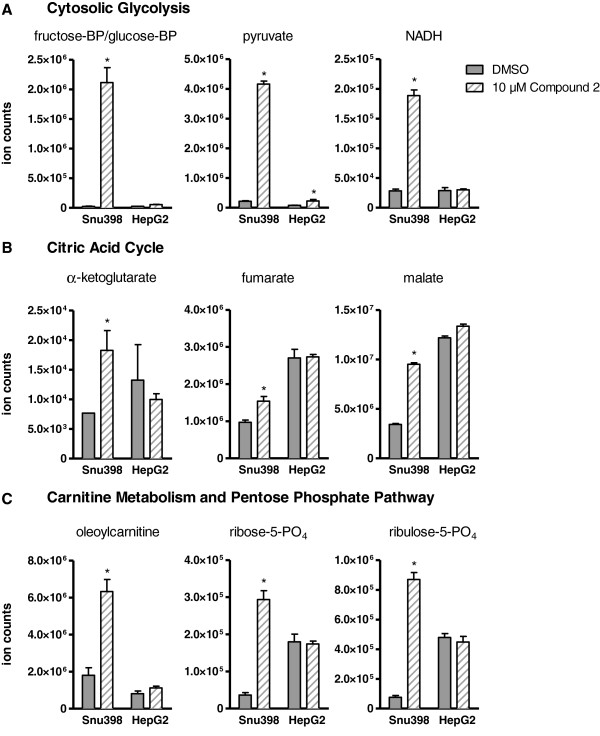
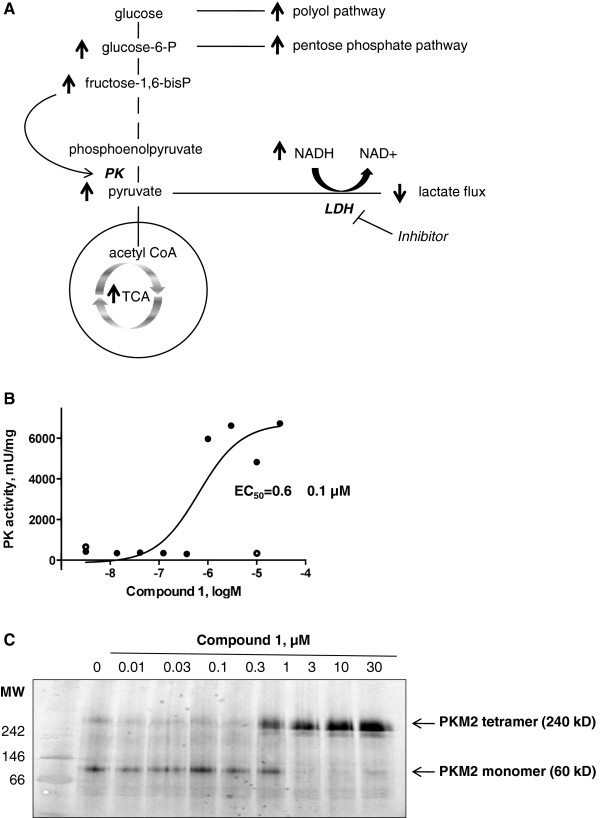
3-((3-carbamoyl-7-(3,5-dimethylisoxazol-4-yl)-6-methoxyquinolin-4-yl) amino) benzoic acid was identified as an NADH-competitive LDHA inhibitor. Lead optimization yielded molecules with LDHA inhibitory potencies as low as 2 nM and 10 to 80-fold selectivity over LDHB. Molecules in this family rapidly and profoundly inhibited lactate production rates in multiple cancer cell lines including hepatocellular and breast carcinomas. Consistent with selective inhibition of LDHA, the most sensitive breast cancer cell lines to lactate inhibition in hypoxic conditions were cells with low expression of LDHB. Our inhibitors increased rates of oxygen consumption in hepatocellular carcinoma cells at doses up to 3 microM, while higher concentrations directly inhibited mitochondrial function. Analysis of more than 500 metabolites upon LDHA inhibition in Snu398 cells revealed that intracellular concentrations of glycolysis and citric acid cycle intermediates were increased, consistent with enhanced Krebs cycle activity and blockage of cytosolic glycolysis. Treatment with these compounds also potentiated PKM2 activity and promoted apoptosis in Snu398 cells.
Rapid chemical inhibition of LDHA by these quinoline 3-sulfonamids led to profound metabolic alterations and impaired cell survival in carcinoma cells making it a compelling strategy for treating solid tumors that rely on aerobic glycolysis for survival.
大多数正常细胞在氧气存在的情况下利用葡萄糖进行线粒体氧化磷酸化。相比之下,许多癌细胞在细胞质中迅速将葡萄糖转化为乳酸,这一过程称为有氧糖酵解。这种糖酵解表型是由乳酸脱氢酶(LDH)实现的,它催化丙酮酸和乳酸的相互转化。本研究的目的是鉴定和表征 LDHA 的有效且选择性抑制剂。
使用高通量筛选和先导化合物优化生成 LDHA 酶活性的抑制剂。使用基于细胞的乳酸生成、耗氧量和 13C NMR 光谱测定法评估这些抑制剂对代谢的影响。在化合物处理后评估全面代谢谱、细胞增殖和细胞凋亡的变化。
3-((3-氨甲酰基-7-(3,5-二甲基异恶唑-4-基)-6-甲氧基喹啉-4-基)氨基)苯甲酸被鉴定为 NADH 竞争性 LDHA 抑制剂。先导化合物优化产生了 LDHA 抑制效力低至 2 nM 且对 LDHB 的选择性为 10 至 80 倍的分子。该家族中的分子迅速且显著地抑制了多种癌细胞系(包括肝癌和乳腺癌)中的乳酸生成速率。与选择性抑制 LDHA 一致,在低氧条件下对乳酸抑制最敏感的乳腺癌细胞系是 LDHB 表达低的细胞。我们的抑制剂在高达 3 μM 的剂量下增加肝癌细胞的耗氧量,而较高浓度则直接抑制线粒体功能。在 Snu398 细胞中 LDHA 抑制时对超过 500 种代谢物的分析表明,糖酵解和柠檬酸循环中间产物的细胞内浓度增加,与增强的三羧酸循环活性和细胞质糖酵解阻断一致。用这些化合物治疗也增强了 Snu398 细胞中 PKM2 的活性并促进了细胞凋亡。
这些喹啉 3-磺酰胺对 LDHA 的快速化学抑制导致癌细胞发生深刻的代谢改变和存活受损,这使其成为治疗依赖有氧糖酵解生存的实体瘤的一种有吸引力的策略。