Arthritis Res Ther. 2013 Oct 2;15(5):R141. doi: 10.1186/ar4323.
Anemia of inflammation (AI) is a common complication of rheumatoid arthritis (RA) and has a negative impact on RA symptoms and quality of life. Upregulation of hepcidin by inflammatory cytokines has been implicated in AI. In this study, we evaluated and compared the effects of IL-6 and TNF-α blocking therapies on anemia, disease activity, and iron-related parameters including serum hepcidin in RA patients.
Patients (n = 93) were treated with an anti-IL-6 receptor antibody (tocilizumab) or TNF-α inhibitors for 16 weeks. Major disease activity indicators and iron-related parameters including serum hepcidin-25 were monitored before and 2, 4, 8, and 16 weeks after the initiation of treatment. Effects of tocilizumab and infliximab (anti-TNF-α antibody) on cytokine-induced hepcidin expression in hepatoma cells were analyzed by quantitative real-time PCR.
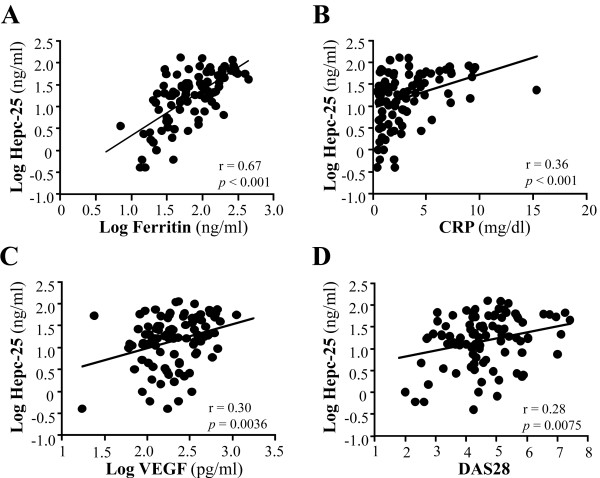
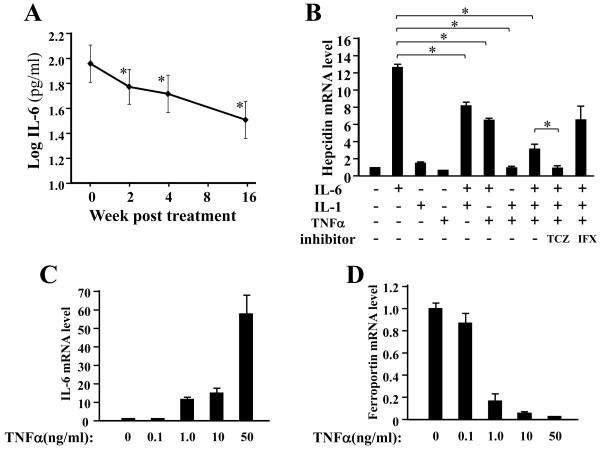
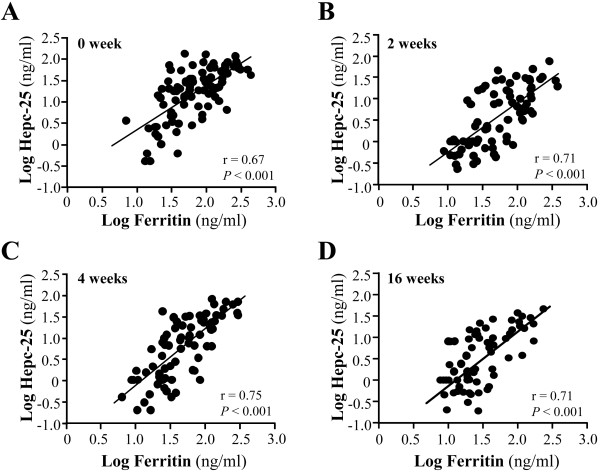
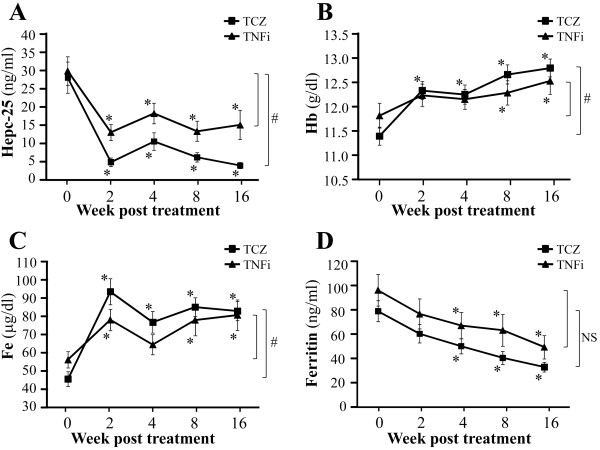
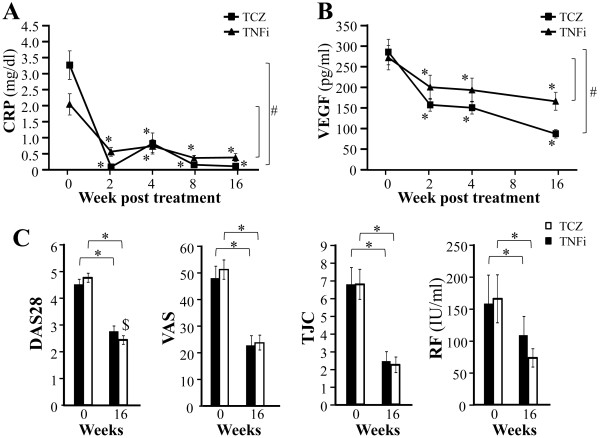
Anemia at base line was present in 66% of patients. Baseline serum hepcidin-25 levels were correlated positively with serum ferritin, C-reactive protein (CRP), vascular endothelial growth factor (VEGF) levels and Disease Activity Score 28 (DAS28). Significant improvements in anemia and disease activity, and reductions in serum hepcidin-25 levels were observed within 2 weeks in both groups, and these effects were more pronounced in the tocilizumab group than in the TNF-α inhibitors group. Serum hepcidin-25 reduction by the TNF-α inhibitor therapy was accompanied by a decrease in serum IL-6, suggesting that the effect of TNF-α on the induction of hepcidin-25 was indirect. In in vitro experiments, stimulation with the cytokine combination of IL-6+TNF-α induced weaker hepcidin expression than did with IL-6 alone, and this induction was completely suppressed by tocilizumab but not by infliximab.
Hepcidin-mediated iron metabolism may contribute to the pathogenesis of RA-related anemia. In our cohort, tocilizumab was more effective than TNF-α inhibitors for improving anemia and normalizing iron metabolism in RA patients by inhibiting hepcidin production.
炎症性贫血(AI)是类风湿关节炎(RA)的常见并发症,对 RA 症状和生活质量有负面影响。炎性细胞因子上调铁调素与 AI 有关。在这项研究中,我们评估和比较了白细胞介素 6(IL-6)和肿瘤坏死因子-α(TNF-α)阻断疗法对 RA 患者贫血、疾病活动度和包括血清铁调素在内的铁相关参数的影响。
93 例患者接受抗 IL-6 受体抗体(托珠单抗)或 TNF-α 抑制剂治疗 16 周。在治疗开始前和 2、4、8 和 16 周后监测主要疾病活动指标和铁相关参数,包括血清铁调素-25。通过定量实时 PCR 分析托珠单抗和英夫利昔单抗(抗 TNF-α 抗体)对细胞因子诱导的肝癌细胞中铁调素表达的影响。
基线时贫血患者占 66%。基线时血清铁调素-25 水平与血清铁蛋白、C 反应蛋白(CRP)、血管内皮生长因子(VEGF)水平和疾病活动评分 28(DAS28)呈正相关。两组患者在 2 周内均观察到贫血和疾病活动度显著改善,血清铁调素-25 水平降低,托珠单抗组的效果较 TNF-α 抑制剂组更为明显。TNF-α 抑制剂治疗后血清铁调素-25 降低伴随着血清 IL-6 的降低,表明 TNF-α 对铁调素-25 的诱导作用是间接的。在体外实验中,与单独使用 IL-6 相比,细胞因子组合 IL-6+TNF-α 的刺激诱导铁调素表达较弱,这种诱导作用完全被托珠单抗抑制,但不受英夫利昔单抗的抑制。
铁调素介导的铁代谢可能有助于 RA 相关贫血的发病机制。在我们的队列中,与 TNF-α 抑制剂相比,托珠单抗通过抑制铁调素的产生,对改善 RA 患者的贫血和使铁代谢正常化更为有效。