Pharmacology and Toxicology Research Center, Institute of Medicinal Plant Development, Chinese Academy of Medical Sciences, Peking Union Medical College, Beijing, China.
J Cell Mol Med. 2014 Feb;18(2):293-304. doi: 10.1111/jcmm.12187. Epub 2013 Nov 28.
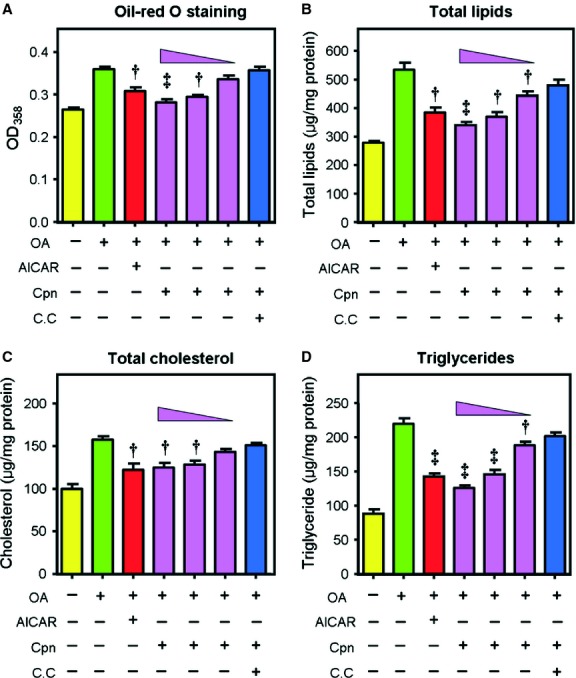
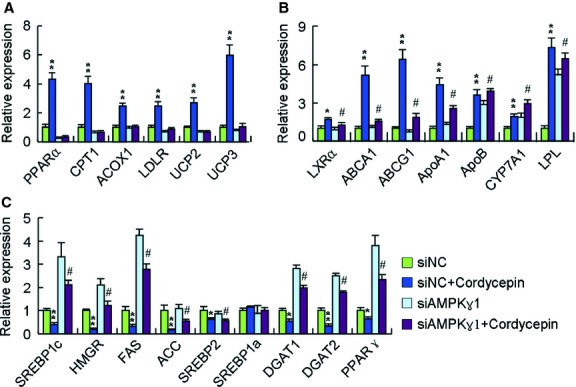
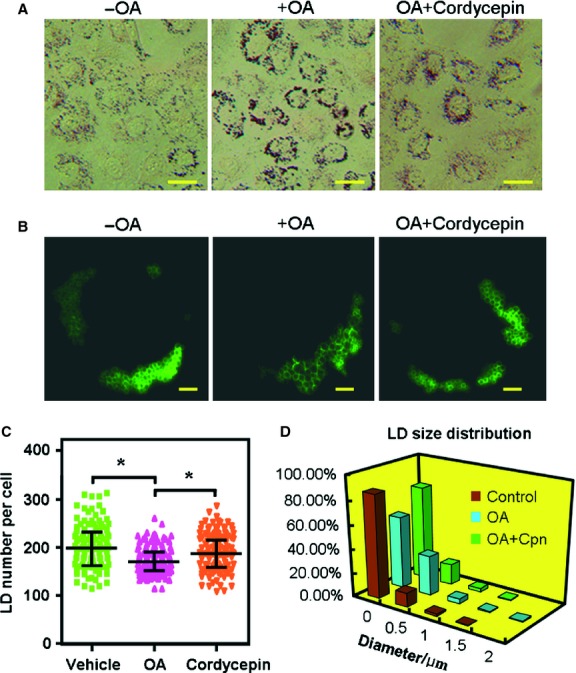
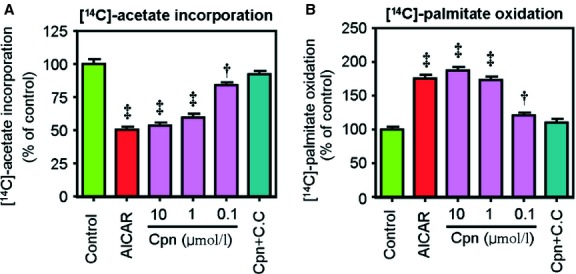
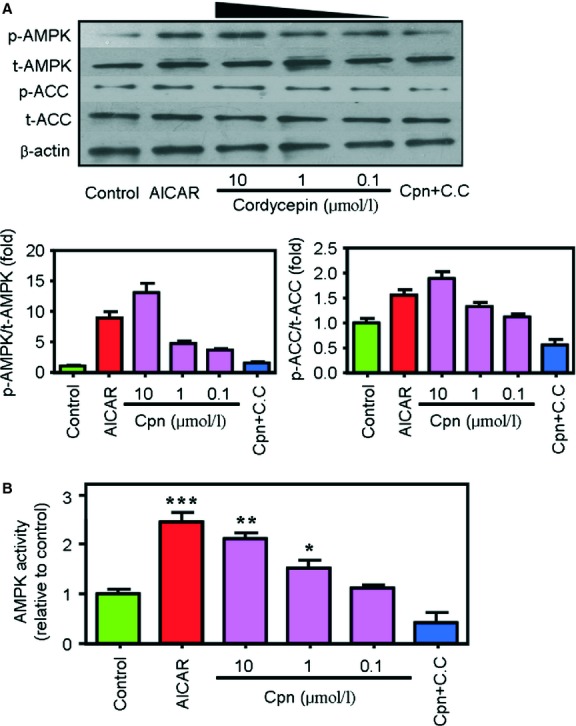
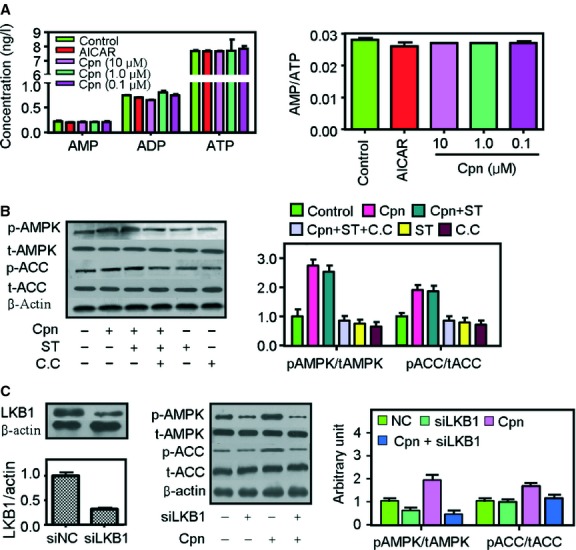
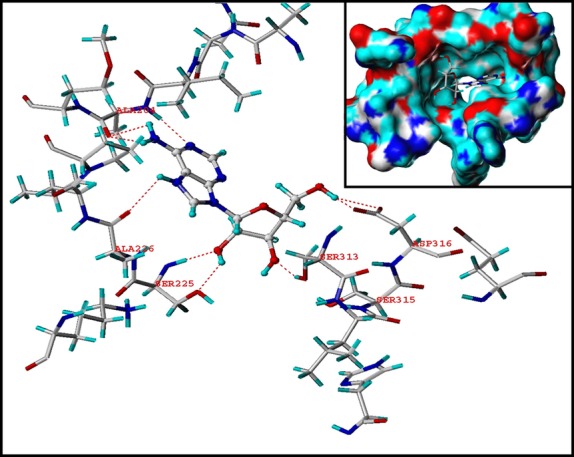
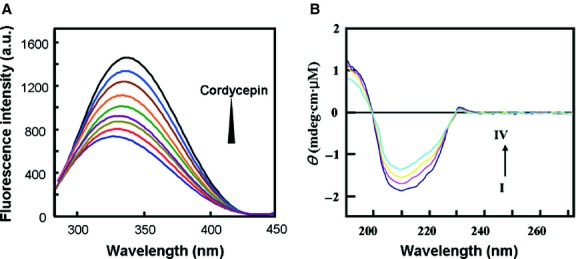
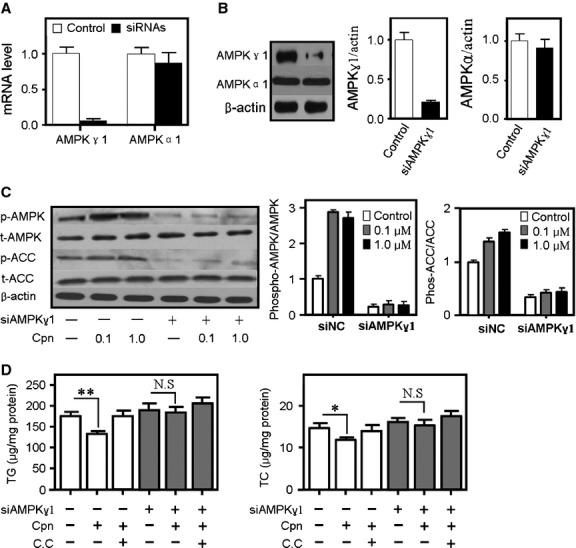
Cordycepin is a bioactive component of the fungus Cordyceps militaris. Previously, we showed that cordycepin can alleviate hyperlipidemia through enhancing the phosphorylation of AMP-activated protein kinase (AMPK), but the mechanism of this stimulation is unknown. Here, we investigated the potential mechanisms of cordycepin-induced AMPK activation in HepG2 cells. Treatment with cordycepin largely reduced oleic acid (OA)-elicited intracellular lipid accumulation and increased AMPK activity in a dose-dependent manner. Cordycepin-induced AMPK activation was not accompanied by changes in either the intracellular levels of AMP or the AMP/ATP ratio, nor was it influenced by calmodulin-dependent protein kinase kinase (CaMKK) inhibition; however, this activation was significantly suppressed by liver kinase B1 (LKB1) knockdown. Molecular docking, fluorescent and circular dichroism measurements showed that cordycepin interacted with the γ1 subunit of AMPK. Knockdown of AMPKγ1 by siRNA substantially abolished the effects of cordycepin on AMPK activation and lipid regulation. The modulating effects of cordycepin on the mRNA levels of key lipid regulatory genes were also largely reversed when AMPKγ1 expression was inhibited. Together, these data suggest that cordycepin may inhibit intracellular lipid accumulation through activation of AMPK via interaction with the γ1 subunit.
蛹虫草中的虫草素有生物活性,是蛹虫草的一种成分。我们之前发现虫草素可以通过激活 AMP 激活的蛋白激酶(AMPK)来缓解高血脂症,但这种刺激的机制尚不清楚。在这里,我们研究了虫草素在 HepG2 细胞中诱导 AMPK 激活的潜在机制。虫草素处理可显著减少油酸钠(OA)引起的细胞内脂质积累,并呈剂量依赖性增加 AMPK 活性。虫草素诱导的 AMPK 激活并不伴有 AMP 或 AMP/ATP 比率的变化,也不受钙调蛋白依赖性蛋白激酶激酶(CaMKK)抑制的影响;然而,这种激活被肝激酶 B1(LKB1)敲低显著抑制。分子对接、荧光和圆二色性测量表明,虫草素与 AMPK 的γ1 亚基相互作用。用 siRNA 敲低 AMPKγ1 可显著抑制虫草素对 AMPK 激活和脂质调节的作用。当抑制 AMPKγ1 表达时,虫草素对关键脂质调节基因的 mRNA 水平的调节作用也被大大逆转。总之,这些数据表明,虫草素可能通过与γ1 亚基相互作用激活 AMPK,从而抑制细胞内脂质积累。