Yu Houyou, Hong Xin, Liu Lihua, Wu Yangpeng, Xie Xuemei, Fang Guoxiang, Zhi Shaomin
Department of Emergency, Xi'an No.3 Hospital, Xi'an, China.
College of Basic Medicine, Fourth Military Medical University, Xi'an, China.
Front Pharmacol. 2021 Oct 20;12:754005. doi: 10.3389/fphar.2021.754005. eCollection 2021.
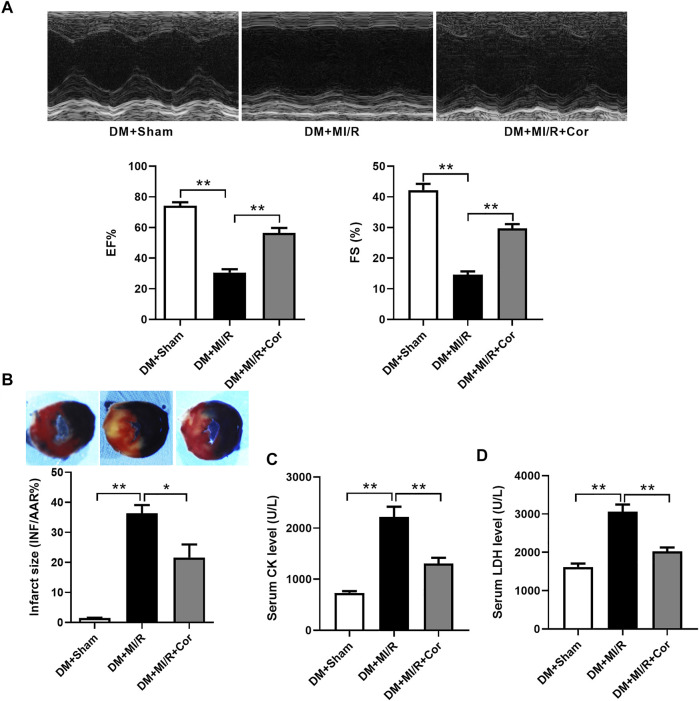
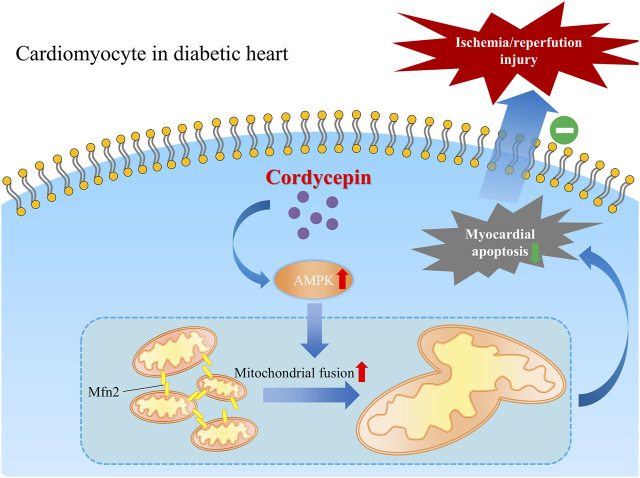
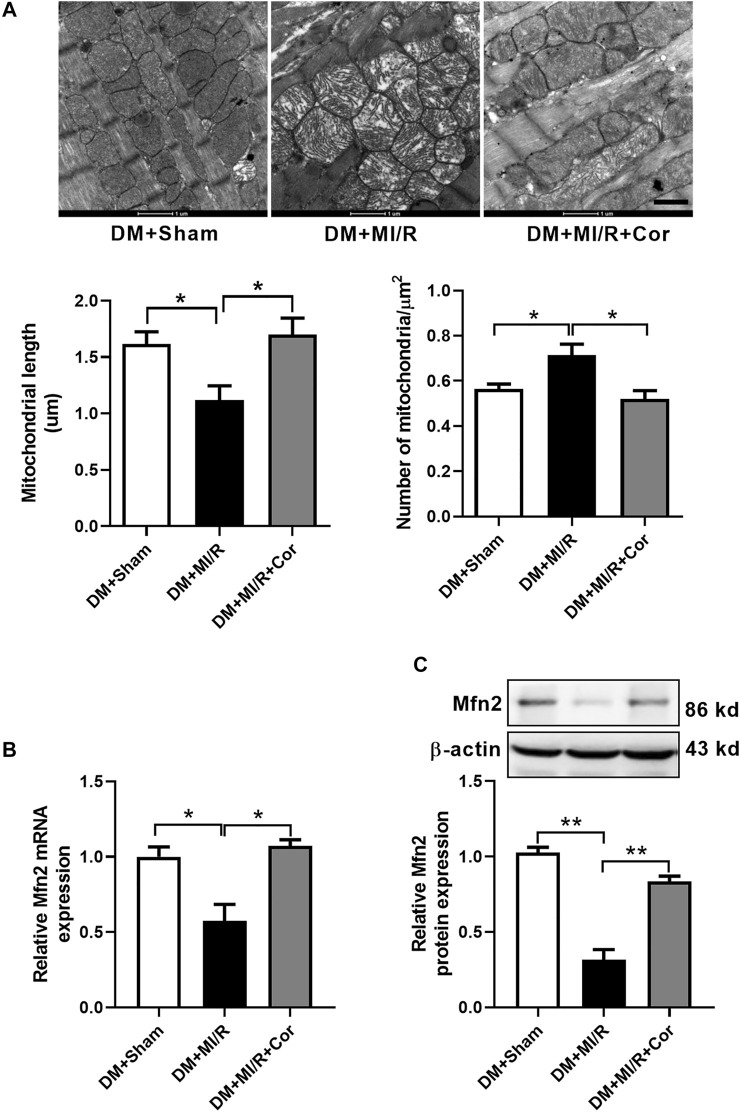
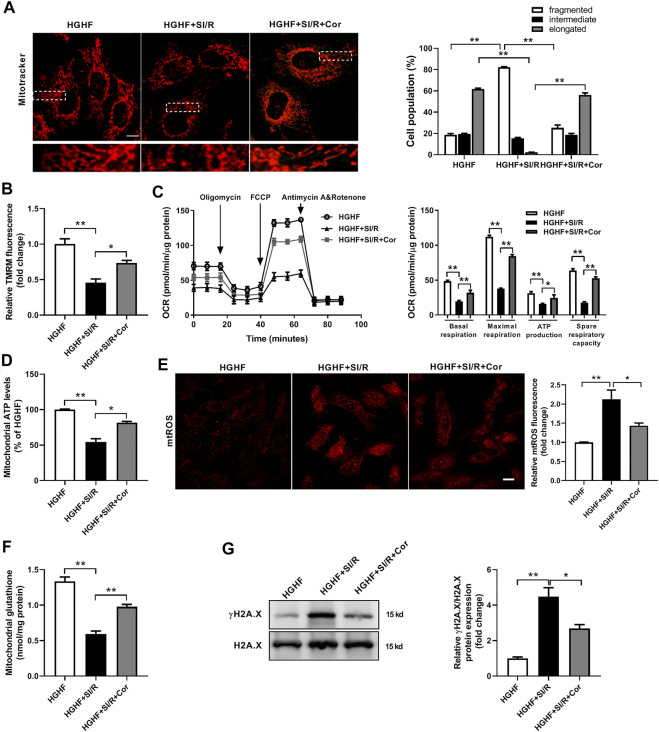
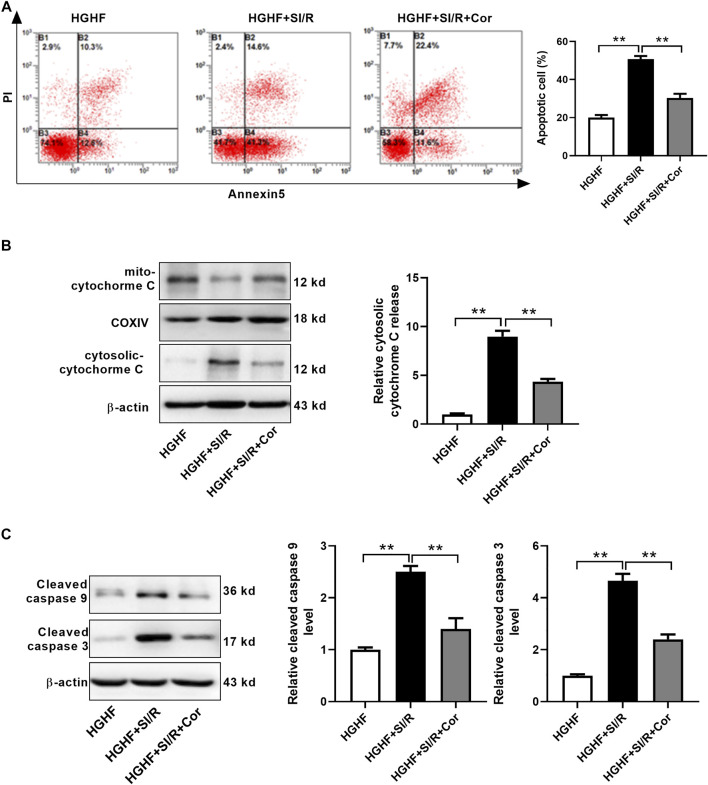
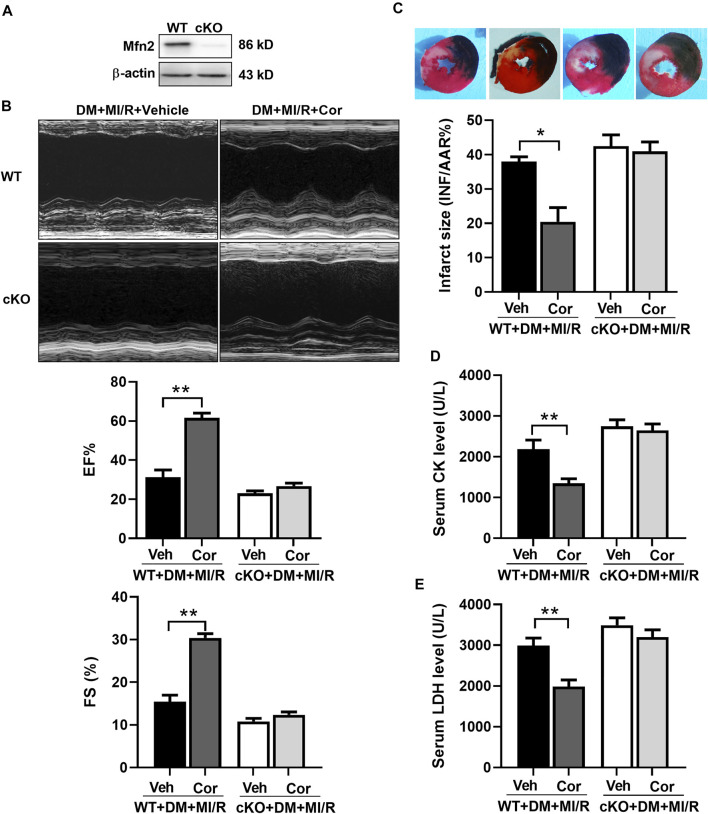
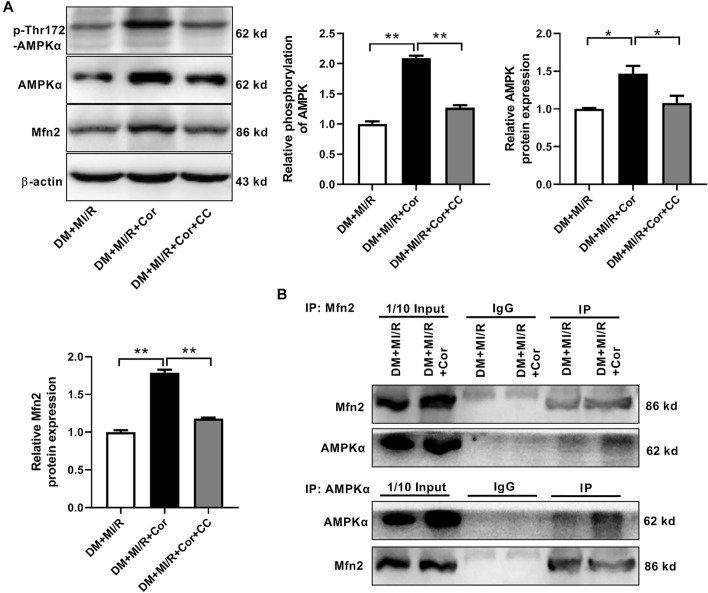
Diabetes mellitus is considered to be a major risk factor for cardiovascular disease, the most common cause of death in diabetes. However, therapeutic strategies for myocardial protection in patients with diabetes are still limited. Cordycepin is a traditional Tibetan medicine with a long history of widespread use, and exerts a wide range of anti-tumor, anti-inflammatory, and anti-oxidative effects. In recent years, although the therapeutic potential of cordycepin has attracted the attention of researchers, it remains unknown whether cordycepin plays a protective role in myocardial ischemia/reperfusion (MI/R) injury in diabetic patients. Here, using a diabetic mouse model, we found that cordycepin protected diabetic hearts from MI/R injury by promoting mitochondrial fusion and Mfn2 expression. Our results showed that cordycepin enhanced Mfn2-medicated mitochondrial fusion, improved mitochondrial function, and reduced cardiomyocyte apoptosis in high-glucose/high-fat cultured simulated ischemia/reperfusion cardiomyocytes. Furthermore, we found that knockout of Mfn2 significantly blocked the cardioprotective effects of cordycepin in diabetic mice. Finally, an AMPK-dependent pathway was found to upregulate Mfn2 expression upon cordycepin treatment, indicating that cordycepin protected diabetic hearts AMPK/Mfn2-dependent mitochondrial fusion. Collectively, our study firstly demonstrated that cordycepin could be a potential cardioprotective agent for MI/R injury, and we established a novel mechanism by which upregulated AMPK/Mfn2-dependent mitochondrial fusion contributes to the cardioprotective role of cordycepin.
糖尿病被认为是心血管疾病的主要危险因素,而心血管疾病是糖尿病患者最常见的死亡原因。然而,糖尿病患者心肌保护的治疗策略仍然有限。虫草素是一种具有悠久广泛使用历史的传统藏药,具有广泛的抗肿瘤、抗炎和抗氧化作用。近年来,尽管虫草素的治疗潜力已引起研究人员的关注,但虫草素是否对糖尿病患者的心肌缺血/再灌注(MI/R)损伤起保护作用仍不清楚。在此,我们使用糖尿病小鼠模型发现,虫草素通过促进线粒体融合和Mfn2表达来保护糖尿病心脏免受MI/R损伤。我们的结果表明,虫草素增强了Mfn2介导的线粒体融合,改善了线粒体功能,并减少了高糖/高脂培养的模拟缺血/再灌注心肌细胞中的心肌细胞凋亡。此外,我们发现敲除Mfn2可显著阻断虫草素对糖尿病小鼠的心脏保护作用。最后,发现虫草素处理后,一条依赖AMPK的信号通路可上调Mfn2表达,这表明虫草素通过AMPK/Mfn2依赖的线粒体融合来保护糖尿病心脏。总的来说,我们的研究首次证明虫草素可能是一种针对MI/R损伤的潜在心脏保护剂,并且我们建立了一种新机制,即上调的AMPK/Mfn2依赖的线粒体融合有助于虫草素的心脏保护作用。