Medical Devices & Technology Group (MEDITEG), Universiti Teknologi Malaysia, 81310 Johor Bahru, Johor, Malaysia.
Biomed Res Int. 2013;2013:175056. doi: 10.1155/2013/175056. Epub 2013 Nov 5.
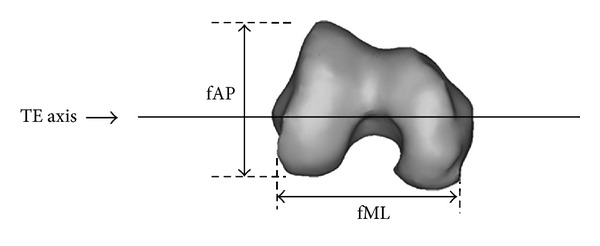
The distal femurs of 100 subjects (50 men, 50 women) from the Malay population aged between 19 and 38 years were scanned to measure the anterior-posterior (AP) and medial-lateral (ML) width. The mean AP values were 64.02 ± 3.38 mm and 57.33 ± 3.26 mm for men and women, respectively, and the mean ML values were 74.91 ± 3.52 mm and 64.53 ± 3.07 mm. We compared our data to that published previously for the Chinese and Indian populations. It was found that the Malay population had smaller distal femur than that of the Chinese but was larger than that of the Indian population (P < 0.05). In conclusion, although it is well established that Asians have a smaller distal femur size than that of the Western population, the variations in different Asian ethnicities may need to be considered when designing the appropriate knee implant.
100 名 19 至 38 岁马来人群体的股骨远端进行了扫描,以测量前后(AP)和内外(ML)宽度。男性和女性的平均 AP 值分别为 64.02 ± 3.38mm 和 57.33 ± 3.26mm,平均 ML 值分别为 74.91 ± 3.52mm 和 64.53 ± 3.07mm。我们将我们的数据与之前发表的中国人和印度人群的数据进行了比较。结果发现,与中国人相比,马来人群的股骨远端较小,但比印度人群大(P < 0.05)。总之,尽管已经确定亚洲人的股骨远端尺寸小于西方人群,但在设计合适的膝关节植入物时,可能需要考虑不同亚洲族群的差异。