Scully Erin D, Hoover Kelli, Carlson John E, Tien Ming, Geib Scott M
Tropical Crop and Commodity Protection Research Unit, USDA-ARS Pacific Basin Agricultural Research Center, Hilo, HI 96720, USA.
BMC Genomics. 2013 Dec 4;14(1):850. doi: 10.1186/1471-2164-14-850.
Wood-feeding insects often work in collaboration with microbial symbionts to degrade lignin biopolymers and release glucose and other fermentable sugars from recalcitrant plant cell wall carbohydrates, including cellulose and hemicellulose. Here, we present the midgut transcriptome of larval Anoplophora glabripennis, a wood-boring beetle with documented lignin-, cellulose-, and hemicellulose- degrading capabilities, which provides valuable insights into how this insect overcomes challenges associated with feeding in woody tissue.
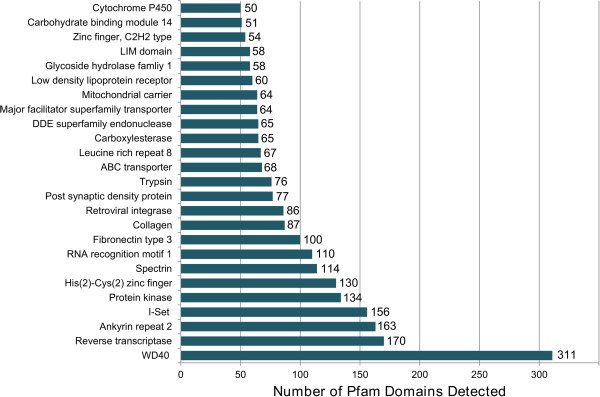
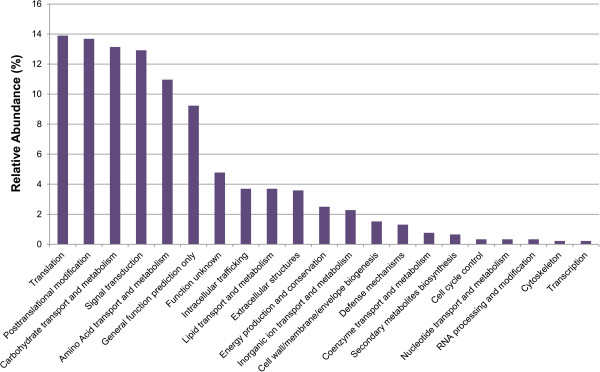
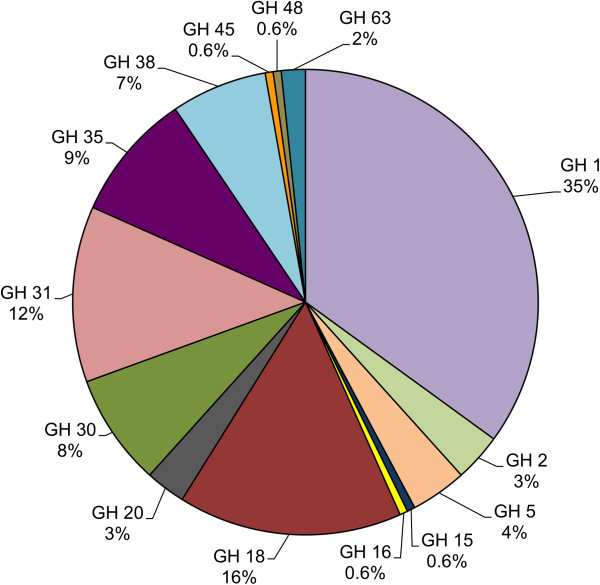
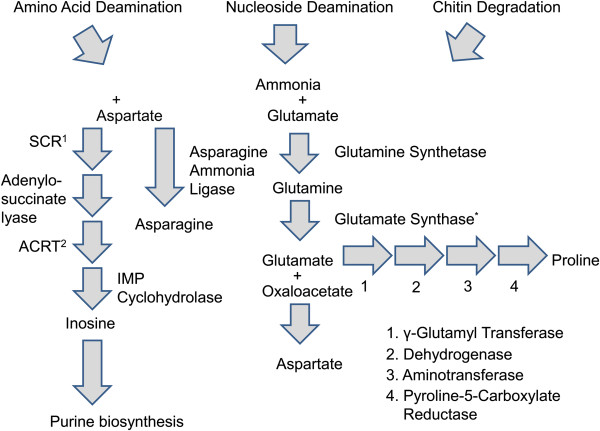
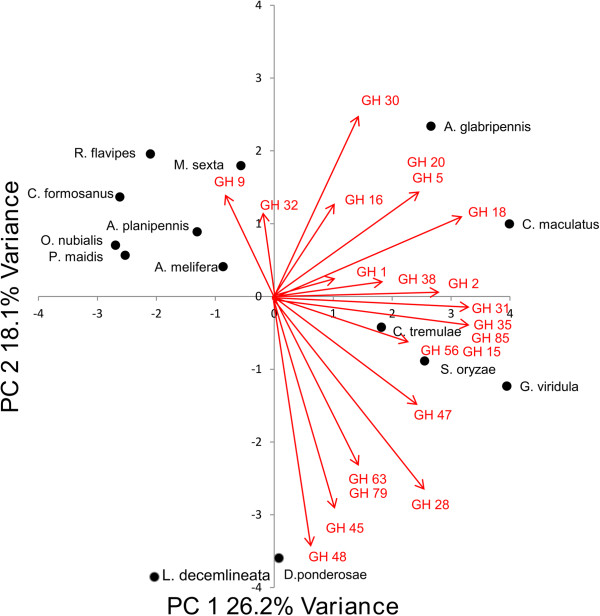
Transcripts from putative protein coding regions of over 9,000 insect-derived genes were identified in the A. glabripennis midgut transcriptome using a combination of 454 shotgun and Illumina paired-end reads. The most highly-expressed genes predicted to encode digestive-related enzymes were trypsins, carboxylesterases, β-glucosidases, and cytochrome P450s. Furthermore, 180 unigenes predicted to encode glycoside hydrolases (GHs) were identified and included several GH 5, 45, and 48 cellulases, GH 1 xylanases, and GH 1 β-glucosidases. In addition, transcripts predicted to encode enzymes involved in detoxification were detected, including a substantial number of unigenes classified as cytochrome P450s (CYP6B) and carboxylesterases, which are hypothesized to play pivotal roles in detoxifying host tree defensive chemicals and could make important contributions to A. glabripennis' expansive host range. While a large diversity of insect-derived transcripts predicted to encode digestive and detoxification enzymes were detected, few transcripts predicted to encode enzymes required for lignin degradation or synthesis of essential nutrients were identified, suggesting that collaboration with microbial enzymes may be required for survival in woody tissue.
A. glabripennis produces a number of enzymes with putative roles in cell wall digestion, detoxification, and nutrient extraction, which likely contribute to its ability to thrive in a broad range of host trees. This system is quite different from the previously characterized termite fermentation system and provides new opportunities to discover enzymes that could be exploited for cellulosic ethanol biofuel production or the development of novel methods to control wood-boring pests.
以木材为食的昆虫通常与微生物共生体协作,以降解木质素生物聚合物,并从包括纤维素和半纤维素在内的难降解植物细胞壁碳水化合物中释放葡萄糖和其他可发酵糖。在此,我们展示了光肩星天牛幼虫的中肠转录组,光肩星天牛是一种具有木质素、纤维素和半纤维素降解能力记录的蛀木甲虫,这为了解这种昆虫如何克服在木质组织中取食所面临的挑战提供了有价值的见解。
使用454鸟枪法和Illumina双末端读数相结合的方法,在光肩星天牛中肠转录组中鉴定出来自9000多个昆虫源基因的推定蛋白质编码区域的转录本。预测编码与消化相关酶的表达最高的基因是胰蛋白酶、羧酸酯酶、β-葡萄糖苷酶和细胞色素P450。此外,鉴定出180个预测编码糖苷水解酶(GHs)的单基因,包括几种GH5、45和48纤维素酶、GH1木聚糖酶和GH1β-葡萄糖苷酶。此外,检测到预测编码参与解毒的酶的转录本,包括大量分类为细胞色素P450(CYP6B)和羧酸酯酶的单基因,据推测它们在对寄主树防御性化学物质进行解毒中起关键作用,并可能对光肩星天牛广泛的寄主范围做出重要贡献。虽然检测到大量预测编码消化和解毒酶的昆虫源转录本,但预测编码木质素降解或必需营养物质合成所需酶的转录本很少,这表明在木质组织中生存可能需要与微生物酶协作。
光肩星天牛产生了许多在细胞壁消化、解毒和营养物质提取中具有推定作用的酶,这可能有助于其在广泛的寄主树中茁壮成长。该系统与先前表征的白蚁发酵系统有很大不同,并为发现可用于纤维素乙醇生物燃料生产的酶或开发控制蛀木害虫的新方法提供了新机会。