Department of Internal Medicine, University of Genoa, IRCCS Azienda Ospedaliera Universitaria San Martino-IST Istituto Nazionale per la Ricerca sul Cancro, 6 Viale Benedetto XV, 16132 Genoa, Italy.
Mediators Inflamm. 2013;2013:975032. doi: 10.1155/2013/975032. Epub 2013 Nov 6.
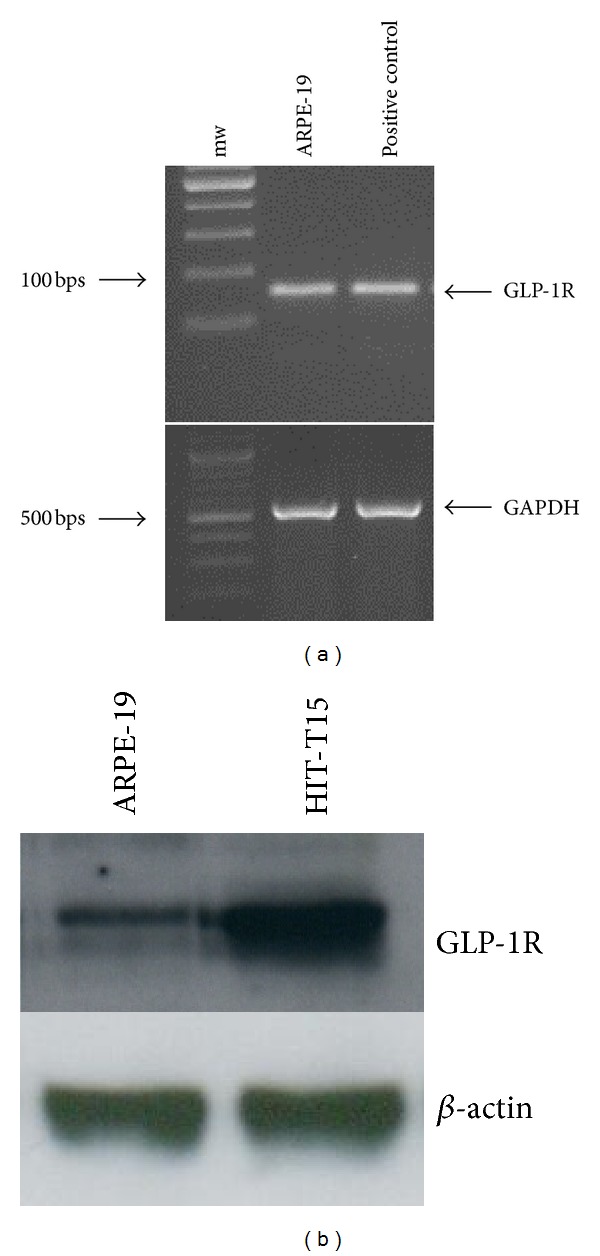
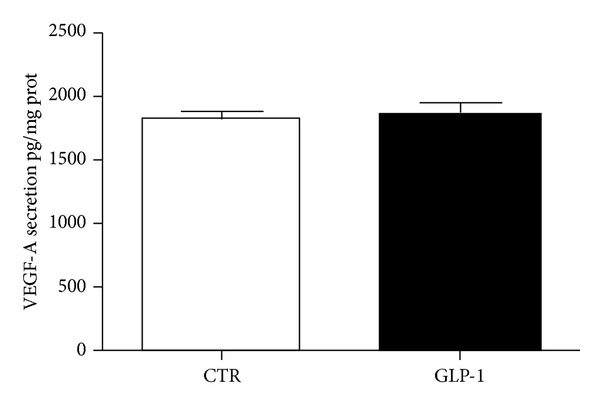
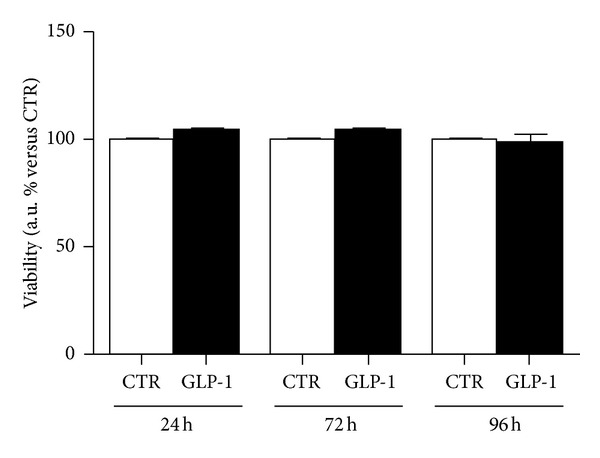
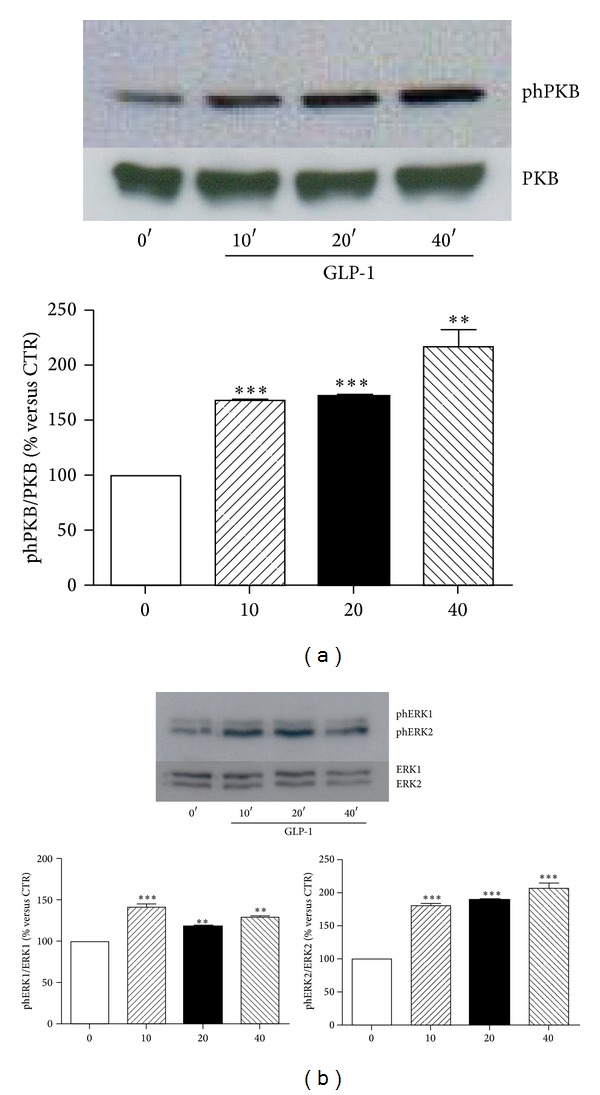
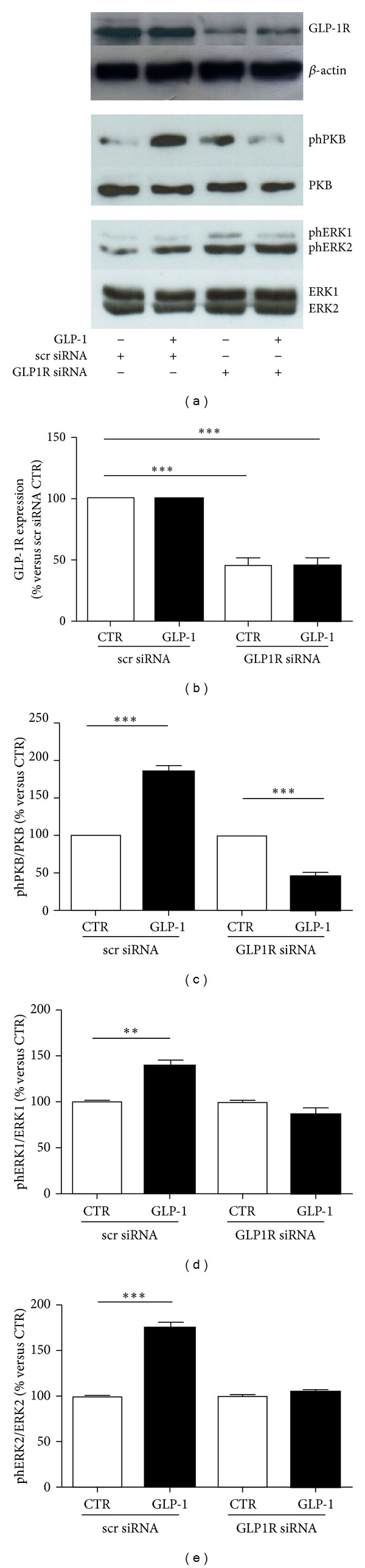
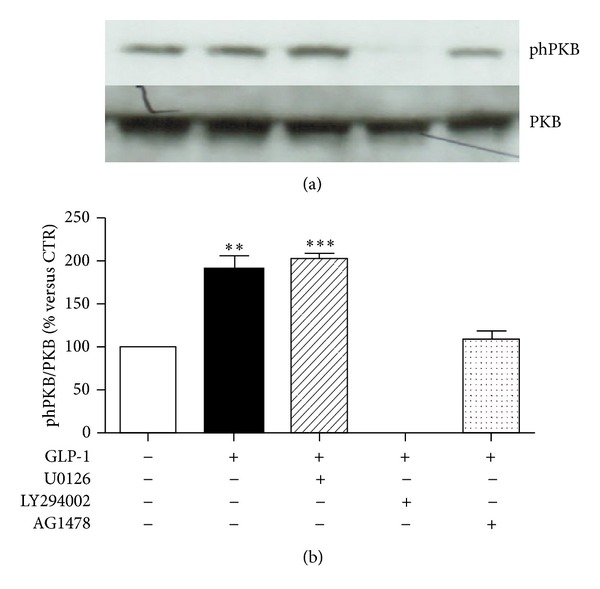
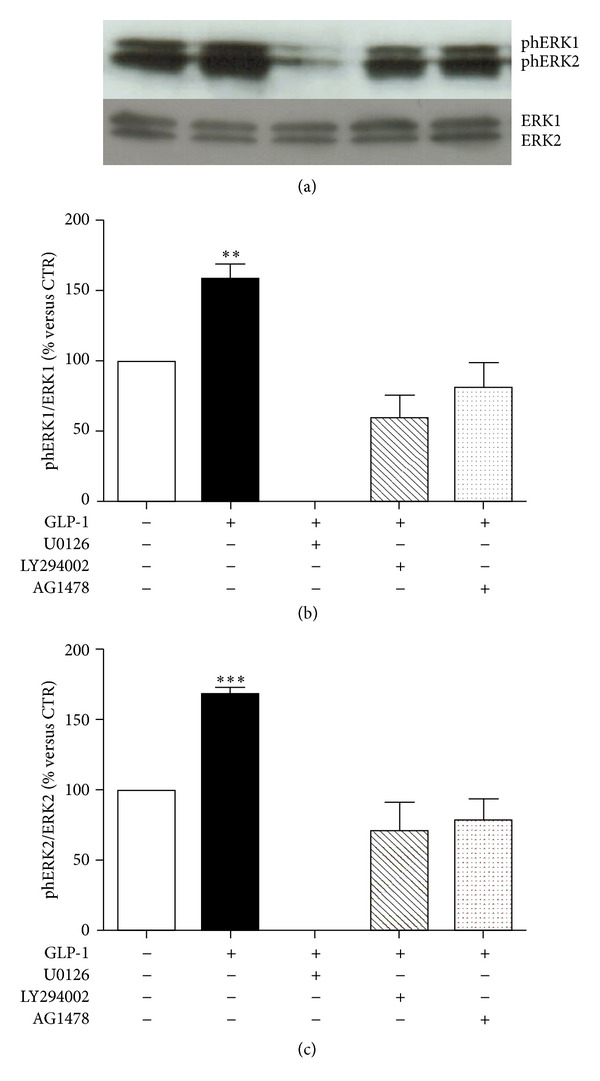
Glucagon-like peptide-1 (GLP-1) is a gut-derived incretin hormone that has been shown to improve glucose homeostasis in type 2 diabetes. The biological effects of GLP-1 are mediated by its specific receptor GLP-1R that is expressed in a wide range of tissues, where it is responsible of the extra-pancreatic effects of GLP-1. Since the retinal pigment epithelium (RPE), that forms the outer retinal barrier, has a key role in protecting from diabetic retinopathy (DR), we investigated the potential expression and function of GLP-1R in a RPE cell line. ARPE-19 cells were cultured in DMEM/F12 supplemented with 10% FBS. The expression of GLP-1R was evaluated at both mRNA and protein levels. Then, the activation postreceptor intracellular signal transduction pathways (extracellular signal-regulated kinases 1 and 2 [ERK1/2] and protein kinase B [PKB]) were assessed by western blot in normal cells or silenced for GLP-1R in the presence or absence of 10 nmol/L GLP-1. The potential connections between intracellular signalling pathways triggered by GLP-1 stimulation were performed before incubating cells with kinase pharmacological inhibitors of mitogen-activated protein kinase (MEK)1/2, phosphatydilinositol-3kinase (PI3K), or epidermal growth factor receptor (EGFR). The results showed that GLP1R is expressed at both mRNA and protein level in ARPE-19 cells. Stimulation with GLP-1 strongly activated PKB and ERK1/2 phosphorylation till 40 min of exposure. GLP-1-mediated activation of both kinases was dependent on the upstream activation of PI3K and EGFR. Finally, treatment with GLP-1 did not affect the spontaneous release of VEGF-A from ARPE-19 cells. In conclusion, this paper showed that the presence of functional GLP-1R is expressed in RPE cells. These data might represent the rationale to further investigate the potential direct beneficial effects of GLP-1 treatment against DR.
胰高血糖素样肽-1(GLP-1)是一种肠道来源的肠促胰岛素激素,已被证明可改善 2 型糖尿病患者的血糖稳态。GLP-1 的生物学效应是通过其在广泛组织中表达的特异性受体 GLP-1R 介导的,它负责 GLP-1 的胰腺外作用。由于视网膜色素上皮(RPE)形成了外视网膜屏障,在保护糖尿病视网膜病变(DR)方面起着关键作用,因此我们研究了 GLP-1R 在 RPE 细胞系中的潜在表达和功能。ARPE-19 细胞在补充有 10%FBS 的 DMEM/F12 中培养。在 mRNA 和蛋白水平上评估 GLP-1R 的表达。然后,通过 Western blot 评估正常细胞或沉默 GLP-1R 后(存在或不存在 10nmol/L GLP-1 时)的细胞内信号转导途径(细胞外信号调节激酶 1 和 2 [ERK1/2]和蛋白激酶 B [PKB])的激活。在用丝裂原激活蛋白激酶(MEK)1/2、磷脂酰肌醇-3-激酶(PI3K)或表皮生长因子受体(EGFR)的激酶药理学抑制剂孵育细胞之前,进行了由 GLP-1 刺激引发的细胞内信号通路之间的潜在连接。结果表明,GLP1R 在 ARPE-19 细胞中均在 mRNA 和蛋白水平上表达。GLP-1 刺激强烈激活 PKB 和 ERK1/2 磷酸化,直至暴露 40 分钟。两种激酶的 GLP-1 介导的激活均依赖于 PI3K 和 EGFR 的上游激活。最后,用 GLP-1 处理不会影响 ARPE-19 细胞中 VEGF-A 的自发释放。总之,本文表明功能性 GLP-1R 存在于 RPE 细胞中。这些数据可能为进一步研究 GLP-1 治疗对 DR 的潜在直接有益作用提供依据。