Bjerkehagen Bodil, Aaberg Kristin, Steigen Sonja E
Department of Pathology, Oslo University Hospital, Norwegian Radium Hospital, Pb 4953 Nydalen, 0424 Oslo, Norway.
Case Rep Med. 2013;2013:845801. doi: 10.1155/2013/845801. Epub 2013 Nov 6.
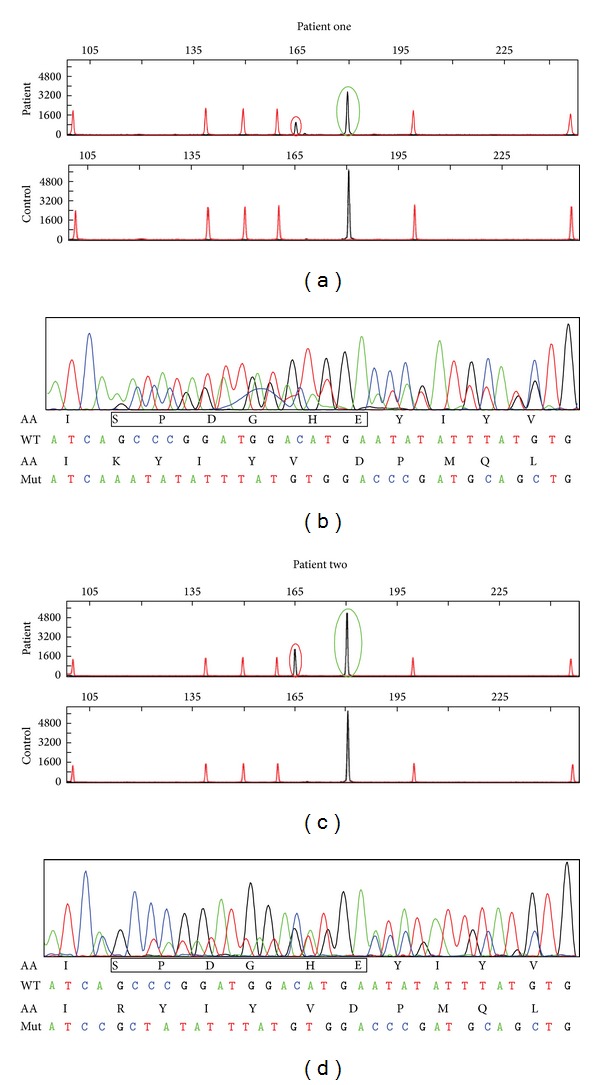
Goal. Surgeons that remove a typical polyp from the stomach or small intestine should be reluctant to accept a diagnosis of GIST just because there is a mutation in platelet-derived growth factor receptor alfa (PDGFRA). Background. A subtype of gastric and intestinal polyps is denoted as inflammatory fibroid polyp (IFP). In some of these cases a mutation in PDGFRA is found, leading to the diagnosis of gastrointestinal stromal tumor (GIST). Study. This study includes two patients that had polyps removed from the ileum, and an extended investigation was performed with immunohistochemical staining and mutation analyses. Results. The tumors did not show typical immunohistochemical staining for markers used to diagnose GIST, but the mutation analysis revealed a mutation in PDGFRA exon 12. On the basis of the mutation analysis, both polyps were primarily diagnosed as GISTs, but the diagnosis was later changed to inflammatory fibroid polyp. Conclusion. It is important that both surgeons and pathologists be aware that IFP can harbor a mutation in PDGFRA where further treatment and follow-up is different with the two different diagnoses. A mutation analysis can be misleading when taken out of the context of clinical observations, histological characteristics and immunohistochemical staining.
目的。仅仅因为血小板衍生生长因子受体α(PDGFRA)存在突变,就切除胃或小肠典型息肉的外科医生不应轻易接受胃肠道间质瘤(GIST)的诊断。背景。胃和肠息肉的一种亚型被称为炎性纤维性息肉(IFP)。在其中一些病例中发现了PDGFRA突变,从而导致胃肠道间质瘤(GIST)的诊断。研究。本研究纳入了两名从回肠切除息肉的患者,并通过免疫组织化学染色和突变分析进行了深入研究。结果。肿瘤并未显示用于诊断GIST的标志物的典型免疫组织化学染色,但突变分析显示PDGFRA外显子12存在突变。基于突变分析,两个息肉最初均被诊断为GIST,但后来诊断改为炎性纤维性息肉。结论。外科医生和病理学家都应意识到,IFP可能存在PDGFRA突变,而这两种不同诊断的进一步治疗和随访是不同的。脱离临床观察、组织学特征和免疫组织化学染色的背景,突变分析可能会产生误导。