Srikannathasan Velupillai, English Grant, Bui Nhat Khai, Trunk Katharina, O'Rourke Patrick E F, Rao Vincenzo A, Vollmer Waldemar, Coulthurst Sarah J, Hunter William N
Division of Biological Chemistry and Drug Discovery, College of Life Sciences, University of Dundee, Dundee DD1 5EH, Scotland.
Acta Crystallogr D Biol Crystallogr. 2013 Dec;69(Pt 12):2468-82. doi: 10.1107/S0907444913022725. Epub 2013 Nov 19.
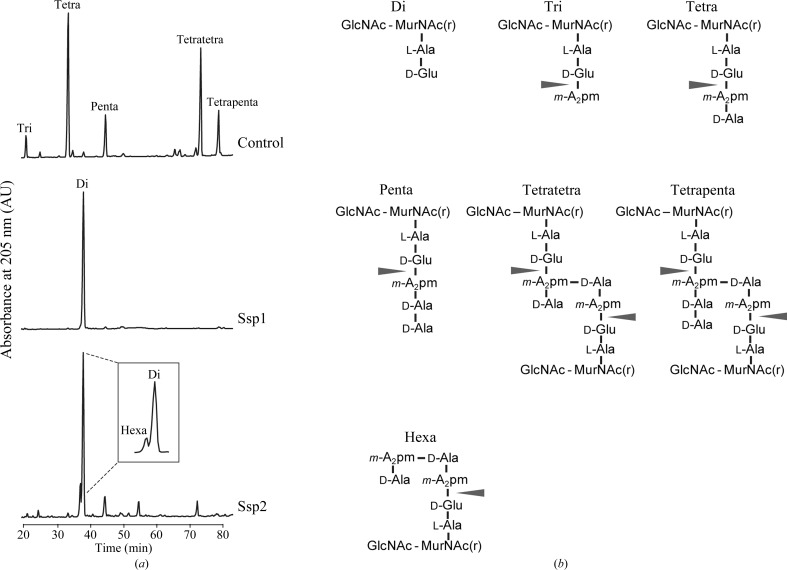
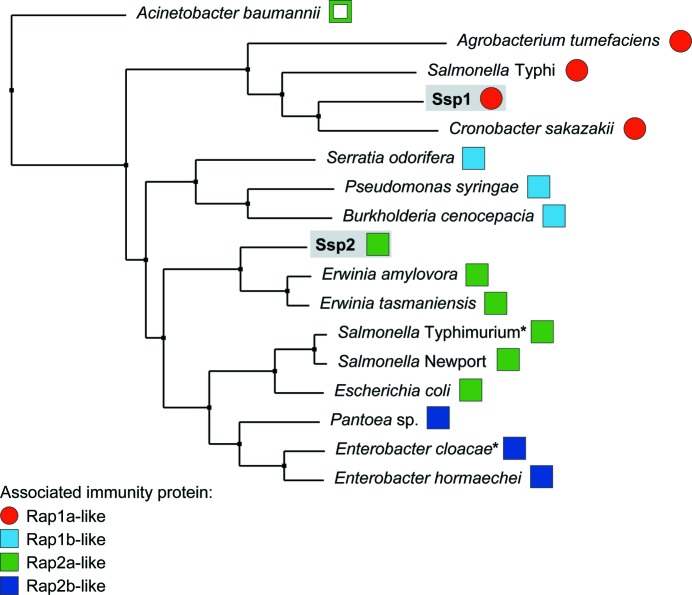
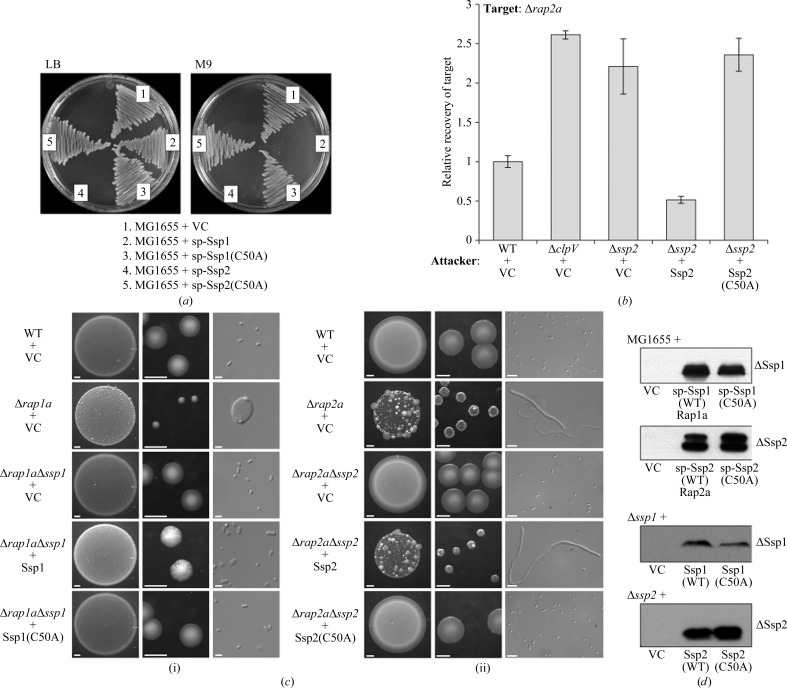
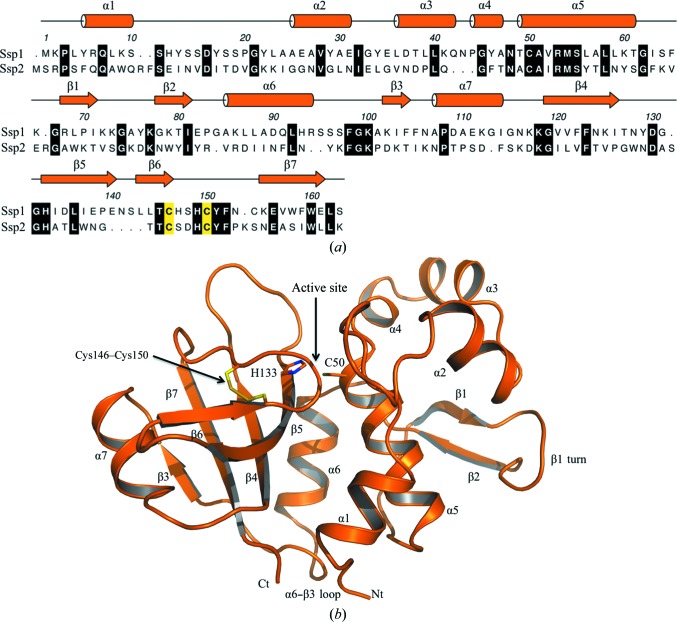
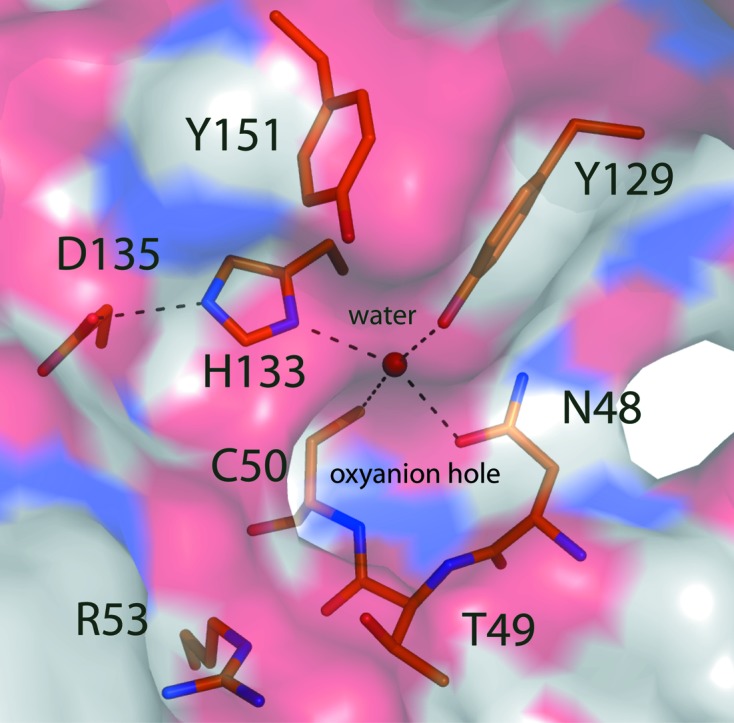
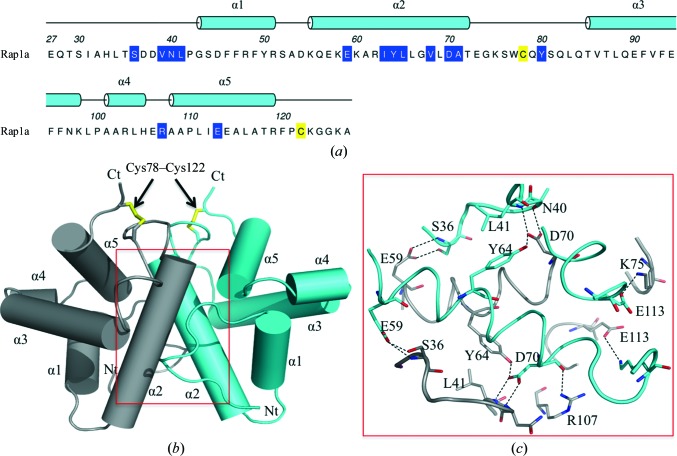
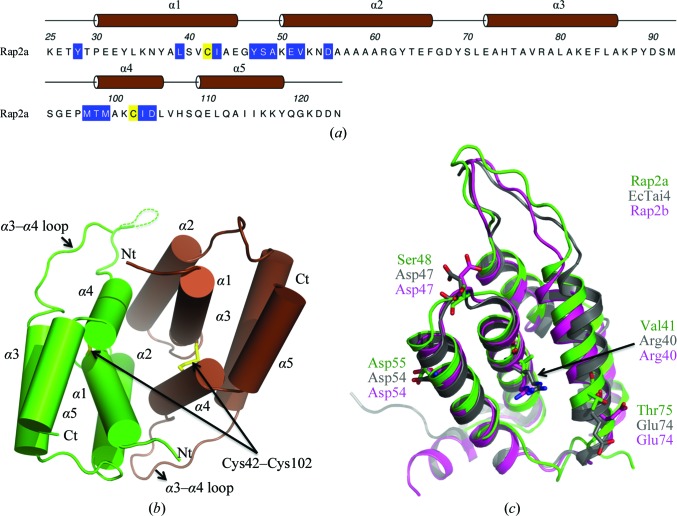
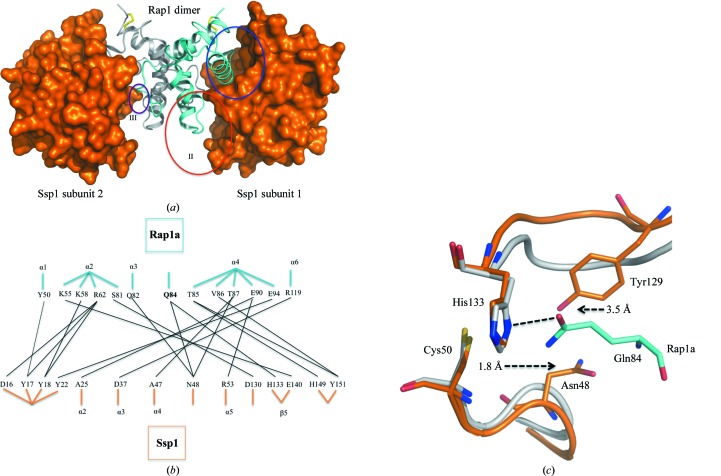
Some Gram-negative bacteria target their competitors by exploiting the type VI secretion system to extrude toxic effector proteins. To prevent self-harm, these bacteria also produce highly specific immunity proteins that neutralize these antagonistic effectors. Here, the peptidoglycan endopeptidase specificity of two type VI secretion-system-associated effectors from Serratia marcescens is characterized. These small secreted proteins, Ssp1 and Ssp2, cleave between γ-D-glutamic acid and L-meso-diaminopimelic acid with different specificities. Ssp2 degrades the acceptor part of cross-linked tetratetrapeptides. Ssp1 displays greater promiscuity and cleaves monomeric tripeptides, tetrapeptides and pentapeptides and dimeric tetratetra and tetrapenta muropeptides on both the acceptor and donor strands. Functional assays confirm the identity of a catalytic cysteine in these endopeptidases and crystal structures provide information on the structure-activity relationships of Ssp1 and, by comparison, of related effectors. Functional assays also reveal that neutralization of these effectors by their cognate immunity proteins, which are called resistance-associated proteins (Raps), contributes an essential role to cell fitness. The structures of two immunity proteins, Rap1a and Rap2a, responsible for the neutralization of Ssp1 and Ssp2-like endopeptidases, respectively, revealed two distinct folds, with that of Rap1a not having previously been observed. The structure of the Ssp1-Rap1a complex revealed a tightly bound heteromeric assembly with two effector molecules flanking a Rap1a dimer. A highly effective steric block of the Ssp1 active site forms the basis of effector neutralization. Comparisons with Ssp2-Rap2a orthologues suggest that the specificity of these immunity proteins for neutralizing effectors is fold-dependent and that in cases where the fold is conserved sequence differences contribute to the specificity of effector-immunity protein interactions.
一些革兰氏阴性菌通过利用VI型分泌系统挤出有毒效应蛋白来靶向其竞争者。为防止自我伤害,这些细菌还会产生高度特异性的免疫蛋白来中和这些拮抗效应蛋白。在此,对来自粘质沙雷氏菌的两种与VI型分泌系统相关的效应蛋白的肽聚糖内肽酶特异性进行了表征。这些小的分泌蛋白Ssp1和Ssp2以不同的特异性在γ-D-谷氨酸和L-中-二氨基庚二酸之间裂解。Ssp2降解交联的四肽四肽的受体部分。Ssp1表现出更大的混杂性,可在受体链和供体链上裂解单体三肽、四肽和五肽以及二聚体四肽四肽和四肽五肽。功能测定证实了这些内肽酶中催化半胱氨酸的身份,晶体结构提供了有关Ssp1以及相关效应蛋白的结构-活性关系的信息。功能测定还表明,这些效应蛋白被其同源免疫蛋白(称为抗性相关蛋白,Raps)中和对细胞适应性起着至关重要的作用。分别负责中和Ssp1和Ssp2样内肽酶的两种免疫蛋白Rap1a和Rap2a的结构揭示了两种不同的折叠方式,其中Rap1a的折叠方式以前未曾观察到。Ssp1-Rap1a复合物的结构揭示了一种紧密结合的异聚体组装,两个效应分子位于Rap1a二聚体两侧。Ssp1活性位点的高效空间阻断构成了效应蛋白中和的基础。与Ssp2-Rap2a直系同源物的比较表明,这些免疫蛋白中和效应蛋白的特异性是折叠依赖性的,并且在折叠保守的情况下,序列差异有助于效应蛋白-免疫蛋白相互作用的特异性。