Center for Neuroeconomics Studies, Claremont Graduate University Claremont, CA, USA ; Department of Neurology, Loma Linda University Medical Center Loma Linda, CA, USA.
Front Neurosci. 2013 Nov 19;7:211. doi: 10.3389/fnins.2013.00211.
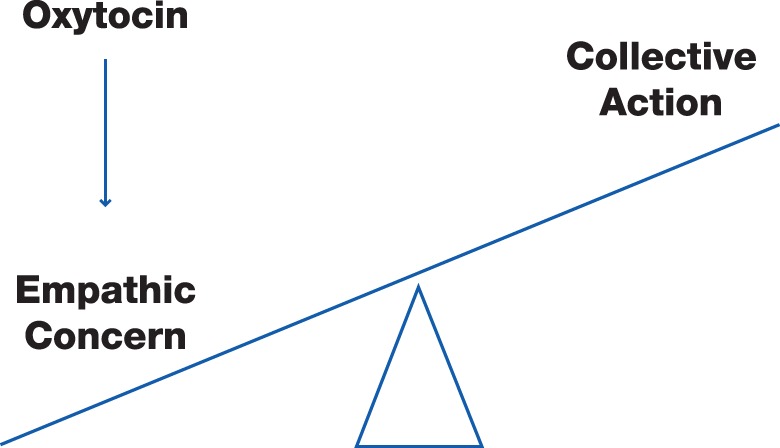
This essay introduces a neurologically-informed mathematical model of collective action (CA) that reveals the role for empathy and distress in motivating costly helping behaviors. We report three direct tests of model with a key focus on the neuropeptide oxytocin as well as a variety of indirect tests. These studies, from our lab and other researchers, show support for the model. Our findings indicate that empathic concern, via the brain's release of oxytocin, is a trigger for CA. We discuss the implications from this model for our understanding why human beings engage in costly CA.
本文介绍了一个受神经科学启发的集体行动(CA)数学模型,该模型揭示了同理心和痛苦在激励昂贵的帮助行为中的作用。我们报告了三个直接测试模型的实验,重点关注神经肽催产素以及各种间接测试。这些研究来自我们实验室和其他研究人员,为该模型提供了支持。我们的发现表明,同理心通过大脑释放催产素来触发 CA。我们讨论了该模型对我们理解人类为何进行昂贵的 CA 的影响。