Instituto Cajal, Consejo Superior de Investigaciones Científicas Madrid, Spain.
Front Neural Circuits. 2013 Nov 13;7:178. doi: 10.3389/fncir.2013.00178. eCollection 2013.
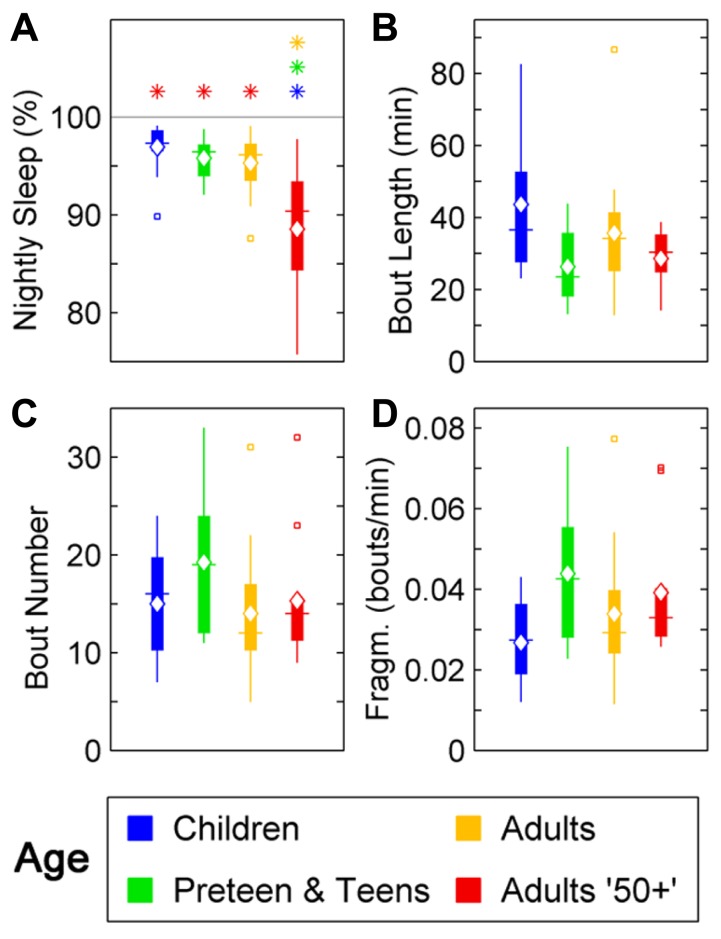
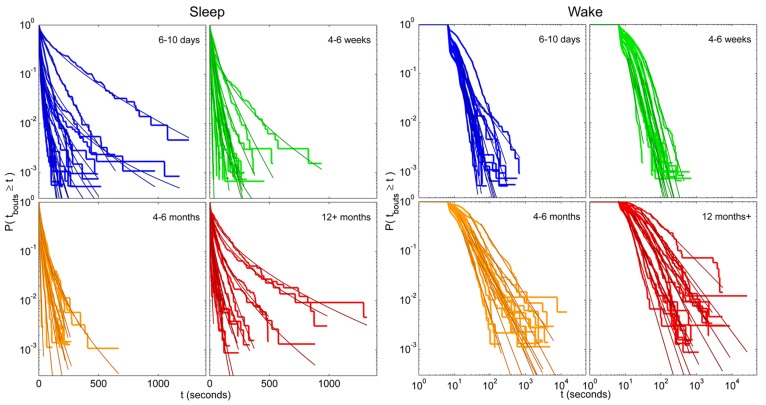
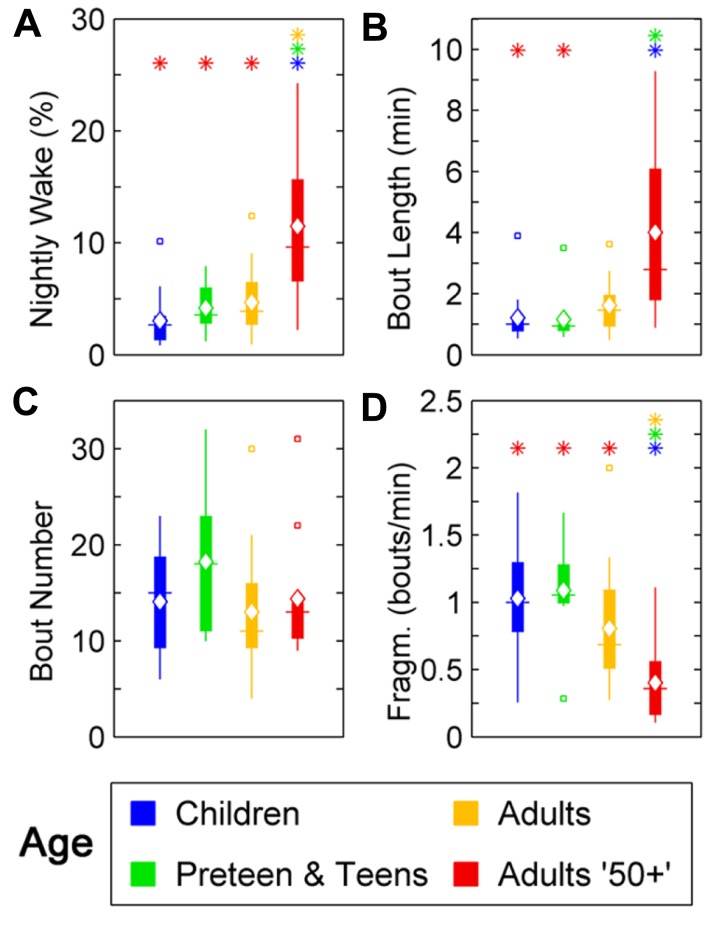
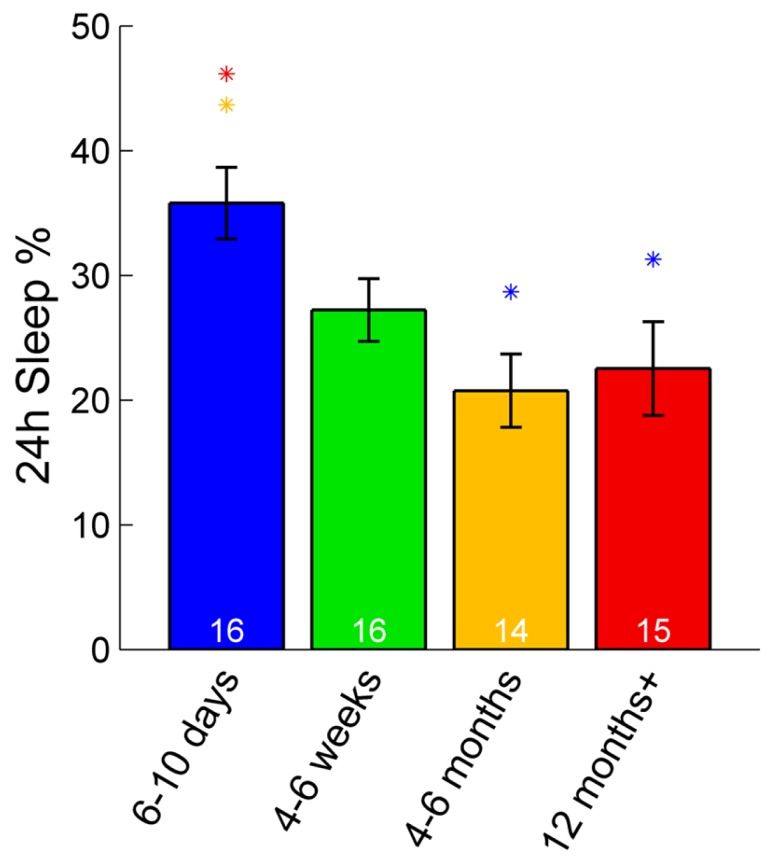
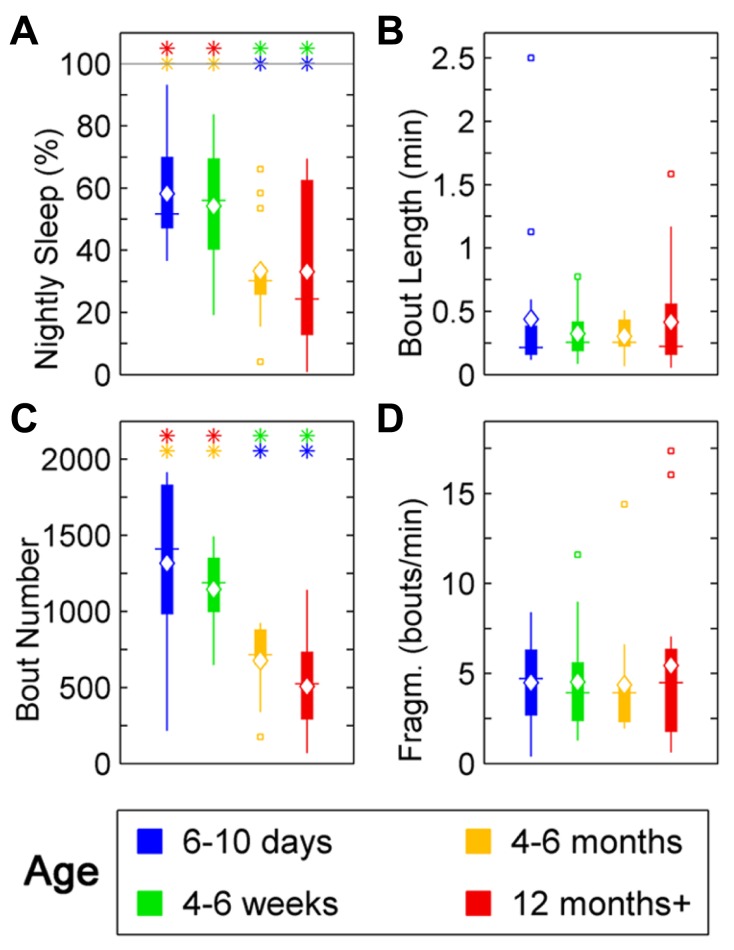
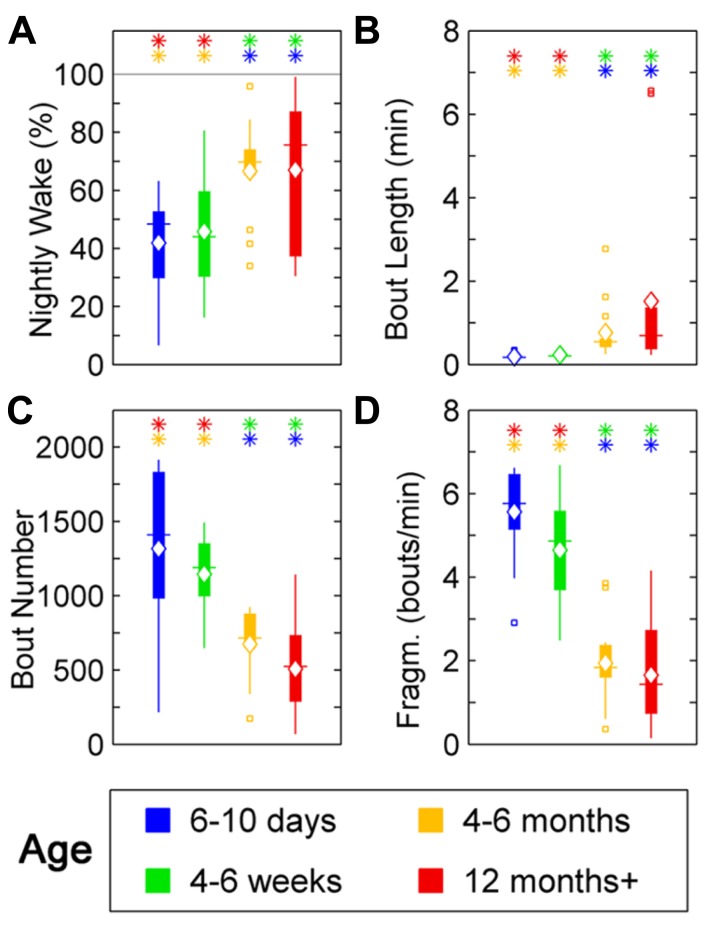
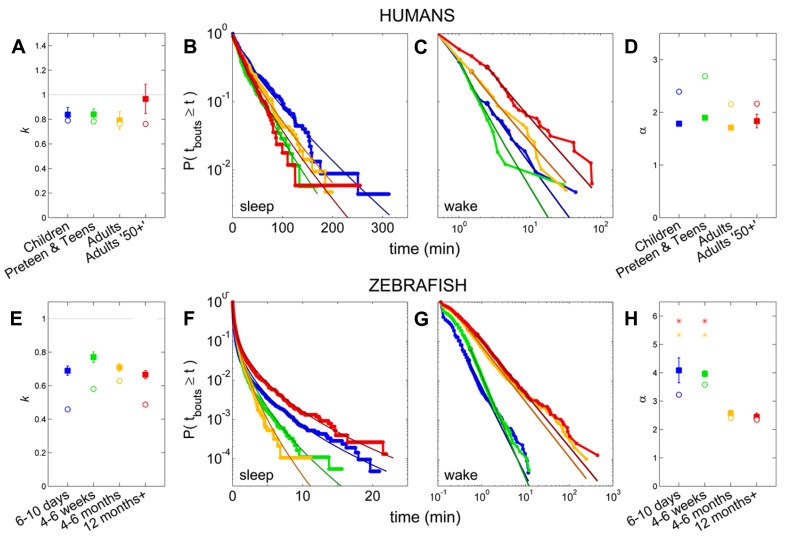
Zebrafish (Danio rerio) are used extensively in sleep research; both to further understanding of sleep in general and also as a model of human sleep. To date, sleep studies have been performed in larval and adult zebrafish but no efforts have been made to document the ontogeny of zebrafish sleep-wake cycles. Because sleep differs across phylogeny and ontogeny it is important to validate the use of zebrafish in elucidating the neural substrates of sleep. Here we describe the development of sleep and wake across the zebrafish lifespan and how it compares to humans. We find power-law distributions to best fit wake bout data but demonstrate that exponential distributions, previously used to describe sleep bout distributions, fail to adequately account for the data in either species. Regardless, the data reveal remarkable similarities in the ontogeny of sleep cycles in zebrafish and humans. Moreover, as seen in other organisms, zebrafish sleep levels are highest early in ontogeny and sleep and wake bouts gradually consolidate to form the adult sleep pattern. Finally, sleep percentage, bout duration, bout number, and sleep fragmentation are shown to allow for meaningful comparisons between zebrafish and human sleep.
斑马鱼(Danio rerio)广泛用于睡眠研究;既可以进一步了解一般睡眠,也可以作为人类睡眠的模型。迄今为止,已经在幼鱼和成年斑马鱼中进行了睡眠研究,但尚未努力记录斑马鱼睡眠-觉醒周期的发育。由于睡眠在系统发生和个体发生上存在差异,因此验证斑马鱼在阐明睡眠的神经基础方面的应用非常重要。在这里,我们描述了斑马鱼整个生命周期的睡眠和觉醒的发展情况,以及与人类的比较。我们发现幂律分布最适合描述觉醒爆发数据,但证明以前用于描述睡眠爆发分布的指数分布不能充分说明两种物种的数据。尽管如此,数据显示斑马鱼和人类在睡眠周期的个体发生上具有惊人的相似性。此外,与其他生物体一样,斑马鱼在个体发生早期的睡眠水平最高,睡眠和觉醒爆发逐渐巩固,形成成年睡眠模式。最后,睡眠百分比、爆发持续时间、爆发次数和睡眠碎片化被证明可以在斑马鱼和人类睡眠之间进行有意义的比较。