Morris Devin, Nguyen Thien, Kim John, Kassissa Christine, Khurasany Melissa, Luong Jennifer, Kasko Sarah, Pandya Shalin, Chu Michael, Chi Po-Ting, Ly Judy, Lagman Minette, Venketaraman Vishwanath
College of Osteopathic Medicine of the Pacific, Western University of Health Sciences, Pomona, CA 91766, USA.
Clin Dev Immunol. 2013;2013:959650. doi: 10.1155/2013/959650. Epub 2013 Nov 7.
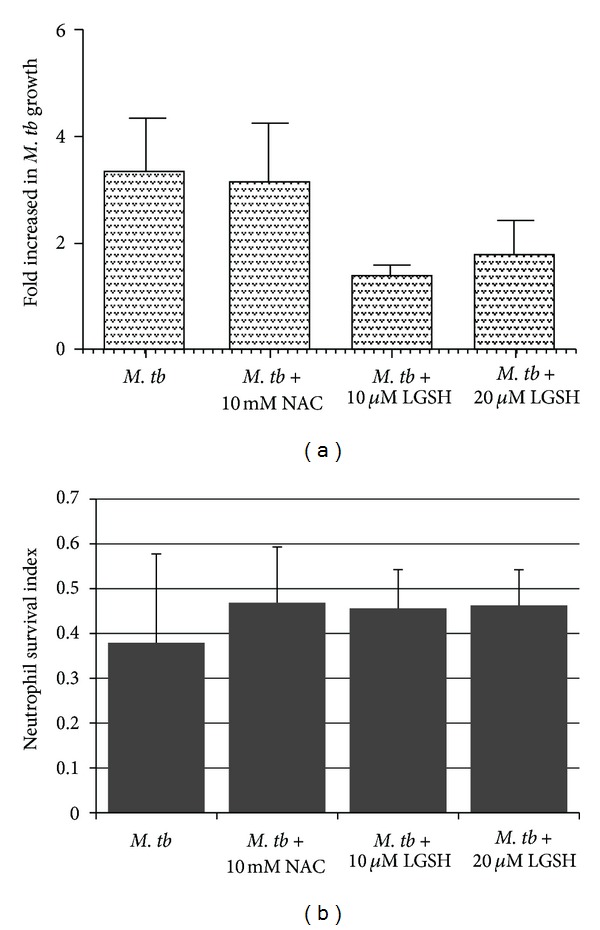
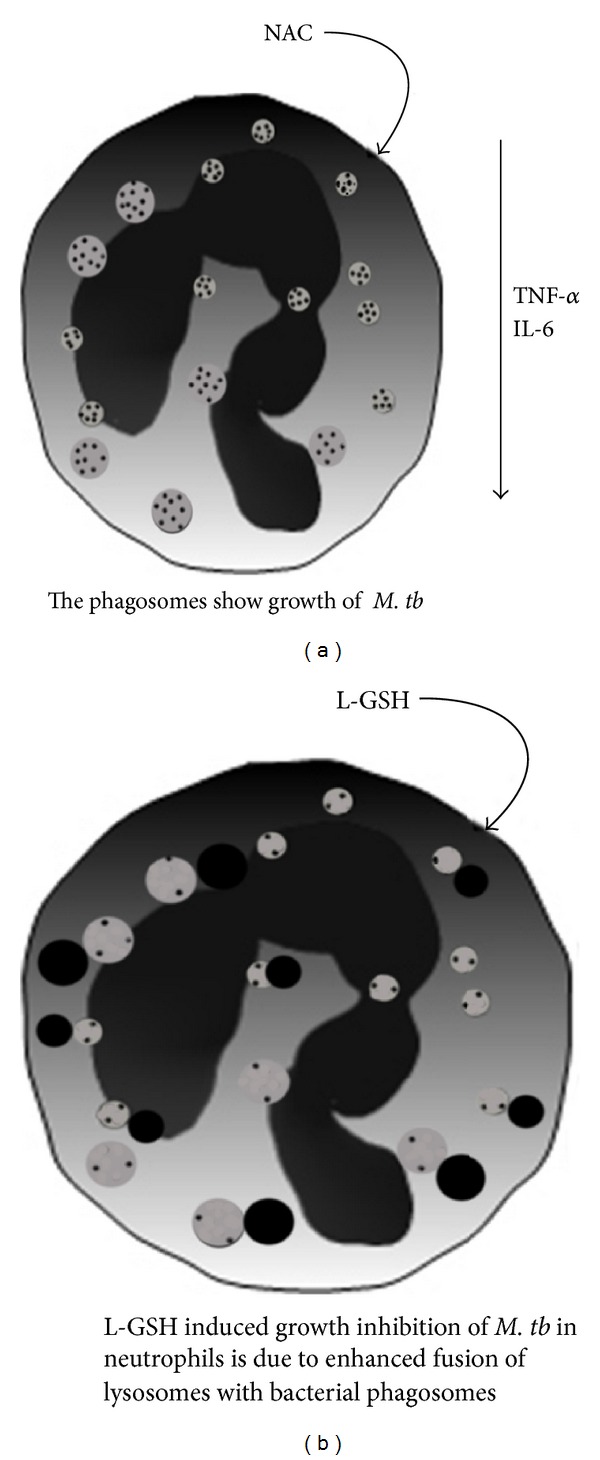
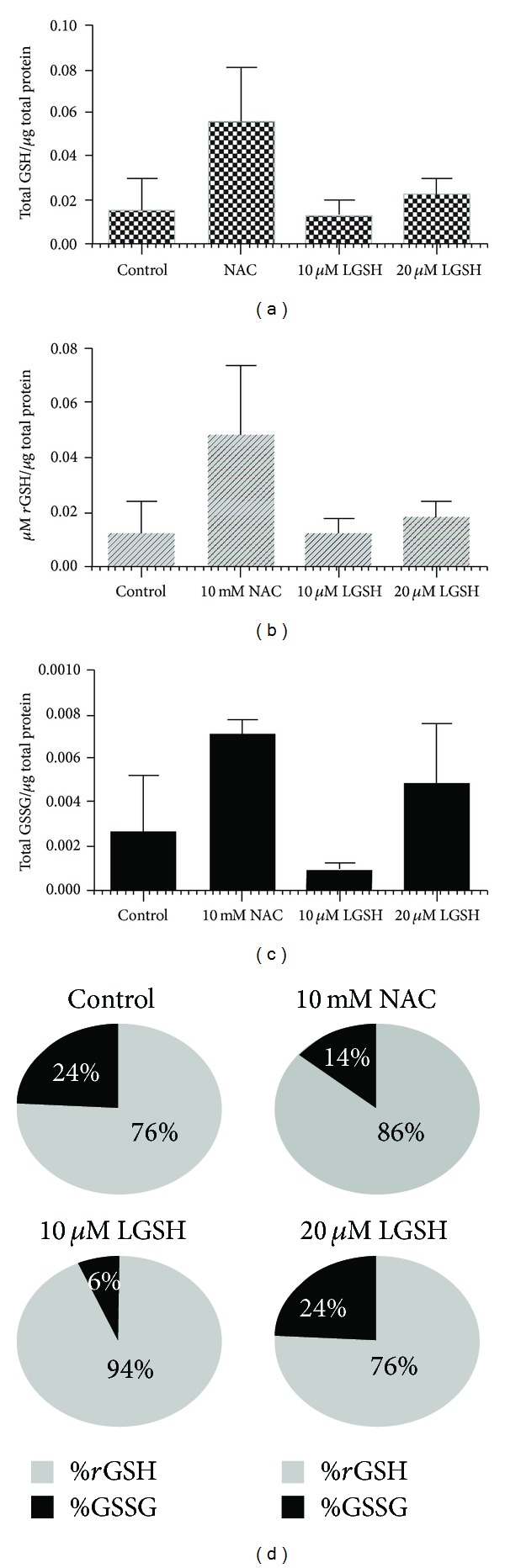
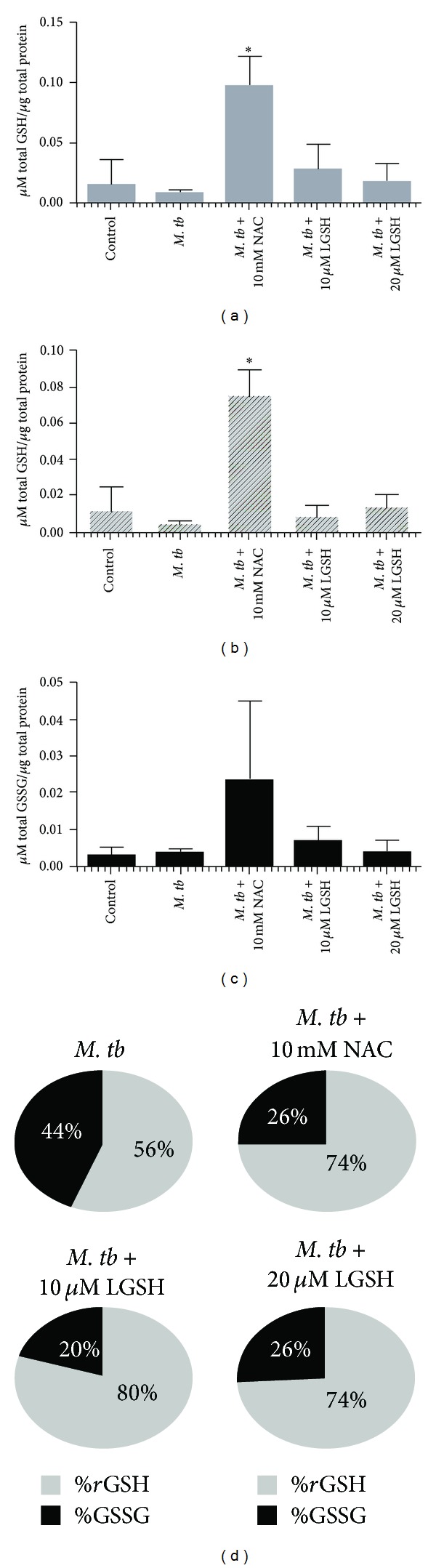
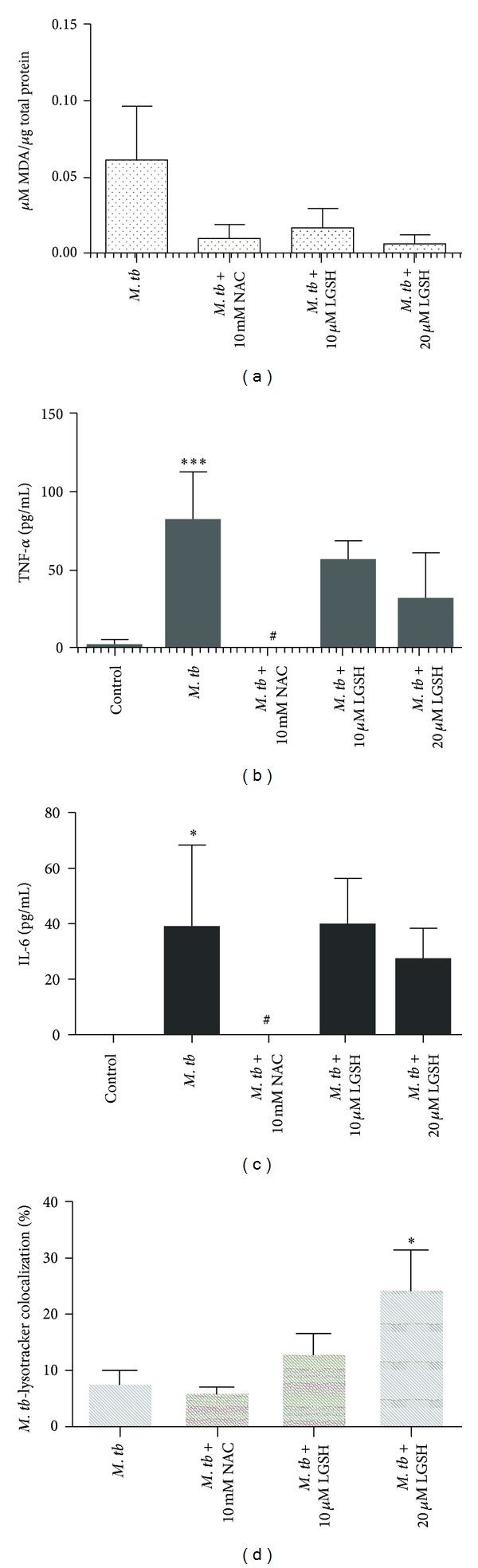
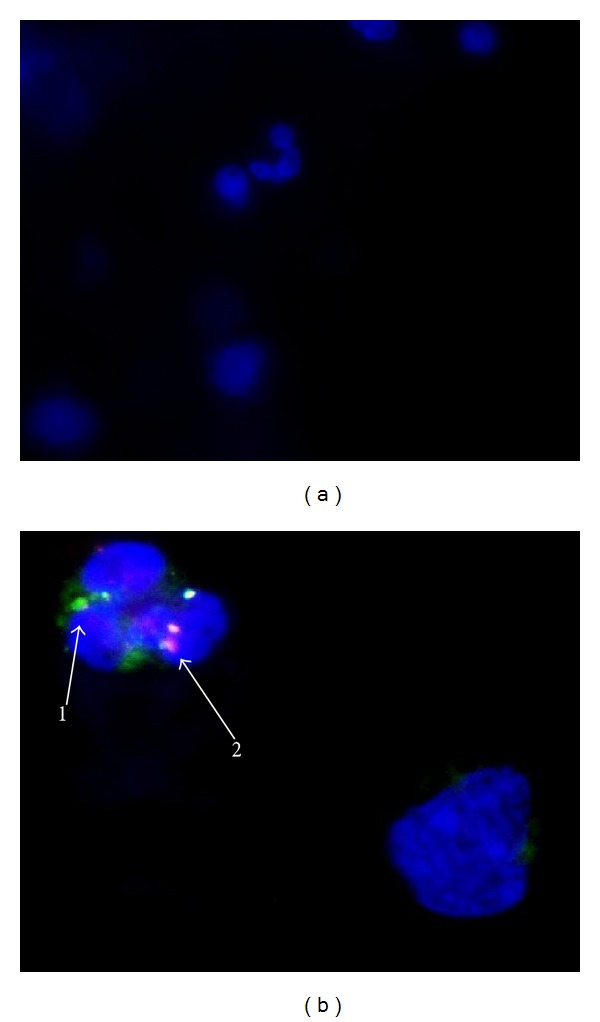
We characterized the functions of neutrophils in response to Mycobacterium tuberculosis (M. tb) infection, with particular reference to glutathione (GSH). We examined the effects of GSH in improving the ability of neutrophils to control intracellular M. tb infection. Our findings indicate that increasing the intracellular levels of GSH with a liposomal formulation of GSH (L-GSH) resulted in reduction in the levels of free radicals and increased acidification of M. tb containing phagosomes leading to the inhibition in the growth of M. tb. This inhibitory mechanism is dependent on the presence of TNF-α and IL-6. Our studies demonstrate a novel regulatory mechanism adapted by the neutrophils to control M. tb infection.
我们对中性粒细胞在应对结核分枝杆菌(M. tb)感染时的功能进行了表征,特别关注了谷胱甘肽(GSH)。我们研究了GSH在提高中性粒细胞控制细胞内M. tb感染能力方面的作用。我们的研究结果表明,用GSH脂质体制剂(L-GSH)提高细胞内GSH水平可导致自由基水平降低,并增加含M. tb吞噬体的酸化,从而抑制M. tb的生长。这种抑制机制依赖于肿瘤坏死因子-α(TNF-α)和白细胞介素-6(IL-6)的存在。我们的研究证明了中性粒细胞采用的一种控制M. tb感染的新型调节机制。