Pötschke Christian, Kessler Wolfram, Maier Stefan, Heidecke Claus-Dieter, Bröker Barbara M
Institute of Immunology and Transfusion Medicine, University Medicine Greifswald, Greifswald, Germany.
PLoS One. 2013 Nov 28;8(11):e81752. doi: 10.1371/journal.pone.0081752. eCollection 2013.
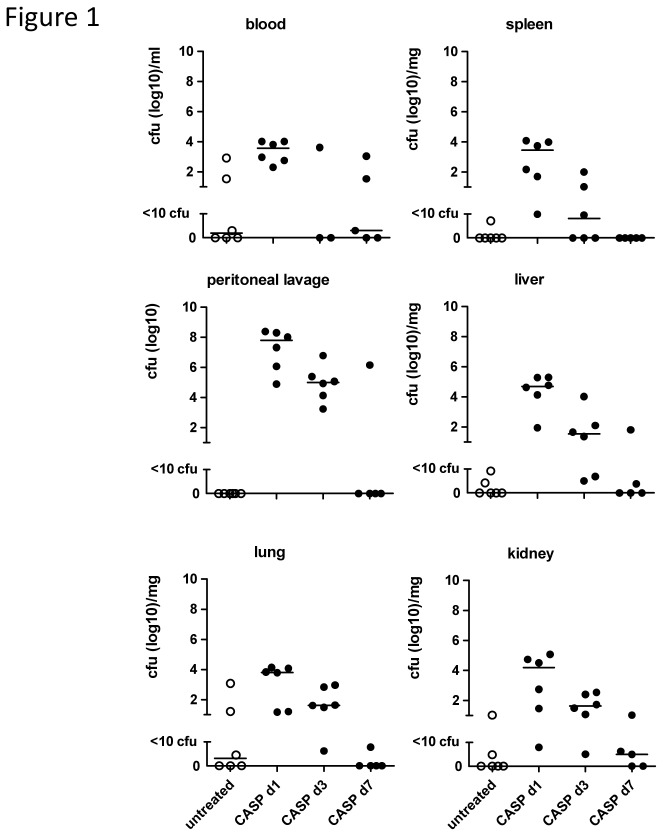
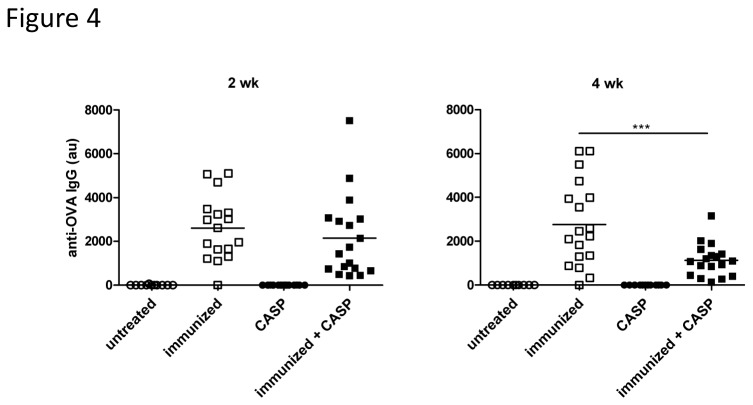
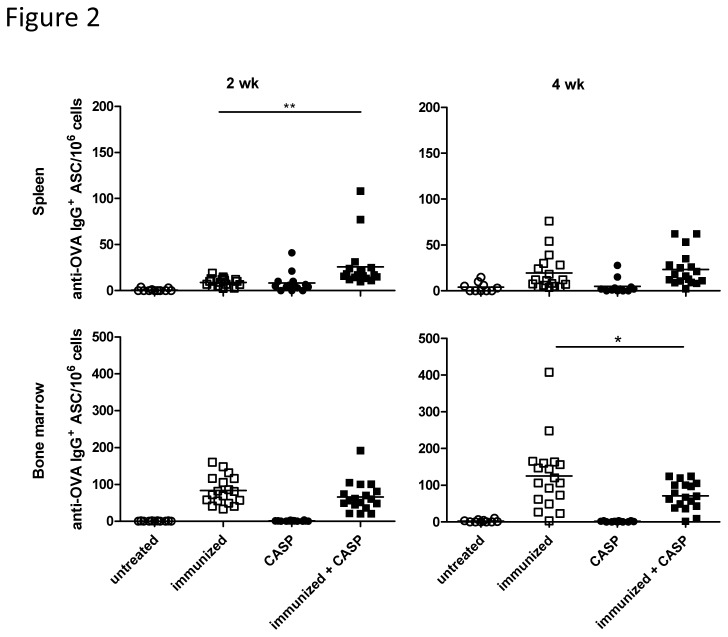
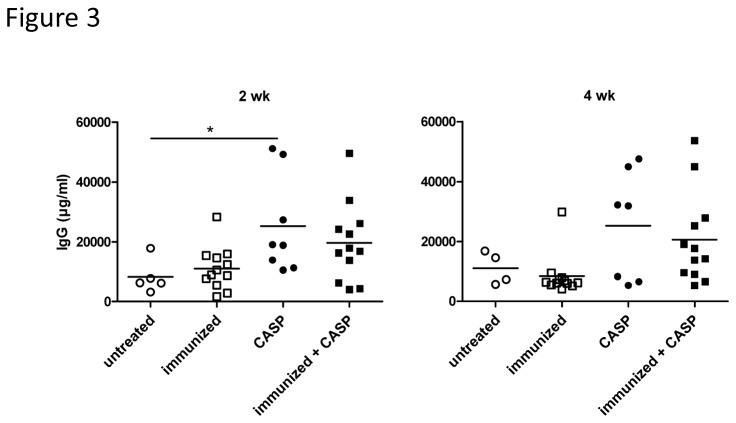
Patients with sepsis are often immune suppressed, and experimental mouse models of sepsis also display this feature. However, acute sepsis in mice is also characterized by a generalized B cell activation and plasma cell differentiation, resulting in a marked increase in serum antibody concentration. Its effects on humoral memory are not clearly defined. We measured the effects of experimental sepsis on long-term immunological memory for a defined antigen: we induced colon ascendens stent peritonitis (CASP) 8 weeks after 2 rounds of immunization with ovalbumin. Four weeks later, the antigen-specific bone marrow plasma cell count had doubled in immunized non-septic animals, but remained unchanged in immunized septic animals. Sepsis also caused a decrease in antigen-specific serum antibody concentration. We conclude that sepsis weakens humoral memory by impeding the antigen-specific plasma cell pool's development, which is not complete 8 weeks after secondary immunization.
脓毒症患者通常存在免疫抑制,脓毒症的实验小鼠模型也表现出这一特征。然而,小鼠急性脓毒症的特点还包括全身性B细胞活化和浆细胞分化,导致血清抗体浓度显著增加。其对体液免疫记忆的影响尚不清楚。我们测量了实验性脓毒症对特定抗原长期免疫记忆的影响:在用卵清蛋白进行两轮免疫8周后,我们诱导了升结肠支架腹膜炎(CASP)。四周后,免疫的非脓毒症动物中抗原特异性骨髓浆细胞计数增加了一倍,但免疫的脓毒症动物中该计数保持不变。脓毒症还导致抗原特异性血清抗体浓度降低。我们得出结论,脓毒症通过阻碍抗原特异性浆细胞池的发育削弱了体液免疫记忆,在二次免疫8周后这种发育仍未完成。