Carvalho Andreia, Menendez Diego Barcena, Senthivel Vivek Raj, Zimmermann Timo, Diambra Luis, Isalan Mark
EMBL/CRG Systems Biology Research Unit, Centre for Genomic Regulation (CRG) , Dr. Aiguader 88, 08003 Barcelona, Spain.
ACS Synth Biol. 2014 May 16;3(5):264-72. doi: 10.1021/sb400053b. Epub 2013 Dec 20.
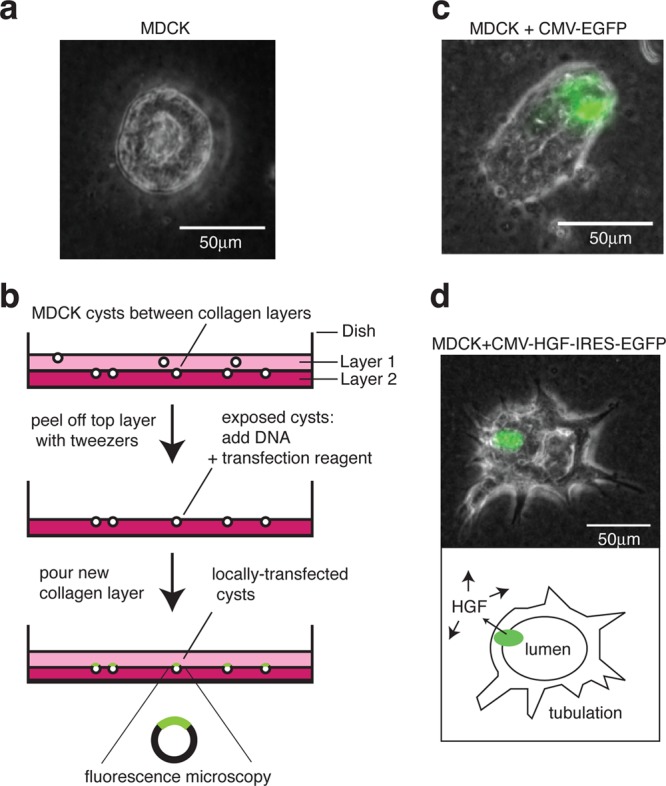
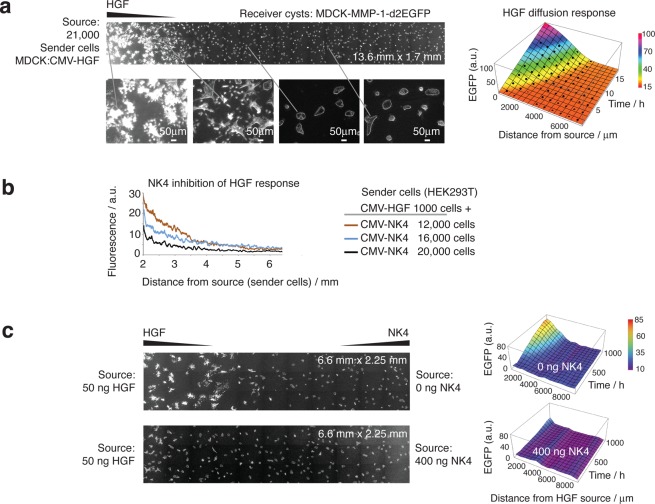
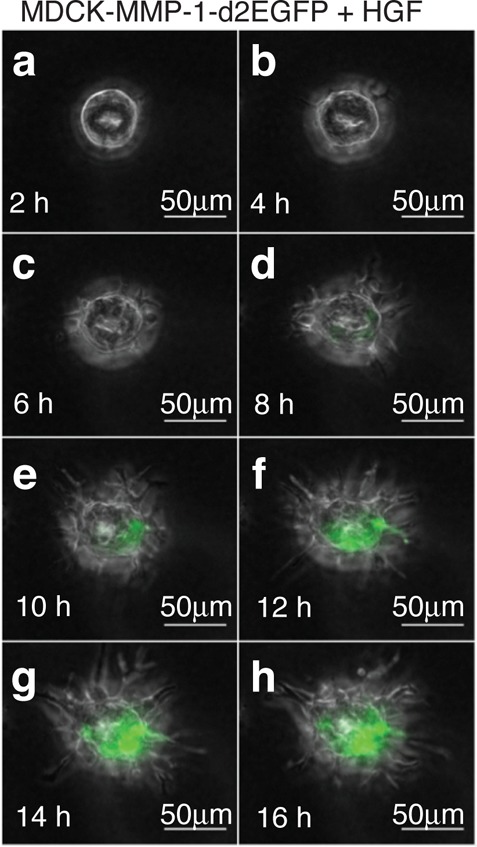
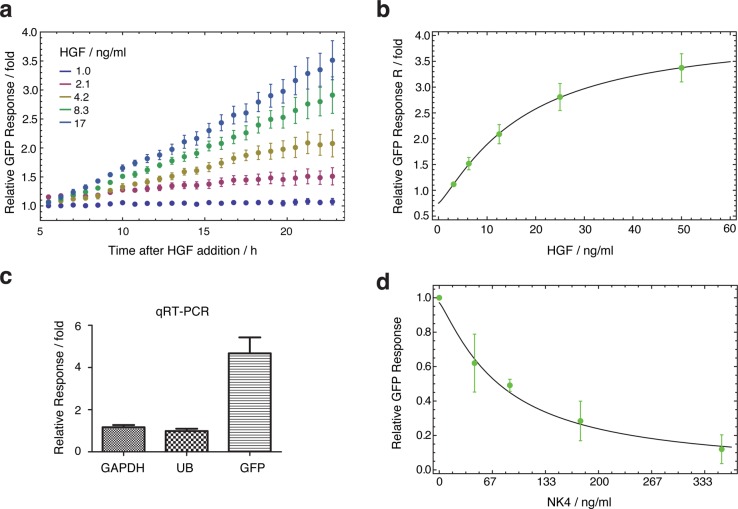
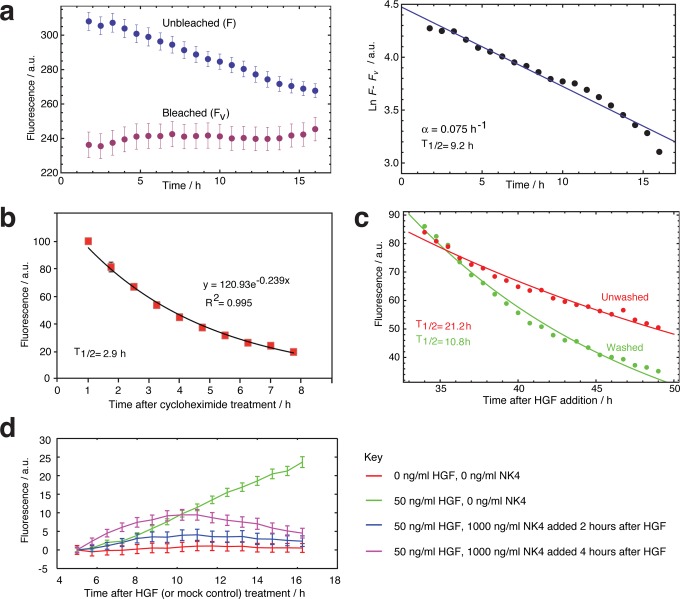
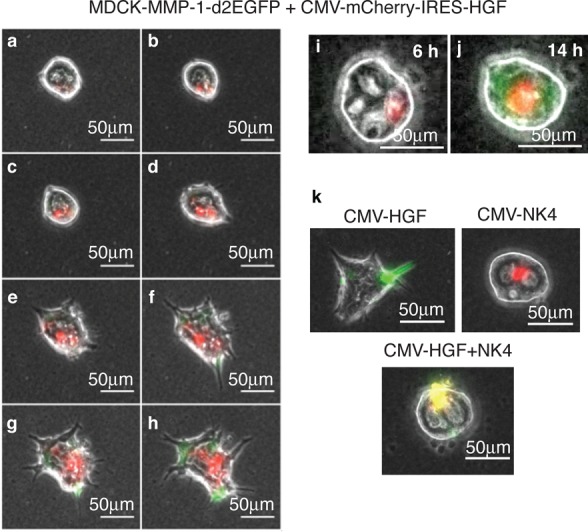
Engineering spatial patterning in mammalian cells, employing entirely genetically encoded components, requires solving several problems. These include how to code secreted activator or inhibitor molecules and how to send concentration-dependent signals to neighboring cells, to control gene expression. The Madin-Darby Canine Kidney (MDCK) cell line is a potential engineering scaffold as it forms hollow spheres (cysts) in 3D culture and tubulates in response to extracellular hepatocyte growth factor (HGF). We first aimed to graft a synthetic patterning system onto single developing MDCK cysts. We therefore developed a new localized transfection method to engineer distinct sender and receiver regions. A stable reporter line enabled reversible EGFP activation by HGF and modulation by a secreted repressor (a truncated HGF variant, NK4). By expanding the scale to wide fields of cysts, we generated morphogen diffusion gradients, controlling reporter gene expression. Together, these components provide a toolkit for engineering cell-cell communication networks in 3D cell culture.
利用完全由基因编码的组件在哺乳动物细胞中构建空间模式,需要解决几个问题。这些问题包括如何编码分泌型激活剂或抑制剂分子,以及如何向邻近细胞发送浓度依赖性信号以控制基因表达。马-达二氏犬肾(MDCK)细胞系是一种潜在的工程支架,因为它在三维培养中形成空心球体(囊肿),并在细胞外肝细胞生长因子(HGF)的作用下形成小管。我们首先旨在将合成模式系统嫁接到单个发育中的MDCK囊肿上。因此,我们开发了一种新的局部转染方法,以构建不同的发送和接收区域。一个稳定的报告基因系能够通过HGF实现可逆的EGFP激活,并通过一种分泌型阻遏物(一种截短的HGF变体,NK4)进行调节。通过将规模扩大到囊肿的广阔区域,我们生成了形态发生素扩散梯度,从而控制报告基因的表达。总之,这些组件为在三维细胞培养中构建细胞间通信网络提供了一个工具包。