Rotman Research Institute, Baycrest Centre, 3560 Bathurst Street, Toronto M6A 2E1, ON, Canada.
BMC Neurosci. 2013 Dec 5;14:151. doi: 10.1186/1471-2202-14-151.
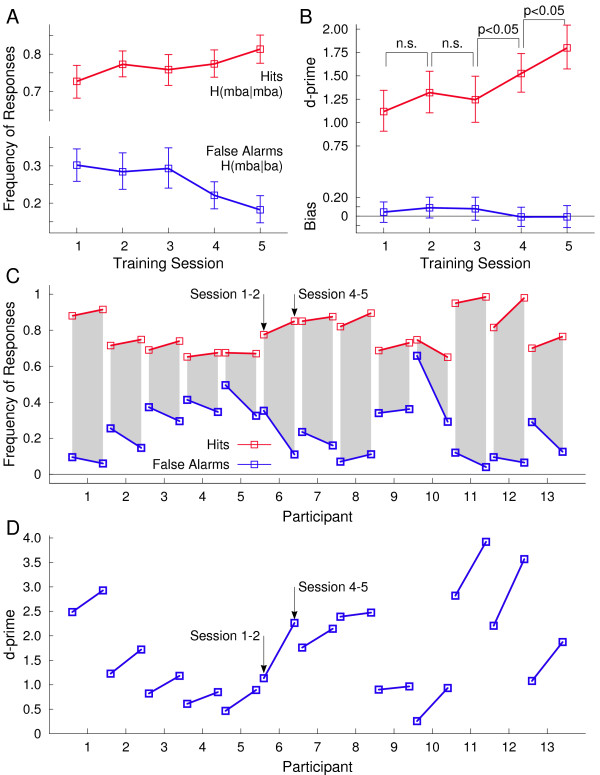
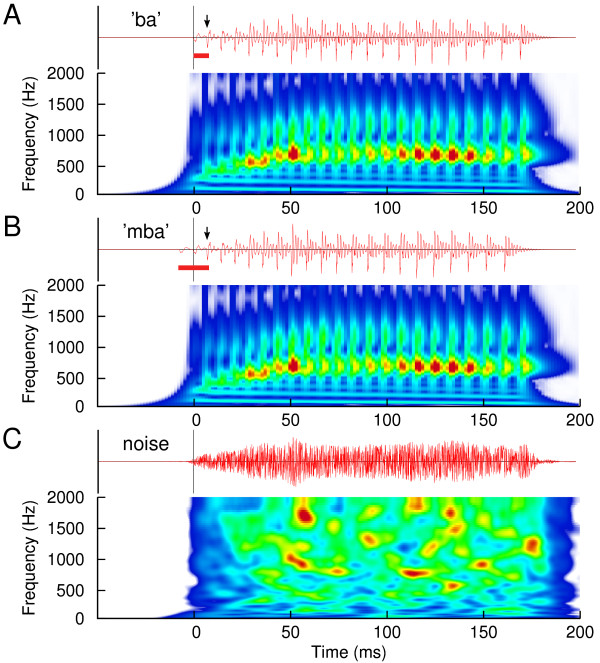
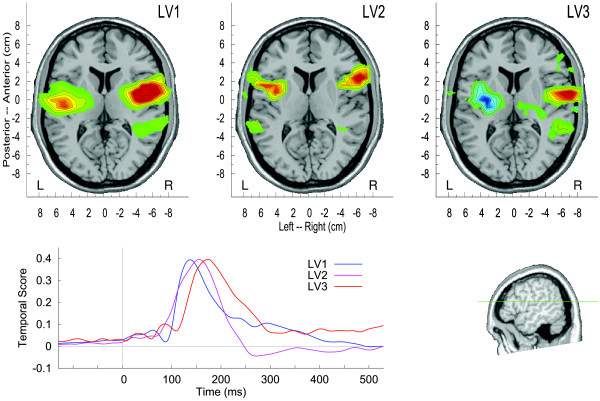
Auditory perceptual learning persistently modifies neural networks in the central nervous system. Central auditory processing comprises a hierarchy of sound analysis and integration, which transforms an acoustical signal into a meaningful object for perception. Based on latencies and source locations of auditory evoked responses, we investigated which stage of central processing undergoes neuroplastic changes when gaining auditory experience during passive listening and active perceptual training. Young healthy volunteers participated in a five-day training program to identify two pre-voiced versions of the stop-consonant syllable 'ba', which is an unusual speech sound to English listeners. Magnetoencephalographic (MEG) brain responses were recorded during two pre-training and one post-training sessions. Underlying cortical sources were localized, and the temporal dynamics of auditory evoked responses were analyzed.
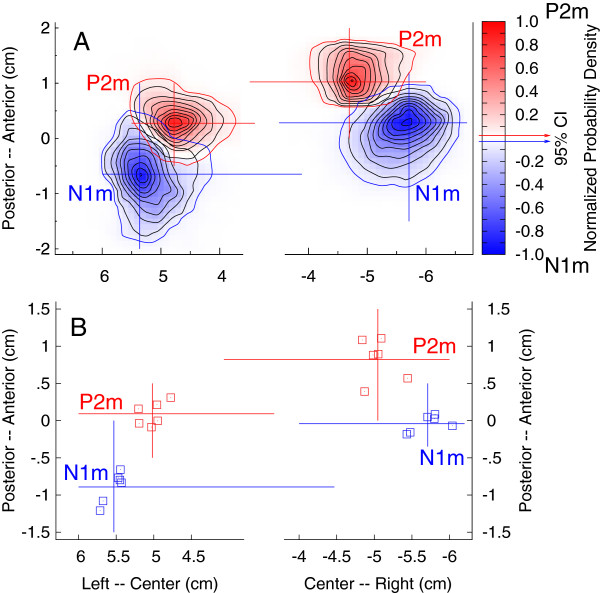
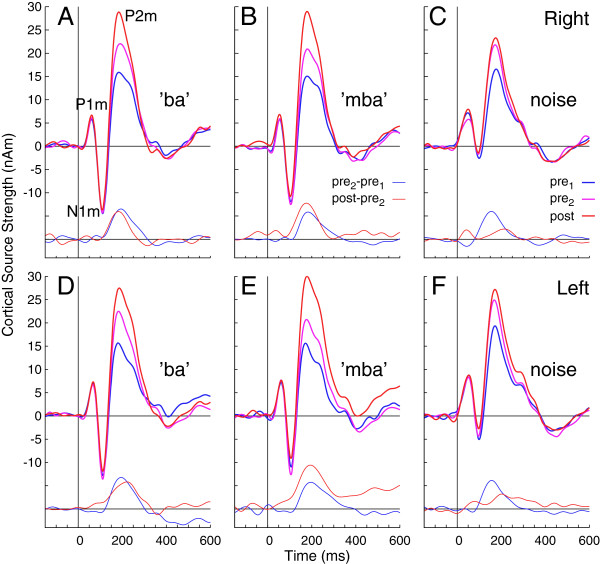
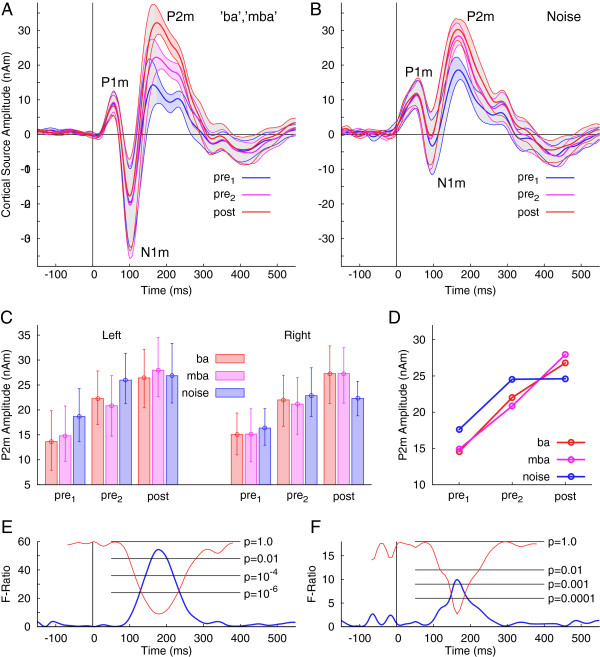
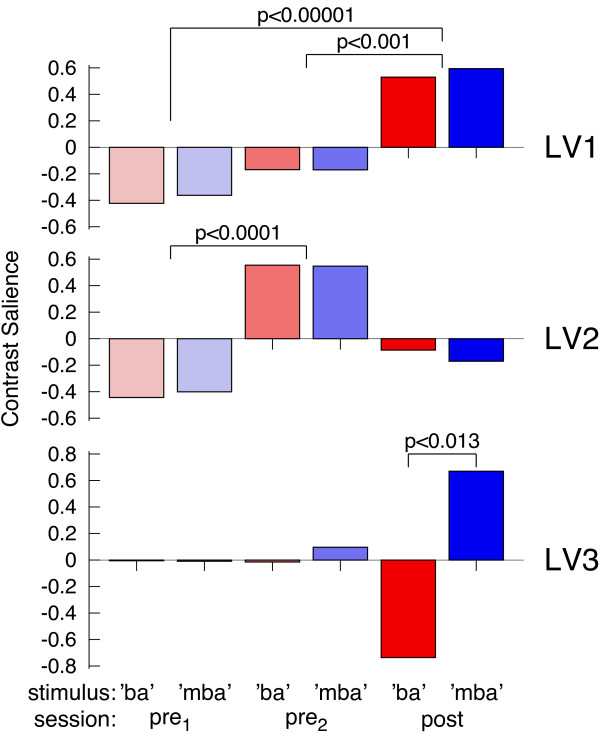
After both passive listening and active training, the amplitude of the P2m wave with latency of 200 ms increased considerably. By this latency, the integration of stimulus features into an auditory object for further conscious perception is considered to be complete. Therefore the P2m changes were discussed in the light of auditory object representation. Moreover, P2m sources were localized in anterior auditory association cortex, which is part of the antero-ventral pathway for object identification. The amplitude of the earlier N1m wave, which is related to processing of sensory information, did not change over the time course of the study.
The P2m amplitude increase and its persistence over time constitute a neuroplastic change. The P2m gain likely reflects enhanced object representation after stimulus experience and training, which enables listeners to improve their ability for scrutinizing fine differences in pre-voicing time. Different trajectories of brain and behaviour changes suggest that the preceding effect of a P2m increase relates to brain processes, which are necessary precursors of perceptual learning. Cautious discussion is required when interpreting the finding of a P2 amplitude increase between recordings before and after training and learning.
听觉感知学习持续改变中枢神经系统中的神经网络。中枢听觉处理由声音分析和整合的层次结构组成,它将声学信号转换为感知的有意义的对象。基于听觉诱发电响应的潜伏期和源位置,我们研究了当在被动聆听和主动感知训练中获得听觉经验时,中枢处理的哪个阶段会发生神经可塑性变化。年轻健康的志愿者参与了一个为期五天的训练计划,以识别两个预发声的停止辅音音节“ba”,这对英语听众来说是一种不寻常的语音。在两个训练前和一个训练后阶段记录了脑磁图(MEG)大脑响应。定位了潜在的皮质源,并分析了听觉诱发电响应的时间动态。
在被动聆听和主动训练之后,潜伏期为 200 毫秒的 P2m 波的振幅显着增加。在此潜伏期内,刺激特征的整合为进一步的有意识感知形成听觉对象被认为是完整的。因此,P2m 的变化是根据听觉对象的表示来讨论的。此外,P2m 源位于前听觉联合皮层,这是用于对象识别的前腹侧通路的一部分。与处理感觉信息相关的较早的 N1m 波的振幅在研究过程中没有随时间变化。
P2m 振幅的增加及其随时间的持续构成了神经可塑性的变化。P2m 的增加可能反映了刺激体验和训练后对象表示的增强,这使听众能够提高其仔细分辨预发声时间差异的能力。大脑和行为变化的不同轨迹表明,P2m 增加的先前效应与大脑过程有关,这些过程是感知学习的必要前提。在解释训练前后记录之间 P2 振幅增加和学习的发现时,需要谨慎讨论。