Chang Lei, Shi Runlin, Yang Tao, Li Fan, Li Guohao, Guo Yonglian, Lang Bin, Yang Weimin, Zhuang Qianyuan, Xu Hua
Department of Urology, Tongji Hospital, Tongji Medical College, Huazhong University of Science and Technology, Wuhan 430030, China.
J Exp Clin Cancer Res. 2013 Dec 8;32(1):101. doi: 10.1186/1756-9966-32-101.
Recently, leucine-rich repeats and immunoglobulin-like domains 1 (LRIG1), a negative regulator of EGFR, was discovered is a novel agent for suppressing bladder cancer. The aim of this study was to investigate the impact of LRIG1 on the biological features of aggressive bladder cancer cells and the possible mechanisms of enhanced apoptosis induced by upregulation of LRIG1.
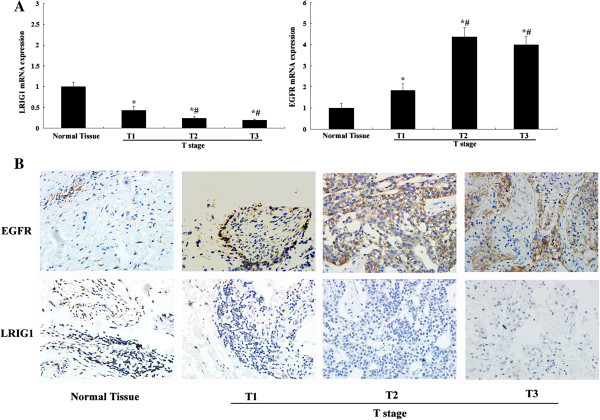
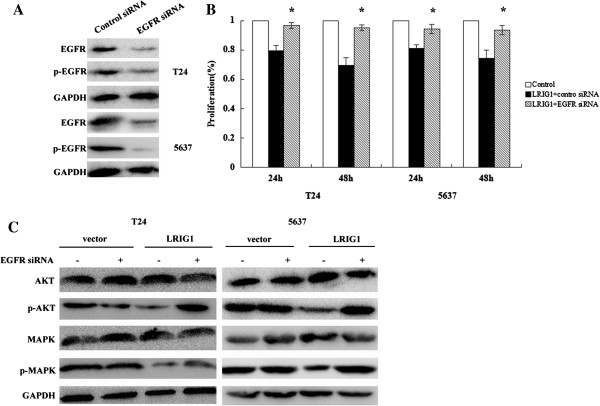
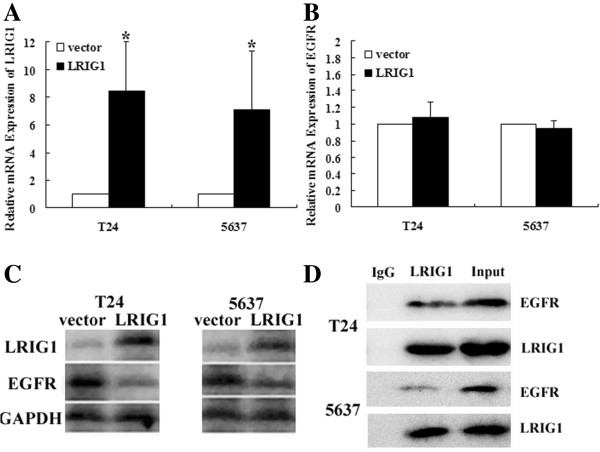
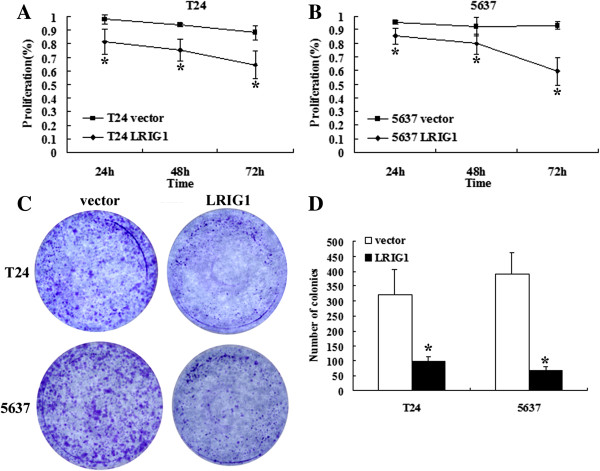
In this study, we examined the mRNA and protein expression of LRIG1 and EGFR in bladder cancers and normal bladder. Meanwhile, we overexpressed LRIG1 with adenovirus vector in T24/5637 bladder cancer cell lines, and we used real time-PCR, western blot, and co-immunoprecipitation analysis in order to examine the effects of LRIG1 gene on EGFR. Furthermore, we evaluate the impact of LRIG1 gene on the function of human bladder cancer cells and EGFR signaling.
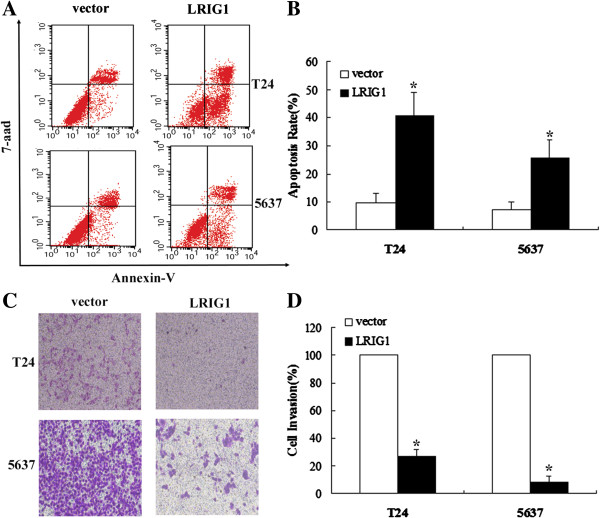
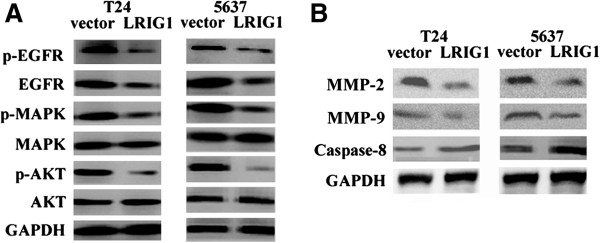
The expression of LRIG1 was decreased, while the expression of EGFR was increased in the majority of bladder cancer, and the ratio of EGFR/LRIG1 was increased in tumors versus normal tissue. We found that upregulation of LRIG1 induced cell apoptosis and cell growth inhibition, and further reversed invasion in bladder cancer cell lines in vitro by inhibiting phosphorylation of downstream MAPK and AKT signaling pathway.
Taken together, our findings provide us with an insight into LRIG1 function, and we conclude that LRIG1 evolved in bladder cancer as a rare feedback negative attenuator of EGFR, thus could offer a novel therapeutic target to treat patients with bladder cancer.
最近,富含亮氨酸重复序列和免疫球蛋白样结构域1(LRIG1),一种表皮生长因子受体(EGFR)的负调节因子,被发现是一种新型的抑制膀胱癌的药物。本研究旨在探讨LRIG1对侵袭性膀胱癌细胞生物学特性的影响以及LRIG1上调诱导细胞凋亡增强的可能机制。
在本研究中,我们检测了膀胱癌组织和正常膀胱组织中LRIG1和EGFR的mRNA及蛋白表达。同时,我们用腺病毒载体在T24/5637膀胱癌细胞系中过表达LRIG1,并采用实时荧光定量PCR、蛋白质免疫印迹法和免疫共沉淀分析法来检测LRIG1基因对EGFR的影响。此外,我们评估了LRIG1基因对人膀胱癌细胞功能和EGFR信号传导的影响。
在大多数膀胱癌组织中,LRIG1表达降低,而EGFR表达增加,肿瘤组织中EGFR/LRIG1比值高于正常组织。我们发现,上调LRIG1可诱导细胞凋亡和抑制细胞生长,并通过抑制下游丝裂原活化蛋白激酶(MAPK)和蛋白激酶B(AKT)信号通路的磷酸化,在体外逆转膀胱癌细胞系的侵袭能力。
综上所述,我们的研究结果为深入了解LRIG1的功能提供了依据,我们得出结论,LRIG1在膀胱癌中作为EGFR罕见的反馈负向衰减因子发挥作用,因此可为膀胱癌患者提供新的治疗靶点。