Department of Burns, Sichuan Academy of Medical Sciences and Sichuan Provincial People's Hospital, Chengdu 610072, P.R. China.
Department of Emergency, Sichuan Academy of Medical Sciences and Sichuan Provincial People's Hospital, Chengdu 610072, P.R. China
Biosci Rep. 2019 Jan 8;39(1). doi: 10.1042/BSR20181165. Print 2019 Jan 31.
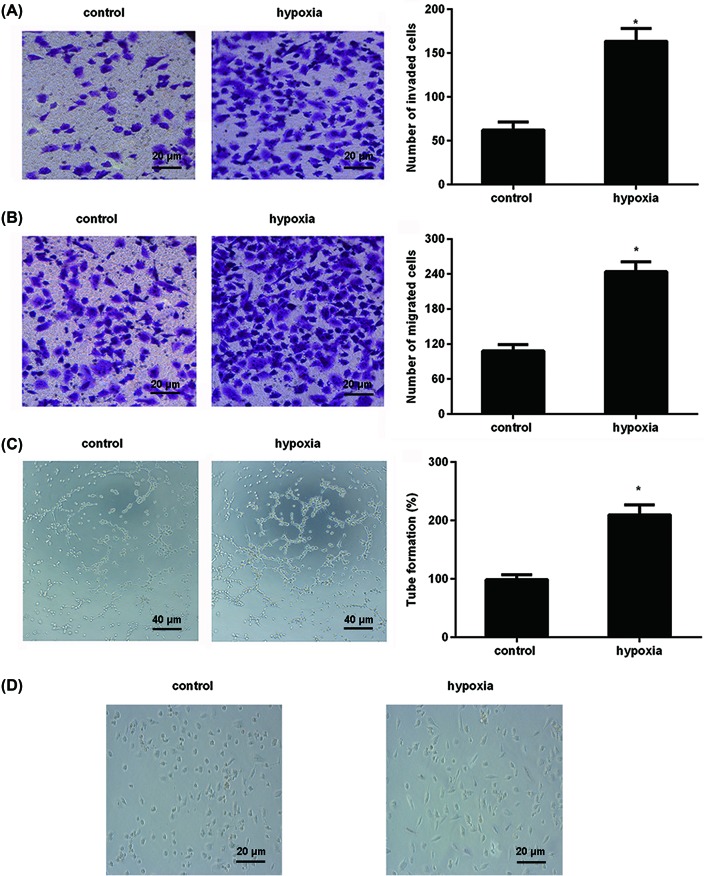
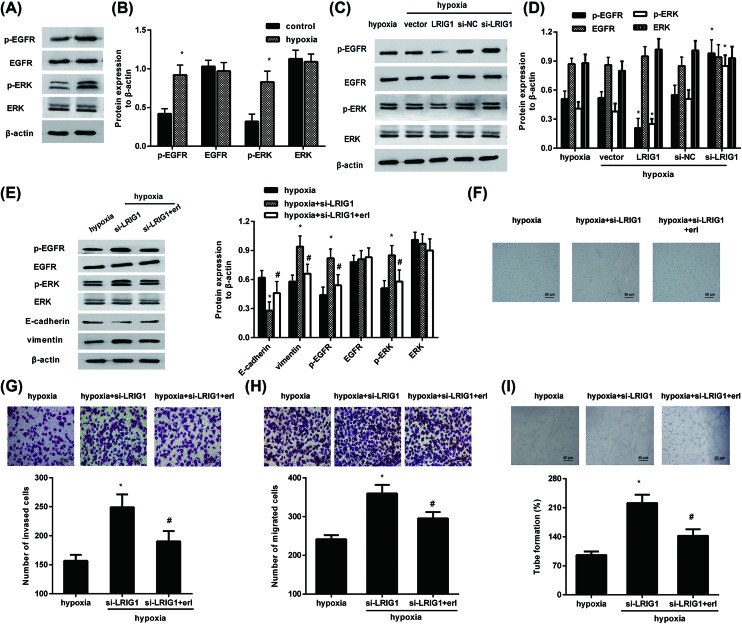
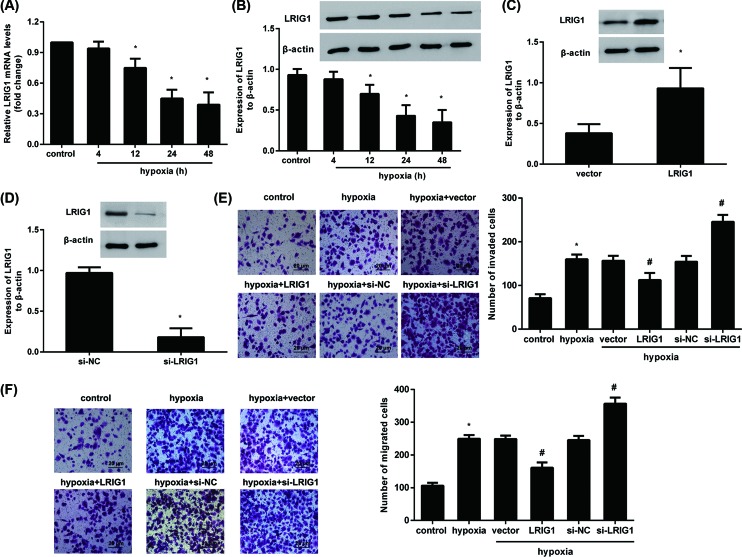
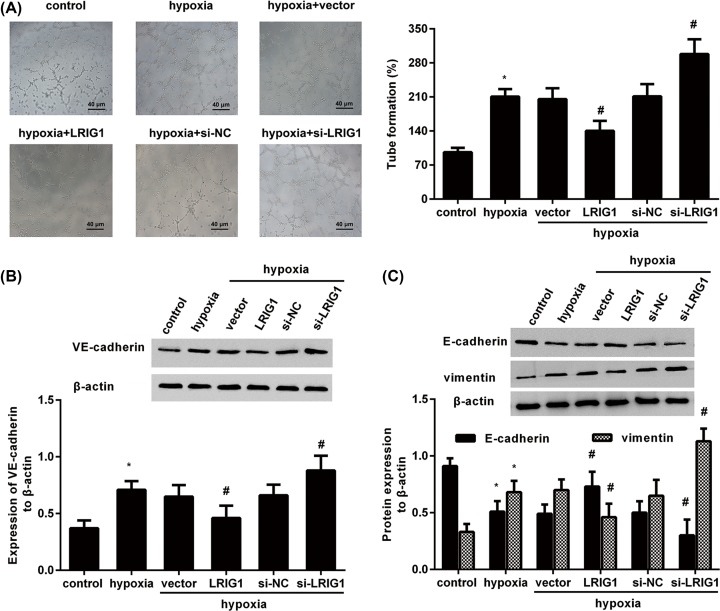
Intratumoral hypoxia is a well-known feature of solid cancers and constitutes a major contributor to cancer metastasis and poor outcomes including melanoma. Leucine-rich repeats and Ig-like domains 1 (LRIG1) participate in the aggressive progression of several tumors, where its expression is frequently decreased. In the present study, hypoxia exposure aggravated melanoma cell invasion, migration, vasculogenic mimicry (VM), and epithelial-mesenchymal transition (EMT). During this process, LRIG1 expression was also decreased. Importantly, overexpression of LRIG1 notably counteracted hypoxia-induced invasion, migration, and VM, which was further augmented after LRIG1 inhibition. Mechanism analysis corroborated that LRIG1 elevation muted hypoxia-induced EMT by suppressing E-cadherin expression and increasing N-cadherin expression. Conversely, cessation of LRIG1 further potentiated hypoxia-triggered EMT. Additionally, hypoxia stimulation activated the epidermal growth factor receptor (EGFR)/ERK pathway, which was dampened by LRIG1 up-regulation but further activated by LRIG1 inhibition. More important, blocking this pathway with its antagonist erlotinib abrogated LRIG1 suppression-induced EMT, and subsequently cell invasion, migration, and VM of melanoma cells under hypoxia. Together, these findings suggest that LRIG1 overexpression can antagonize hypoxia-evoked aggressive metastatic phenotype by suppressing cell invasion, migration, and VM via regulating EGFR/ERK-mediated EMT process. Therefore, these findings may provide a promising target for melanoma therapy.
肿瘤内缺氧是实体瘤的一个显著特征,是导致癌症转移和不良预后的主要因素,包括黑色素瘤。富含亮氨酸重复和免疫球蛋白样结构域 1(LRIG1)参与了几种肿瘤的侵袭性进展,其表达通常降低。在本研究中,缺氧暴露加重了黑色素瘤细胞的侵袭、迁移、血管生成拟态(VM)和上皮间质转化(EMT)。在此过程中,LRIG1 的表达也下降。重要的是,LRIG1 的过表达显著逆转了缺氧诱导的侵袭、迁移和 VM,而在 LRIG1 抑制后进一步增强。机制分析证实,LRIG1 的上调通过抑制 E-钙黏蛋白表达和增加 N-钙黏蛋白表达来抑制缺氧诱导的 EMT。相反,LRIG1 的停止进一步增强了缺氧触发的 EMT。此外,缺氧刺激激活了表皮生长因子受体(EGFR)/ERK 通路,LRIG1 的上调抑制了该通路,但 LRIG1 的抑制进一步激活了该通路。更重要的是,用其拮抗剂厄洛替尼阻断该通路,可阻断 LRIG1 抑制诱导的 EMT,进而阻断缺氧下黑色素瘤细胞的侵袭、迁移和 VM。综上所述,这些发现表明,LRIG1 的过表达可以通过抑制 EGFR/ERK 介导的 EMT 过程来拮抗缺氧诱导的侵袭性转移表型,从而抑制细胞侵袭、迁移和 VM。因此,这些发现可能为黑色素瘤治疗提供一个有前途的靶点。