National Institute of Health Administration, BP: 6329 Rabat, Morocco.
BMC Pregnancy Childbirth. 2013 Dec 5;13:225. doi: 10.1186/1471-2393-13-225.
Information about postpartum maternal morbidity in developing countries is limited and often based on information obtained from hospitals. As a result, the reports do not usually reflect the true magnitude of obstetric complications and poor management at delivery. In Morocco, little is known about obstetric maternal morbidity. Our aim was to measure and identify the causes of postpartum morbidity 6 weeks after delivery and to compare women's perception of their health during this period to their medical diagnoses.
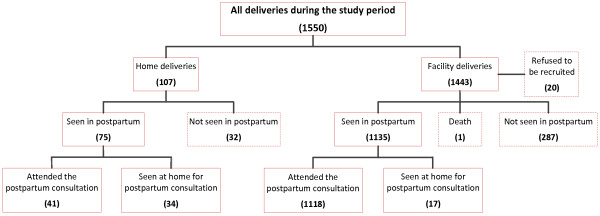
We did a cross-sectional study of all women, independent of place of delivery, in Al Massira district, Marrakech, from December 2010 to March 2012. All women were clinically examined 6 to 8 weeks postpartum for delivery-related morbidities. We coupled a clinical examination with a questionnaire and laboratory tests (hemoglobin).
During postpartum consultation, 44% of women expressed at least one complaint. Complaints related to mental health were most often reported (10%), followed by genital infections (8%). Only 9% of women sought treatment for their symptoms before the postpartum visit. Women who were aged ≥30 years, employed, belonged to highest socioeconomic class, and had obstetric complications during birth or delivered in a private facility or at home were more likely to report a complaint. Overall, 60% of women received a medical diagnosis related to their complaint, most of which were related to gynecological problems (22%), followed by laboratory-confirmed anemia (19%). Problems related to mental health represented only 5% of the diagnoses. The comparative analysis between perceived and diagnosed morbidity highlighted discrepancies between complaints that women expressed during their postpartum consultation and those they received from a physician.
A better understanding of postpartum complaints is one of the de facto essential elements to ensuring quality of care for women. Sensitizing and training clinicians in mental health services is important to respond to women's needs and improve the quality of maternal care.
发展中国家有关产后产妇发病率的信息有限,且通常基于从医院获得的信息。因此,这些报告通常不能反映产科并发症的真实程度和分娩时的不良管理。在摩洛哥,人们对产科产妇发病率知之甚少。我们的目的是测量和确定产后 6 周发病的原因,并将妇女在此期间对自己健康的看法与医疗诊断进行比较。
我们对 2010 年 12 月至 2012 年 3 月在马拉喀什 Al Massira 区的所有产妇(无论分娩地点如何)进行了横断面研究。所有产妇在产后 6 至 8 周进行与分娩相关的发病率的临床检查。我们将临床检查与问卷和实验室检查(血红蛋白)相结合。
在产后咨询期间,44%的妇女至少表达了一种抱怨。报告的抱怨主要与心理健康有关(10%),其次是生殖器感染(8%)。只有 9%的妇女在产后就诊前因症状而接受治疗。年龄≥30 岁、有工作、属于最高社会经济阶层、分娩时有产科并发症或在私人机构或家中分娩的妇女更有可能报告抱怨。总的来说,60%的妇女得到了与抱怨相关的医疗诊断,其中大部分与妇科问题有关(22%),其次是实验室确诊的贫血(19%)。与心理健康相关的问题仅占诊断的 5%。在感知发病率和诊断发病率之间的比较分析中,突出了妇女在产后咨询期间表达的抱怨与医生诊断的发病率之间的差异。
更好地理解产后抱怨是确保妇女护理质量的一个基本要素。对精神卫生服务的临床医生进行敏感性和培训很重要,这有助于满足妇女的需求,提高产妇护理质量。