Smith K D, Clegg P D, Innes J F, Comerford E J
Faculty of Veterinary Medicine, Small Animal Hospital, University of Glasgow, 464 Bearsden Road, Glasgow G61 1QH, UK.
Department of Musculoskeletal Biology, Institute of Ageing and Chronic Disease, Faculty of Health and Life Sciences, University of Liverpool, Liverpool CH64 7TE, UK.
Vet J. 2014 Jan;199(1):169-74. doi: 10.1016/j.tvjl.2013.11.002. Epub 2013 Nov 11.
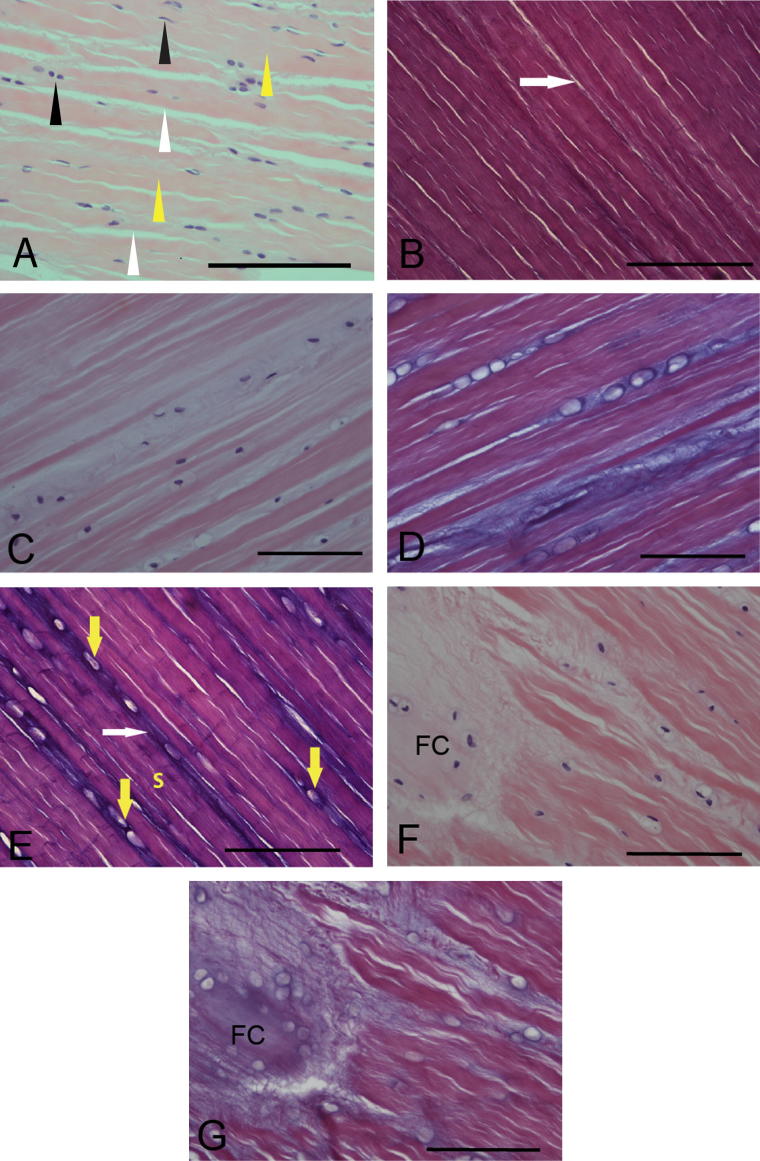
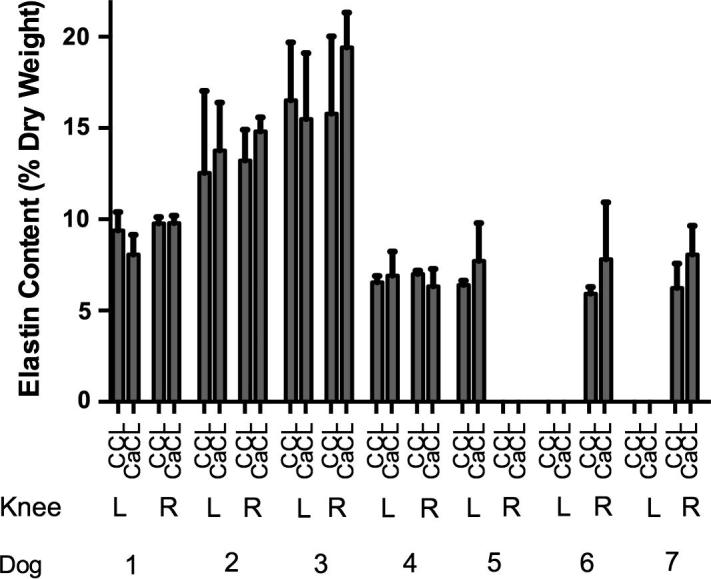
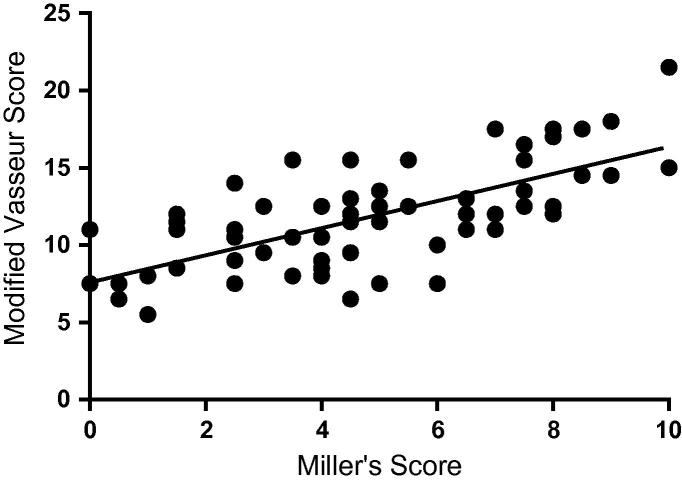
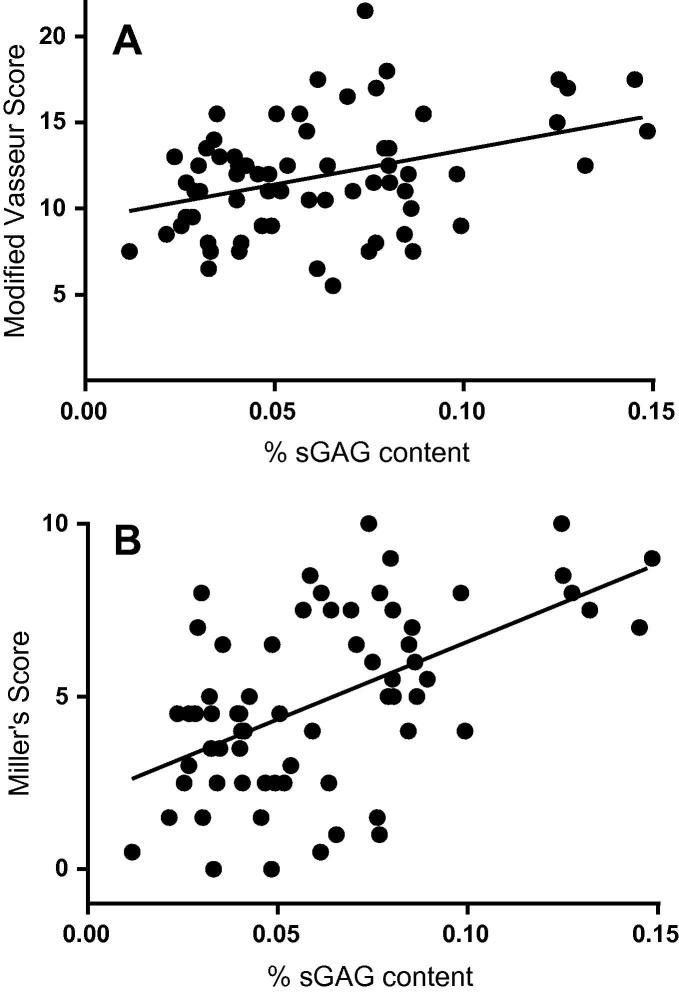
Cruciate ligaments (CLs) are primary stabilisers of the knee joint and canine cranial cruciate ligament disease (CCLD) and rupture is a common injury. Elastin fibres, composed of an elastin core and fibrillin containing microfibrils, are traditionally considered minor components of the ligament extracellular matrix (ECM). However, their content and distribution in CLs is unknown. The purposes of this study were to determine the elastin content of canine CLs and to ascertain its relationship to other biochemical components and histological architecture. Macroscopically normal CLs were harvested from Greyhounds (n=11), a breed with a low risk of CCLD. Elastin, collagen and sulfated glycosaminoglycan content were measured and histological scoring systems were developed to quantify ECM changes using a modified Vasseur score (mVS) and oxytalan fibre (bundles of microfibrils) staining. Elastin contents were 9.86 ± 3.97% dry weight in the cranial CL and 10.79 ± 4.37% in the caudal CL, respectively, and did not alter with advancing histological degeneration. All CLs demonstrated mild degenerative changes, with an average mVS score of 11.9 ± 3.3 (maximum 24). Increasing degeneration of the ligament ECM showed a positive correlation (r=0.690, P<0.001) with increased oxytalan fibre staining within the ECM. Elastin is an abundant protein in CLs forming a greater proportion of the ligament ECM than previously reported. The appearance of oxytalan fibres in degenerative CL ECM may reflect an adaptive or reparative response to normal or increased loads. This finding is important for future therapeutic or ligament replacement strategies associated with cranial CL injury.
十字韧带(CLs)是膝关节的主要稳定结构,犬颅十字韧带疾病(CCLD)及破裂是一种常见损伤。弹性纤维由弹性蛋白核心和含原纤维蛋白的微原纤维组成,传统上被认为是韧带细胞外基质(ECM)的次要成分。然而,它们在CLs中的含量和分布尚不清楚。本研究的目的是确定犬CLs的弹性蛋白含量,并确定其与其他生化成分及组织结构的关系。从惠比特犬(n = 11)身上采集宏观正常的CLs,该品种患CCLD的风险较低。测量弹性蛋白、胶原蛋白和硫酸化糖胺聚糖的含量,并开发组织学评分系统,使用改良的瓦瑟尔评分(mVS)和氧化弹力纤维(微原纤维束)染色来量化ECM变化。颅侧CL的弹性蛋白含量分别为干重的9.86±3.97%,尾侧CL为10.79±4.37%,且不随组织学退变进展而改变。所有CLs均表现出轻度退变改变,平均mVS评分为11.9±3.3(最高24分)。韧带ECM退变加剧与ECM内氧化弹力纤维染色增加呈正相关(r = 0.690,P < 0.001)。弹性蛋白是CLs中含量丰富的蛋白质,在韧带ECM中所占比例比先前报道的更大。退变CL ECM中氧化弹力纤维的出现可能反映了对正常或增加负荷的适应性或修复性反应。这一发现对于未来与颅侧CL损伤相关的治疗或韧带替代策略具有重要意义。