Department Obstetrics and Gynecology, NYU Langone Medical Center, New York, NY 10016, USA.
Department Obstetrics and Gynecology, NYU Langone Medical Center, New York, NY 10016, USA; NYU Cancer Institute, NYU School of Medicine, New York, NY 10016, USA.
Gynecol Oncol. 2014 Feb;132(2):468-73. doi: 10.1016/j.ygyno.2013.11.027. Epub 2013 Dec 4.
Up to 70% of endometrioid endometrial cancers carry PTEN gene deletions that can upregulate mTOR activity. Investigational mTOR kinase inhibitors may provide a novel therapeutic approach for these tumors. Using a xenograft tumor model of endometrial cancer, we assessed the activity of mTOR and downstream effector proteins in the mTOR translational control pathway after treatment with a dual mTOR complex 1 and 2 (mTORC1/2) catalytic inhibitor (PP242) compared to that of an allosteric mTOR complex 1 (mTORC1) inhibitor (everolimus, RAD001).
Grade 3 endometrioid endometrial cancer cells (AN3CA) were xenografted into nude mice. Animals were treated with PP242, PP242 and carboplatin, carboplatin, RAD001, and RAD001 and carboplatin. Mean tumor volume was compared across groups by ANOVA. Immunoblot analysis was performed to assess mTORC1/2 activity using P-Akt, P-S6 and P-4E-BP1.
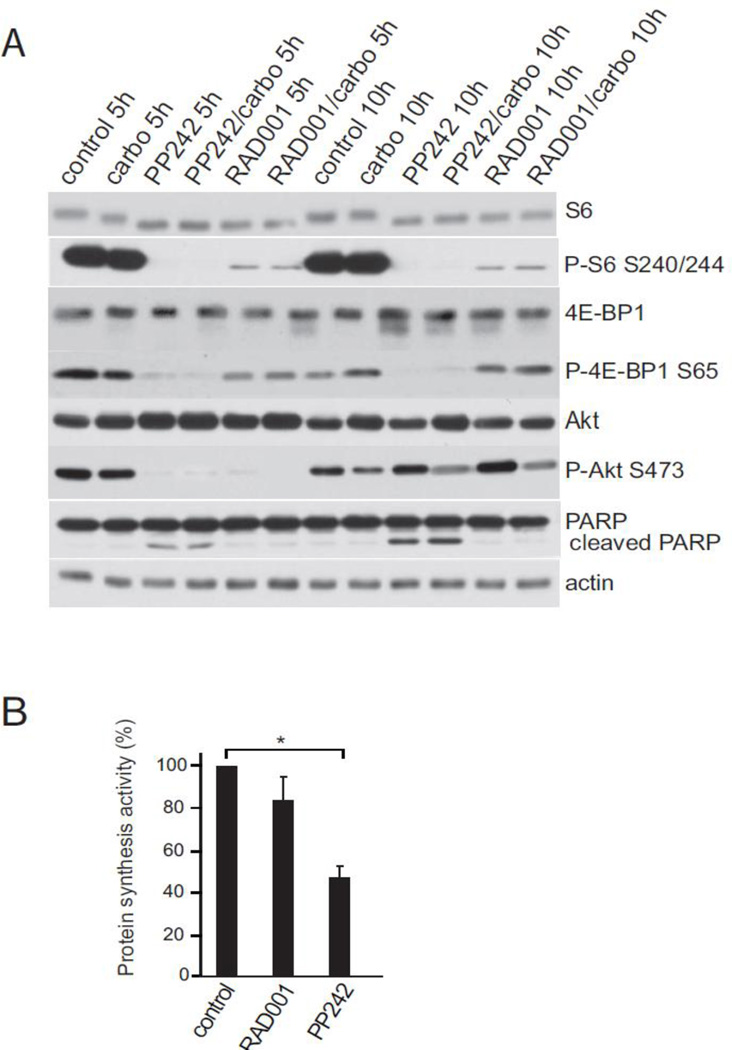
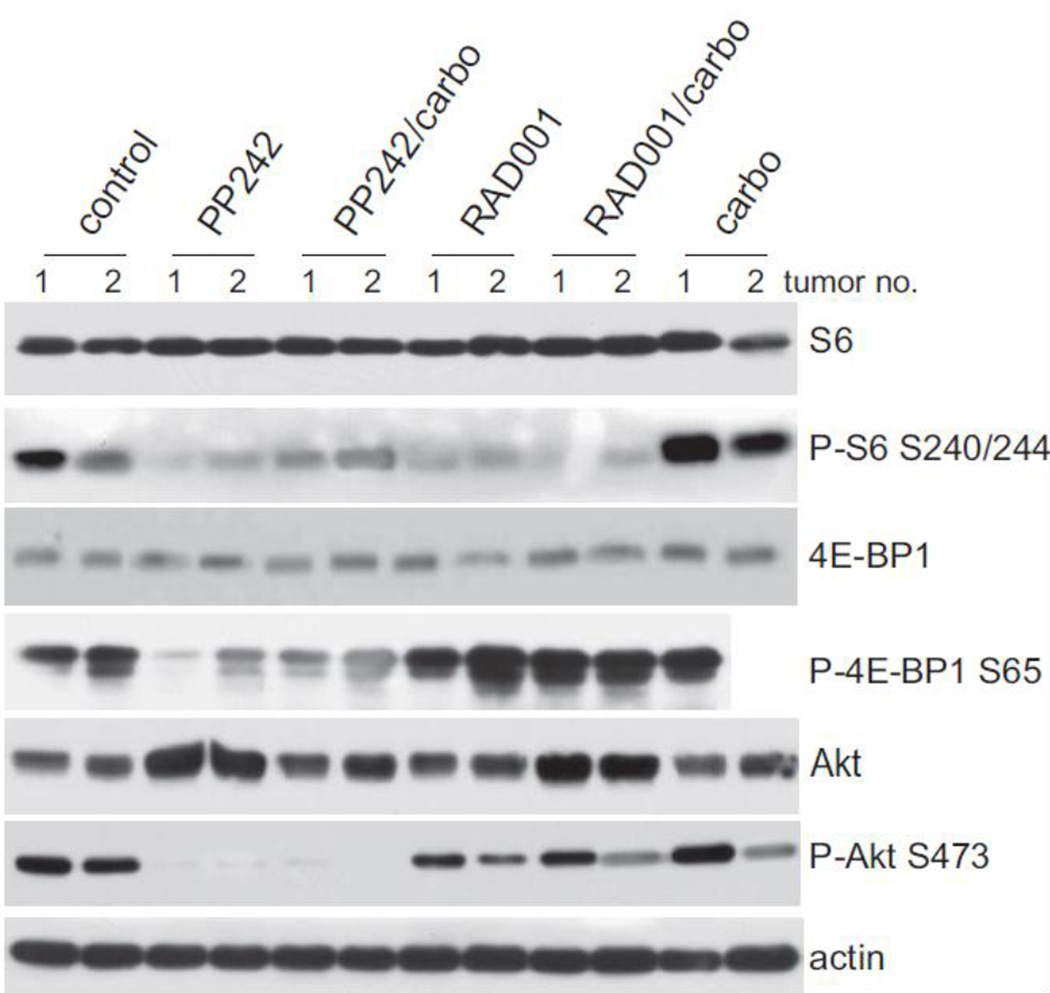
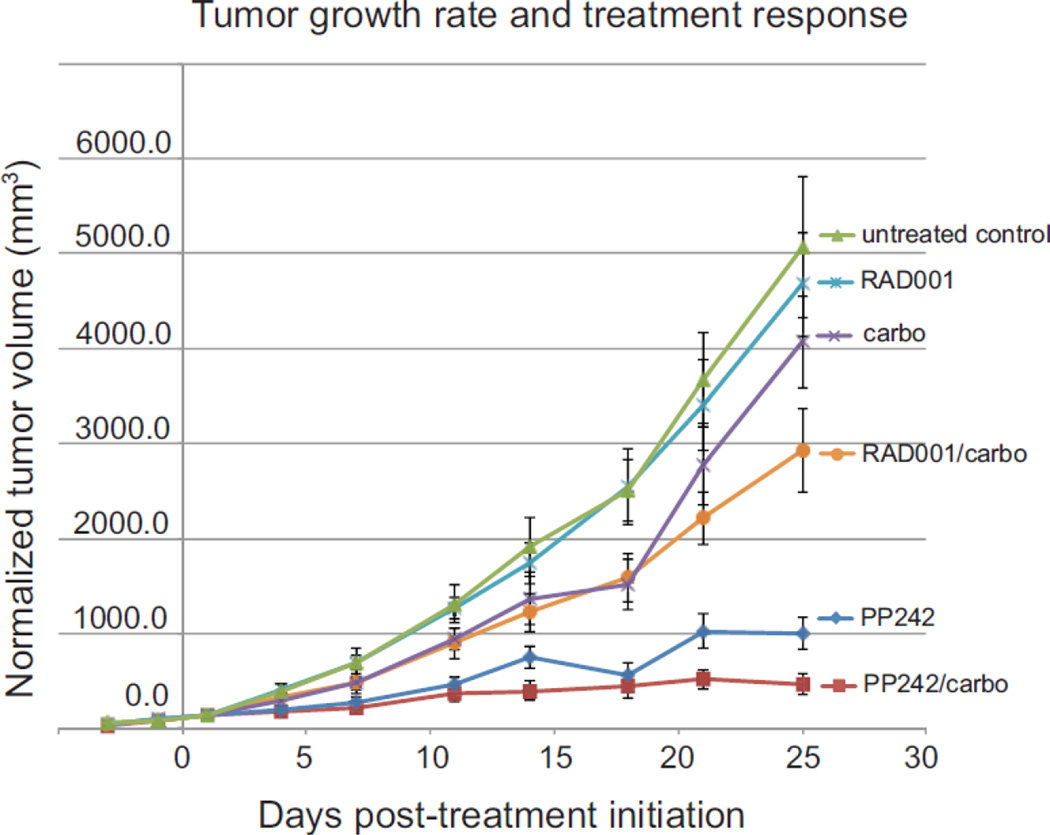
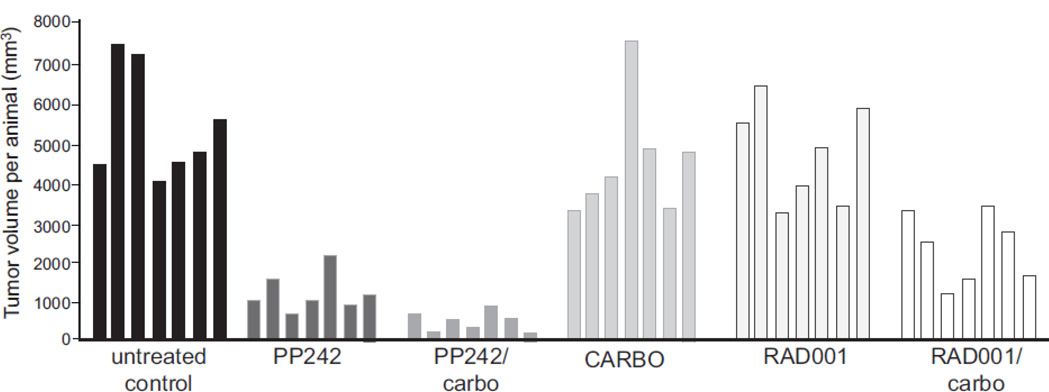
The mean tumor volume of PP242+carboplatin was significantly lower than in all other treatment groups, P < 0.001 (89% smaller). The RAD001+carboplatin group was also smaller, but this did not reach statistical significance (P = 0.097). Immunoblot analysis of tumor lysates treated with PP242 demonstrated inhibition of activated P-Akt.
Catalytic mTORC1/2 inhibition demonstrates clear efficacy in tumor growth control that is enhanced by the addition of a DNA damage agent, carboplatin. Targeting mTORC1/2 leads to inhibition of Akt activation and strong downregulation of effectors of mTORC1, resulting in downregulation of protein synthesis. Based on this study, mTORC1/2 kinase inhibitors warrant further investigation as a potential treatment for endometrial cancer.
高达 70%的子宫内膜样腺癌携带 PTEN 基因缺失,这可能导致 mTOR 活性上调。研究中的 mTOR 激酶抑制剂可能为这些肿瘤提供一种新的治疗方法。我们使用子宫内膜癌的异种移植肿瘤模型,评估了 mTOR 及其下游效应蛋白在 mTOR 翻译控制途径中的活性,与全酶 mTOR 复合物 1(mTORC1)抑制剂(everolimus,RAD001)相比,mTOR 双重复合物 1 和 2(mTORC1/2)催化抑制剂(PP242)治疗后的活性。
将 3 级子宫内膜样腺癌细胞(AN3CA)异种移植到裸鼠中。动物接受 PP242、PP242 和卡铂、卡铂、RAD001 和 RAD001 和卡铂治疗。通过方差分析比较各组之间的平均肿瘤体积。使用 P-Akt、P-S6 和 P-4E-BP1 进行免疫印迹分析,评估 mTORC1/2 活性。
PP242+卡铂的平均肿瘤体积明显小于其他所有治疗组,P < 0.001(小 89%)。RAD001+卡铂组也较小,但这并未达到统计学意义(P = 0.097)。用 PP242 处理的肿瘤裂解物的免疫印迹分析显示激活的 P-Akt 被抑制。
催化 mTORC1/2 抑制在肿瘤生长控制方面显示出明显的疗效,添加 DNA 损伤剂卡铂可增强其疗效。靶向 mTORC1/2 导致 Akt 激活的抑制和 mTORC1 的效应物的强烈下调,从而导致蛋白质合成的下调。基于这项研究,mTORC1/2 激酶抑制剂作为子宫内膜癌的潜在治疗方法值得进一步研究。