Authors' Affiliations: Department of Cell Biology and Physiology; Lineberger Comprehensive Cancer Center; and Division of Medical Oncology, Department of Internal Medicine and Otolaryngology, Lineberger Comprehensive Cancer Center, University of North Carolina at Chapel Hill School of Medicine; Department of Computer Science, University of North Carolina at Chapel Hill, Chapel Hill, North Carolina; and Department of Pharmacology, Howard Hughes Medical Institute, University of Washington, Seattle, Washington.
Cancer Res. 2014 Feb 1;74(3):808-17. doi: 10.1158/0008-5472.CAN-13-1655. Epub 2013 Dec 9.
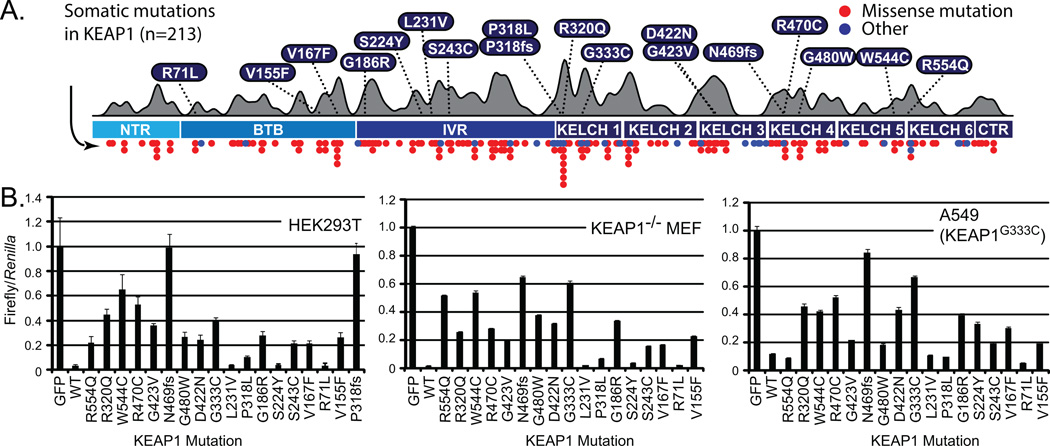
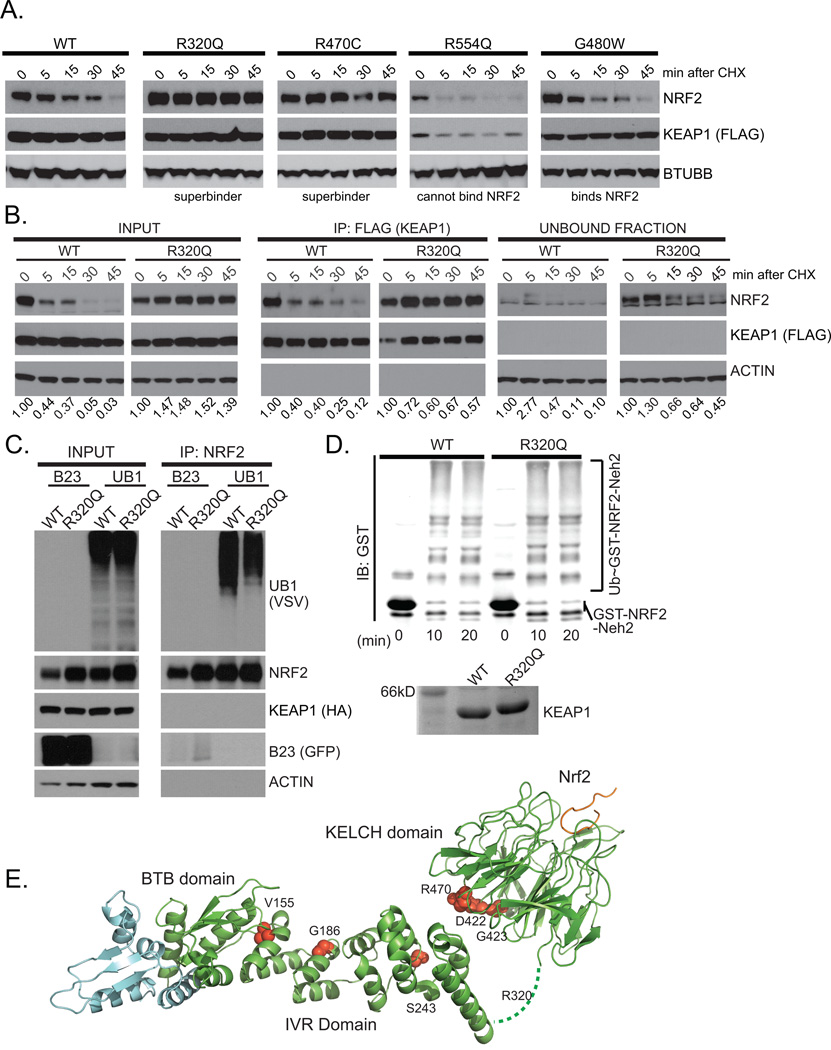
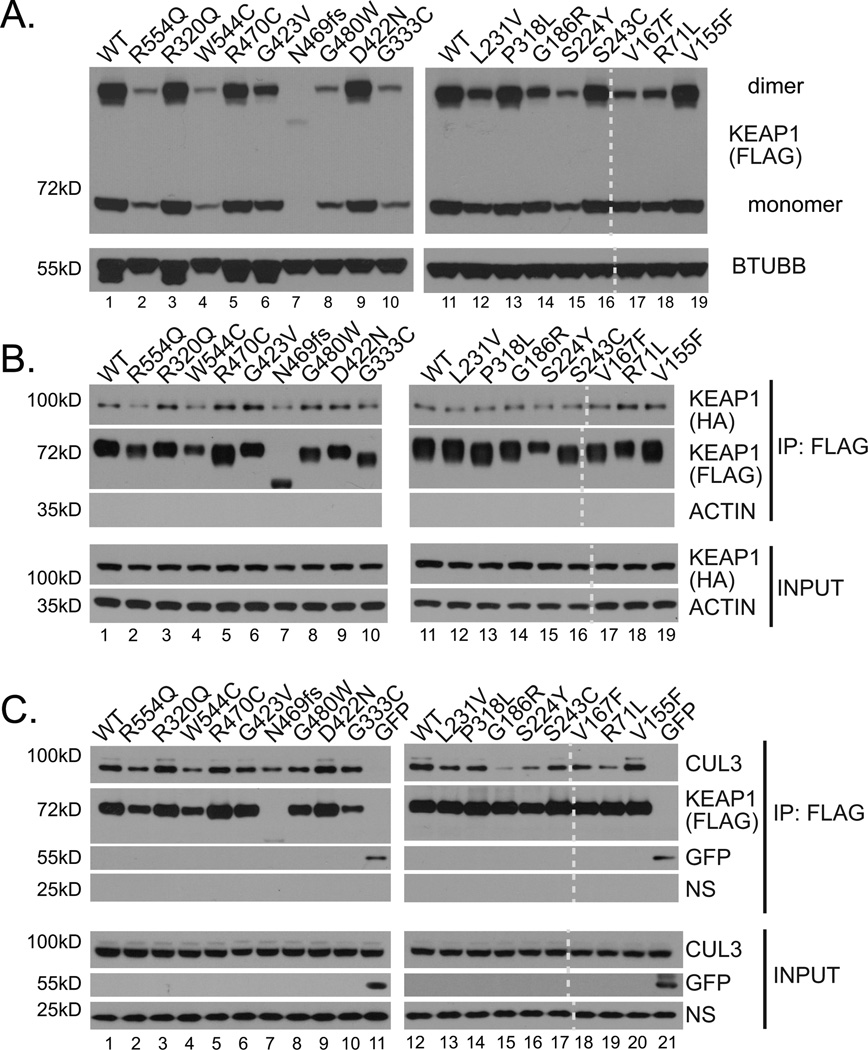
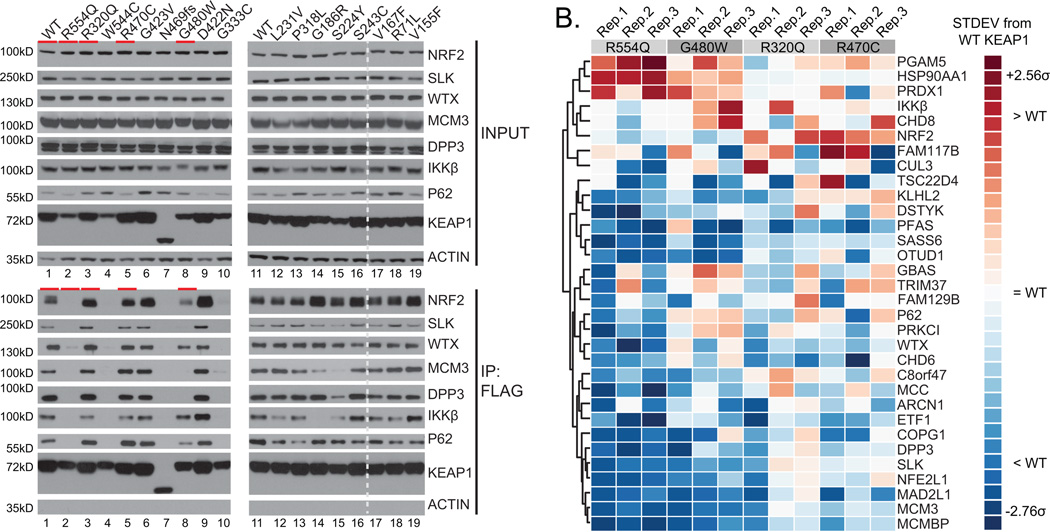
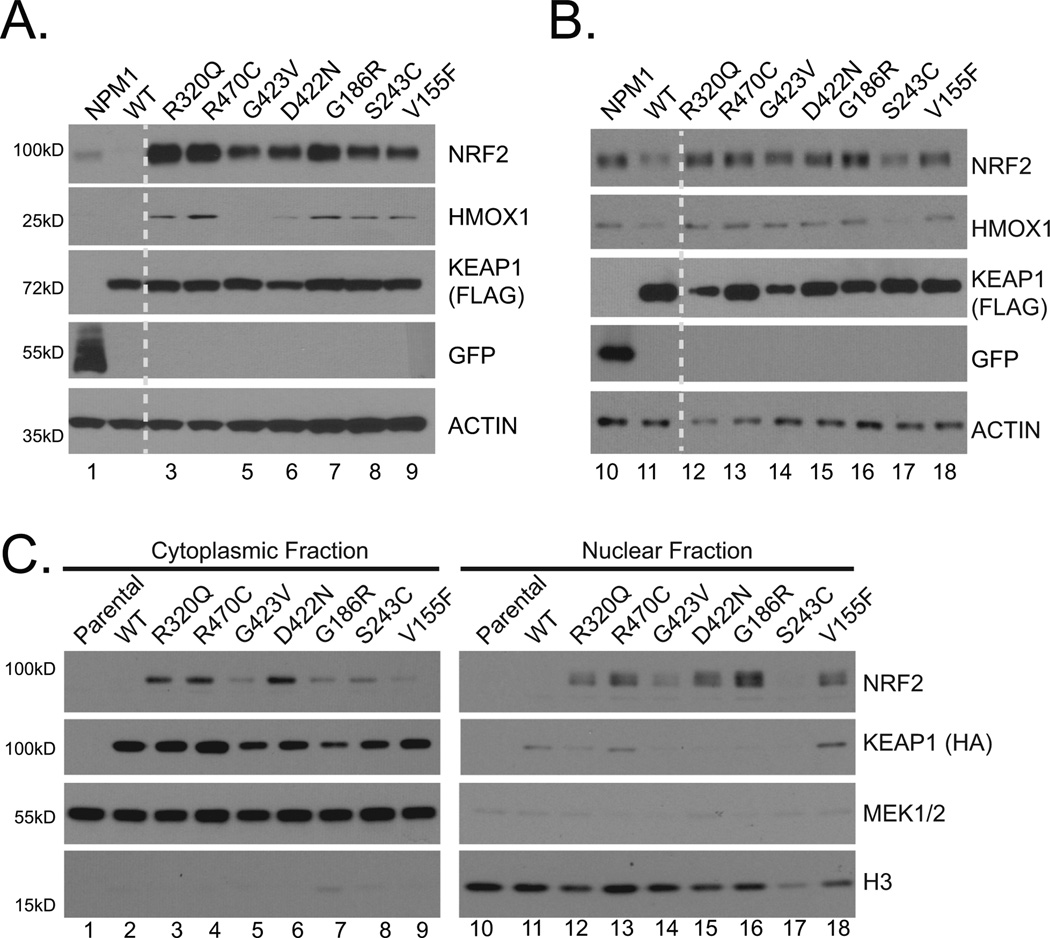
NRF2 is a transcription factor that mediates stress responses. Oncogenic mutations in NRF2 localize to one of its two binding interfaces with KEAP1, an E3 ubiquitin ligase that promotes proteasome-dependent degradation of NRF2. Somatic mutations in KEAP1 occur commonly in human cancer, where KEAP1 may function as a tumor suppressor. These mutations distribute throughout the KEAP1 protein but little is known about their functional impact. In this study, we characterized 18 KEAP1 mutations defined in a lung squamous cell carcinoma tumor set. Four mutations behaved as wild-type KEAP1, thus are likely passenger events. R554Q, W544C, N469fs, P318fs, and G333C mutations attenuated binding and suppression of NRF2 activity. The remaining mutations exhibited hypomorphic suppression of NRF2, binding both NRF2 and CUL3. Proteomic analysis revealed that the R320Q, R470C, G423V, D422N, G186R, S243C, and V155F mutations augmented the binding of KEAP1 and NRF2. Intriguingly, these "super-binder" mutants exhibited reduced degradation of NRF2. Cell-based and in vitro biochemical analyses demonstrated that despite its inability to suppress NRF2 activity, the R320Q "superbinder" mutant maintained the ability to ubiquitinate NRF2. These data strengthen the genetic interactions between KEAP1 and NRF2 in cancer and provide new insight into KEAP1 mechanics.
NRF2 是一种转录因子,介导应激反应。NRF2 的致癌突变定位于与 KEAP1 结合的两个结合界面之一,KEAP1 是一种促进 NRF2 蛋白酶体依赖性降解的 E3 泛素连接酶。KEAP1 的体细胞突变在人类癌症中很常见,KEAP1 可能作为肿瘤抑制因子发挥作用。这些突变分布在 KEAP1 蛋白的整个区域,但对其功能影响知之甚少。在这项研究中,我们对一组肺鳞状细胞癌肿瘤中定义的 18 个 KEAP1 突变进行了特征描述。四个突变表现为野生型 KEAP1,因此可能是过客事件。R554Q、W544C、N469fs、P318fs 和 G333C 突变削弱了与 NRF2 活性的结合和抑制作用。其余的突变表现出对 NRF2 的低功能抑制作用,与 NRF2 和 CUL3 结合。蛋白质组学分析显示,R320Q、R470C、G423V、D422N、G186R、S243C 和 V155F 突变增强了 KEAP1 和 NRF2 的结合。有趣的是,这些“超级结合”突变体表现出 NRF2 降解减少。基于细胞的和体外生化分析表明,尽管 R320Q“超级结合”突变体不能抑制 NRF2 活性,但仍保持泛素化 NRF2 的能力。这些数据加强了癌症中 KEAP1 和 NRF2 之间的遗传相互作用,并为 KEAP1 机制提供了新的见解。