Lo Alvin W H, Van de Water Karen, Gane Paul J, Chan A W Edith, Steadman David, Stevens Kiri, Selwood David L, Waksman Gabriel, Remaut Han
Structural and Molecular Microbiology, VIB Department of Structural Biology, VIB, Pleinlaan 2, 1050 Brussels, Belgium.
J Antimicrob Chemother. 2014 Apr;69(4):1017-26. doi: 10.1093/jac/dkt467. Epub 2013 Dec 8.
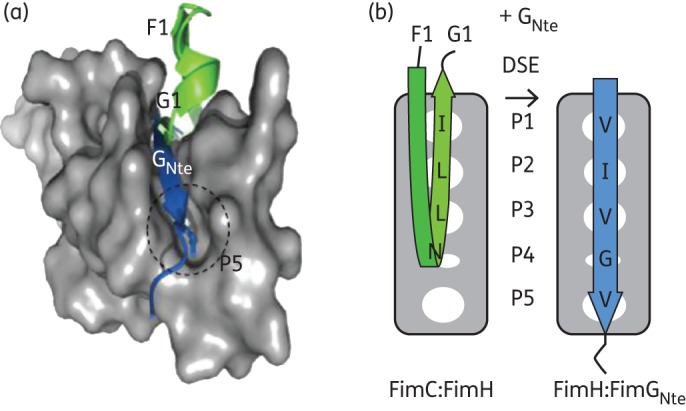
To identify and to characterize small-molecule inhibitors that target the subunit polymerization of the type 1 pilus assembly in uropathogenic Escherichia coli (UPEC).
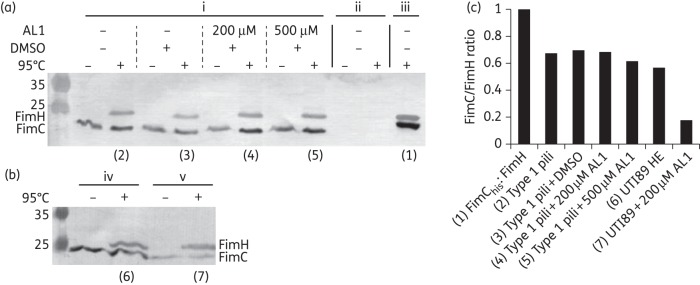
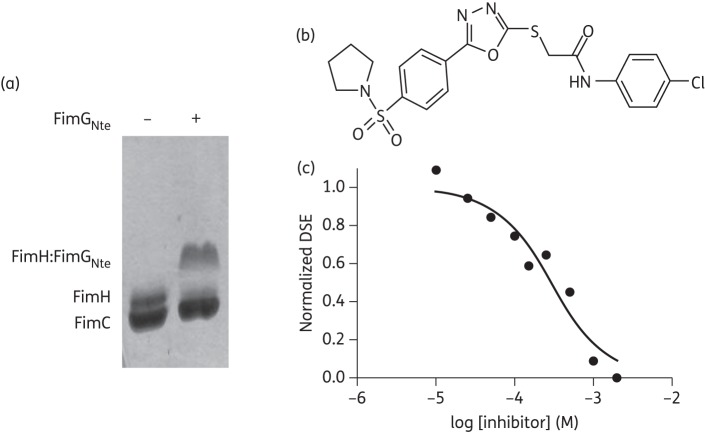
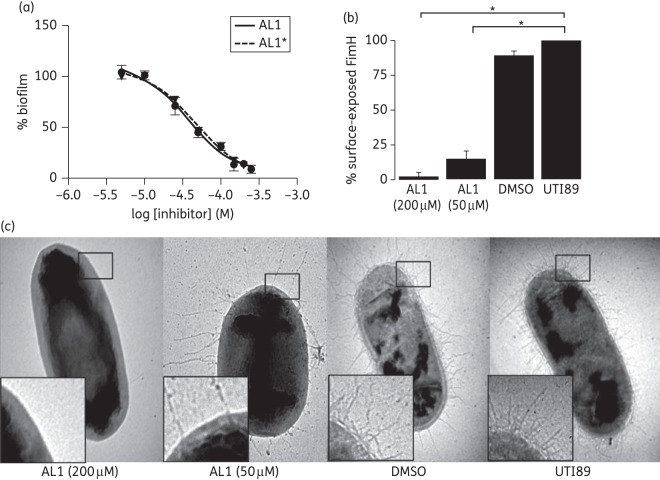
Using an SDS-PAGE-based assay, in silico pre-filtered small-molecule compounds were screened for specific inhibitory activity against the critical subunit polymerization step of the chaperone-usher pathway during pilus biogenesis. The biological activity of one of the compounds was validated in assays monitoring UPEC type 1 pilus biogenesis, type 1 pilus-dependent biofilm formation and adherence to human bladder epithelial cells. The time dependence of the in vivo inhibitory activity and the overall effect of the compound on UPEC growth were determined.
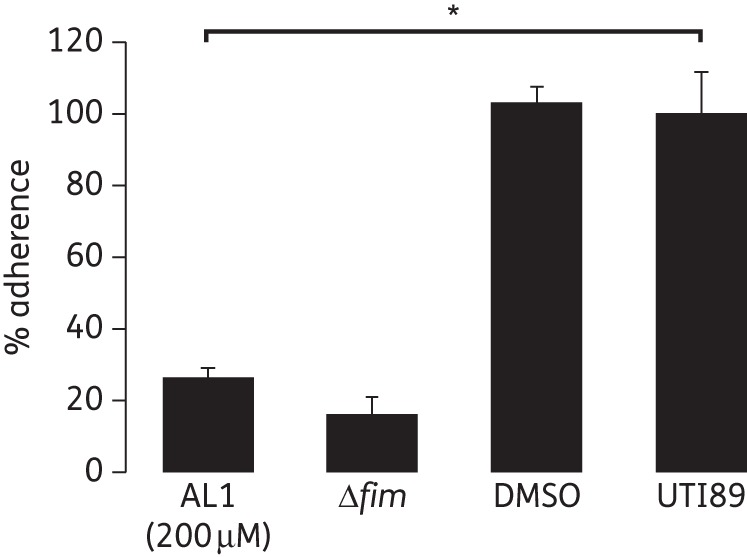
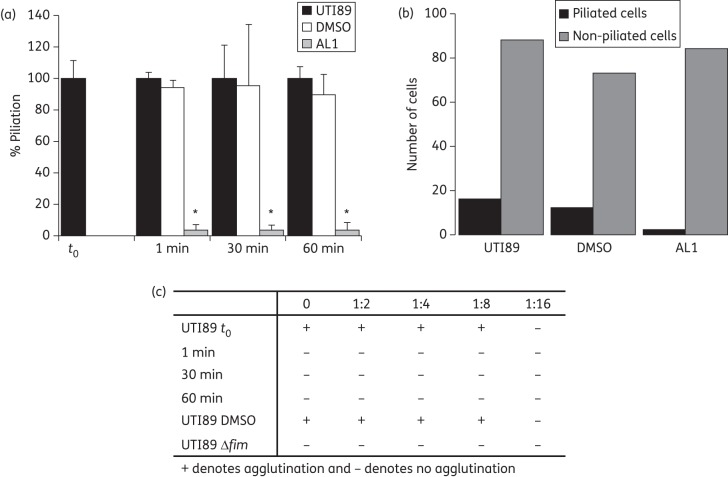
N-(4-chloro-phenyl)-2-{5-[4-(pyrrolidine-1-sulfonyl)-phenyl]-[1,3,4]oxadiazol-2-yl sulfanyl}-acetamide (AL1) inhibited in vitro pilus subunit polymerization. In bacterial cultures, AL1 disrupted UPEC type 1 pilus biogenesis and pilus-dependent biofilm formation, and resulted in the reduction of bacterial adherence to human bladder epithelial cells, without affecting bacterial cell growth. Bacterial exposure to the inhibitor led to an almost instantaneous loss of type 1 pili.
We have identified and characterized a small molecule that interferes with the assembly of type 1 pili. The molecule targets the polymerization step during the subunit incorporation cycle of the chaperone-usher pathway. Our discovery provides new insight into the design and development of novel anti-virulence therapies targeting key virulence factors of bacterial pathogens.
鉴定并表征靶向致病性大肠杆菌(UPEC)1型菌毛组装亚基聚合的小分子抑制剂。
使用基于SDS-PAGE的检测方法,对通过计算机预筛选的小分子化合物进行筛选,以检测其对菌毛生物合成过程中伴侣-引导途径关键亚基聚合步骤的特异性抑制活性。在监测UPEC 1型菌毛生物合成、1型菌毛依赖性生物膜形成以及对人膀胱上皮细胞黏附的检测中验证了其中一种化合物的生物活性。确定了体内抑制活性的时间依赖性以及该化合物对UPEC生长的总体影响。
N-(4-氯苯基)-2-{5-[4-(吡咯烷-1-磺酰基)-苯基]-[1,3,4]恶二唑-2-基硫烷基}-乙酰胺(AL1)在体外抑制菌毛亚基聚合。在细菌培养物中,AL1破坏了UPEC 1型菌毛生物合成和菌毛依赖性生物膜形成,并导致细菌对人膀胱上皮细胞的黏附减少,而不影响细菌细胞生长。细菌暴露于该抑制剂会导致1型菌毛几乎瞬间丧失。
我们鉴定并表征了一种干扰1型菌毛组装的小分子。该分子靶向伴侣-引导途径亚基掺入周期中的聚合步骤。我们的发现为针对细菌病原体关键毒力因子的新型抗毒力疗法的设计和开发提供了新的见解。