Kivits Robbert Anton, Furneaux Craig
Southern Cross University, Lismore, NSW 2480, Australia.
ScientificWorldJournal. 2013 Nov 10;2013:983721. doi: 10.1155/2013/983721.
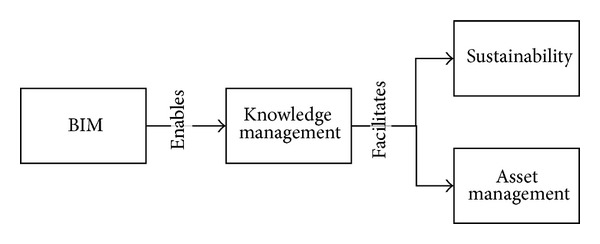
Building Information Modeling (BIM) is the use of virtual building information models to develop building design solutions and design documentation and to analyse construction processes. Recent advances in IT have enabled advanced knowledge management, which in turn facilitates sustainability and improves asset management in the civil construction industry. There are several important qualifiers and some disadvantages of the current suite of technologies. This paper outlines the benefits, enablers, and barriers associated with BIM and makes suggestions about how these issues may be addressed. The paper highlights the advantages of BIM, particularly the increased utility and speed, enhanced fault finding in all construction phases, and enhanced collaborations and visualisation of data. The paper additionally identifies a range of issues concerning the implementation of BIM as follows: IP, liability, risks, and contracts and the authenticity of users. Implementing BIM requires investment in new technology, skills training, and development of new ways of collaboration and Trade Practices concerns. However, when these challenges are overcome, BIM as a new information technology promises a new level of collaborative engineering knowledge management, designed to facilitate sustainability and asset management issues in design, construction, asset management practices, and eventually decommissioning for the civil engineering industry.
建筑信息模型(BIM)是利用虚拟建筑信息模型来开发建筑设计方案、设计文档以及分析施工过程。信息技术的最新进展实现了先进的知识管理,进而促进了可持续性发展并改善了土木建筑行业的资产管理。当前这一套技术存在几个重要的限定因素和一些缺点。本文概述了与BIM相关的益处、推动因素和障碍,并就如何解决这些问题提出了建议。本文强调了BIM的优势,特别是提高了实用性和速度、在所有施工阶段增强了故障排查能力,以及加强了协作和数据可视化。本文还识别出一系列与BIM实施有关的问题,如下所示:知识产权、责任、风险、合同以及用户的真实性。实施BIM需要在新技术、技能培训以及开发新的协作方式和贸易惯例方面进行投资。然而,当这些挑战被克服时,BIM作为一种新的信息技术有望实现协作式工程知识管理的新水平,旨在促进设计、施工、资产管理实践中的可持续性和资产管理问题,并最终实现土木工程行业的退役处理。