Maccoun Robert J
Goldman School of Public Policy and Berkeley Law, University of California at Berkeley , Berkeley, CA , USA.
Front Psychiatry. 2013 Nov 25;4:153. doi: 10.3389/fpsyt.2013.00153.
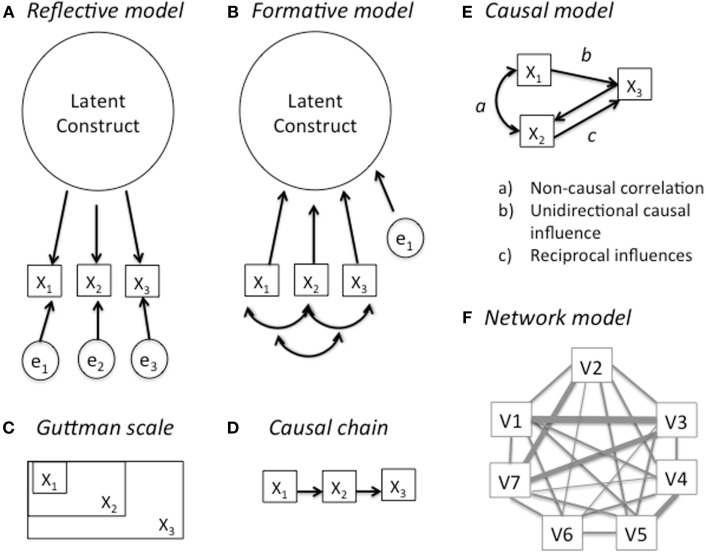
There is a perennial expert debate about the criteria to be included or excluded for the DSM diagnoses of substance use dependence. Yet analysts routinely report evidence for the unidimensionality of the resulting checklist. If in fact the checklist is unidimensional, the experts are wrong that the criteria are distinct, so either the experts are mistaken or the reported unidimensionality is spurious. I argue for the latter position, and suggest that the traditional reflexive measurement model is inappropriate for the DSM; a formative measurement model would be a more accurate characterization of the institutional process by which the checklist is created, and a network or causal model would be a more appropriate foundation for a scientifically grounded diagnostic system.
对于物质使用障碍在《精神疾病诊断与统计手册》(DSM)中诊断时纳入或排除的标准,一直存在着专家间的争论。然而,分析人士经常报告该诊断清单具有单维度性的证据。如果事实上该清单确实是单维度的,那么专家们认为这些标准是不同的观点就是错误的,所以要么专家们错了,要么所报告的单维度性是虚假的。我支持后一种观点,并认为传统的反射性测量模型不适用于DSM;形成性测量模型将更准确地描述创建该清单的制度过程,而网络或因果模型将为基于科学的诊断系统提供更合适的基础。