Wang Jiaxin, Liang Yanchun, Wang Yan, Cui Juan, Liu Ming, Du Wei, Xu Ying
Key Laboratory for Symbolic Computation and Knowledge Engineering of the Ministry of Education, College of Computer Science and Technology, Jilin University, Changchun, China.
PLoS One. 2013 Nov 12;8(11):e80211. doi: 10.1371/journal.pone.0080211. eCollection 2013.
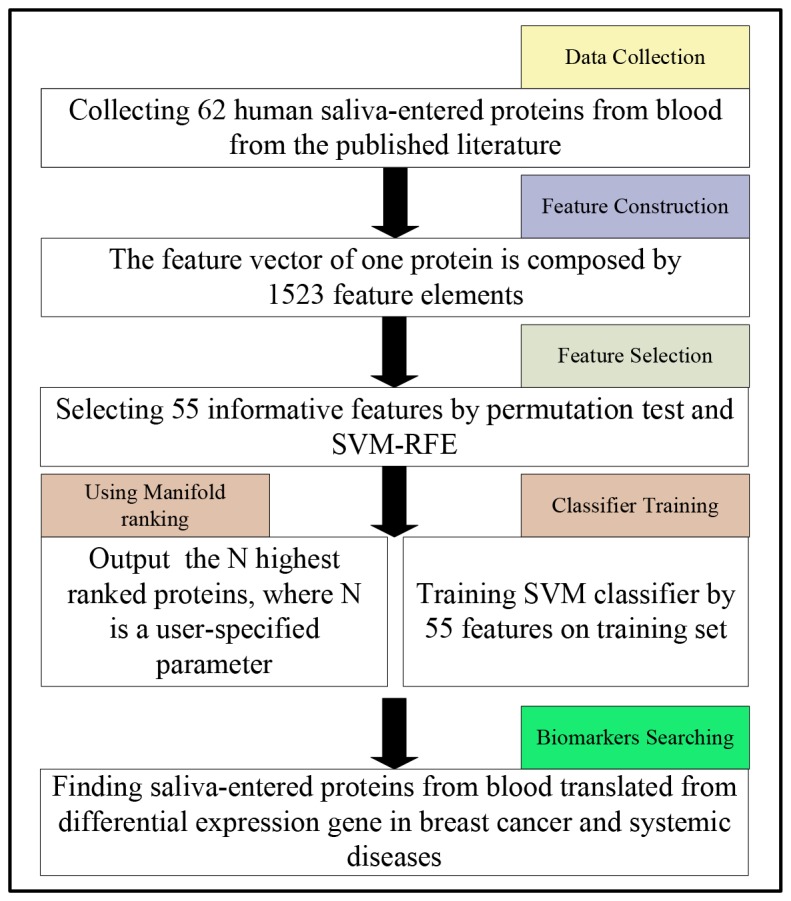
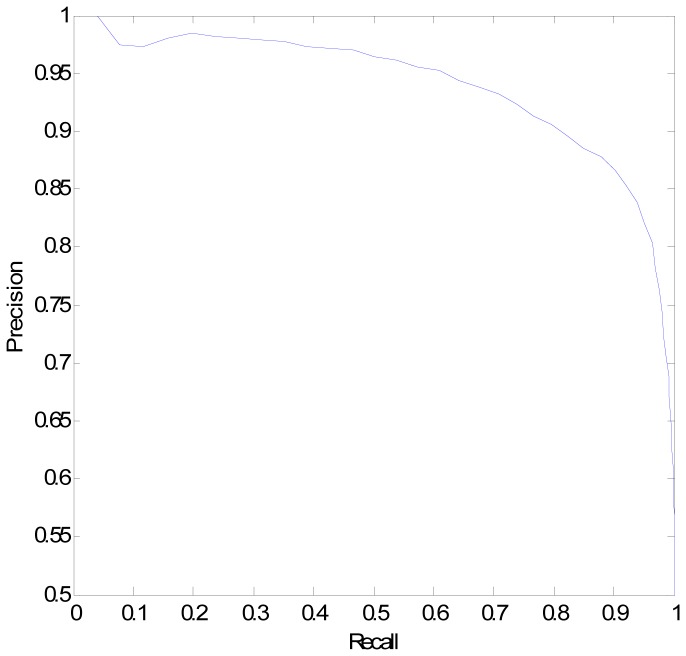
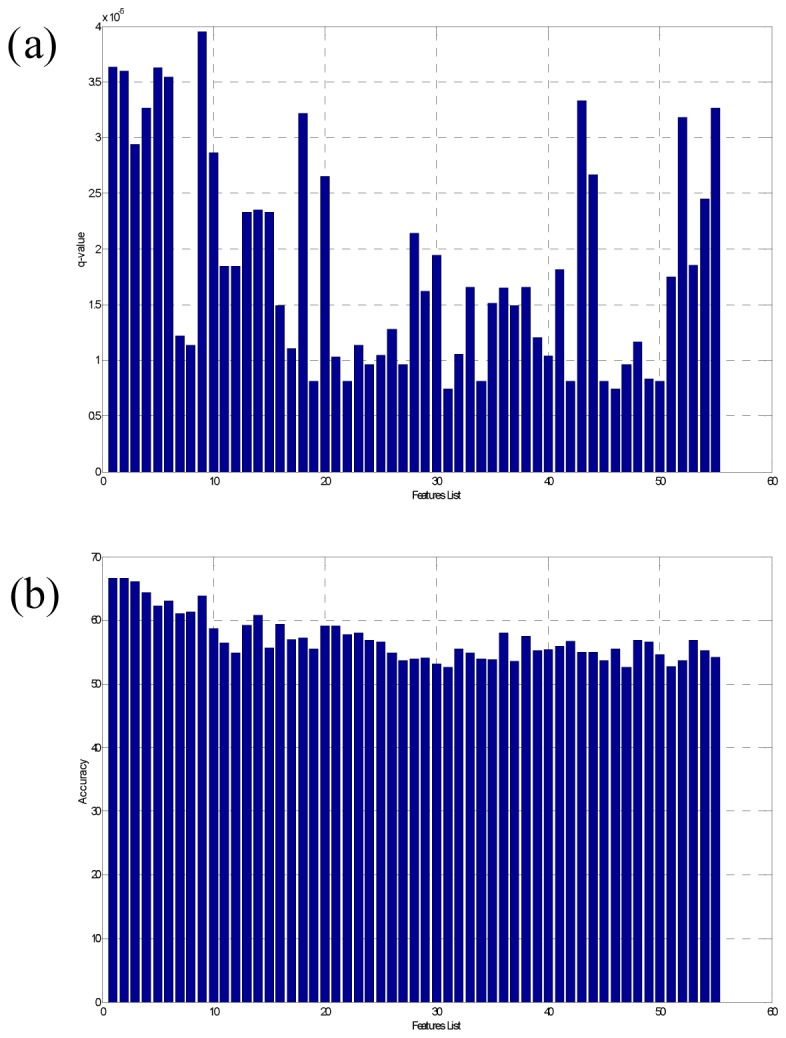
Proteins can move from blood circulation into salivary glands through active transportation, passive diffusion or ultrafiltration, some of which are then released into saliva and hence can potentially serve as biomarkers for diseases if accurately identified. We present a novel computational method for predicting salivary proteins that come from circulation. The basis for the prediction is a set of physiochemical and sequence features we found to be discerning between human proteins known to be movable from circulation to saliva and proteins deemed to be not in saliva. A classifier was trained based on these features using a support-vector machine to predict protein secretion into saliva. The classifier achieved 88.56% average recall and 90.76% average precision in 10-fold cross-validation on the training data, indicating that the selected features are informative. Considering the possibility that our negative training data may not be highly reliable (i.e., proteins predicted to be not in saliva), we have also trained a ranking method, aiming to rank the known salivary proteins from circulation as the highest among the proteins in the general background, based on the same features. This prediction capability can be used to predict potential biomarker proteins for specific human diseases when coupled with the information of differentially expressed proteins in diseased versus healthy control tissues and a prediction capability for blood-secretory proteins. Using such integrated information, we predicted 31 candidate biomarker proteins in saliva for breast cancer.
蛋白质可以通过主动运输、被动扩散或超滤作用从血液循环进入唾液腺,其中一些随后会释放到唾液中,因此,如果能够准确识别,它们有可能作为疾病的生物标志物。我们提出了一种预测来自血液循环的唾液蛋白质的新计算方法。预测的依据是一组理化和序列特征,我们发现这些特征能够区分已知可从血液循环转移到唾液中的人类蛋白质和被认为不在唾液中的蛋白质。基于这些特征,使用支持向量机训练了一个分类器,以预测蛋白质分泌到唾液中的情况。在训练数据的10折交叉验证中,该分类器的平均召回率达到88.56%,平均精度达到90.76%,表明所选特征具有信息价值。考虑到我们的负训练数据可能不太可靠(即预测不在唾液中的蛋白质),我们还训练了一种排序方法,旨在基于相同的特征,将已知的来自血液循环的唾液蛋白质在一般背景中的蛋白质中排名最高。当与疾病组织与健康对照组织中差异表达蛋白质的信息以及血液分泌蛋白质的预测能力相结合时,这种预测能力可用于预测特定人类疾病的潜在生物标志物蛋白质。利用这些综合信息,我们预测了31种唾液中乳腺癌的候选生物标志物蛋白质。